
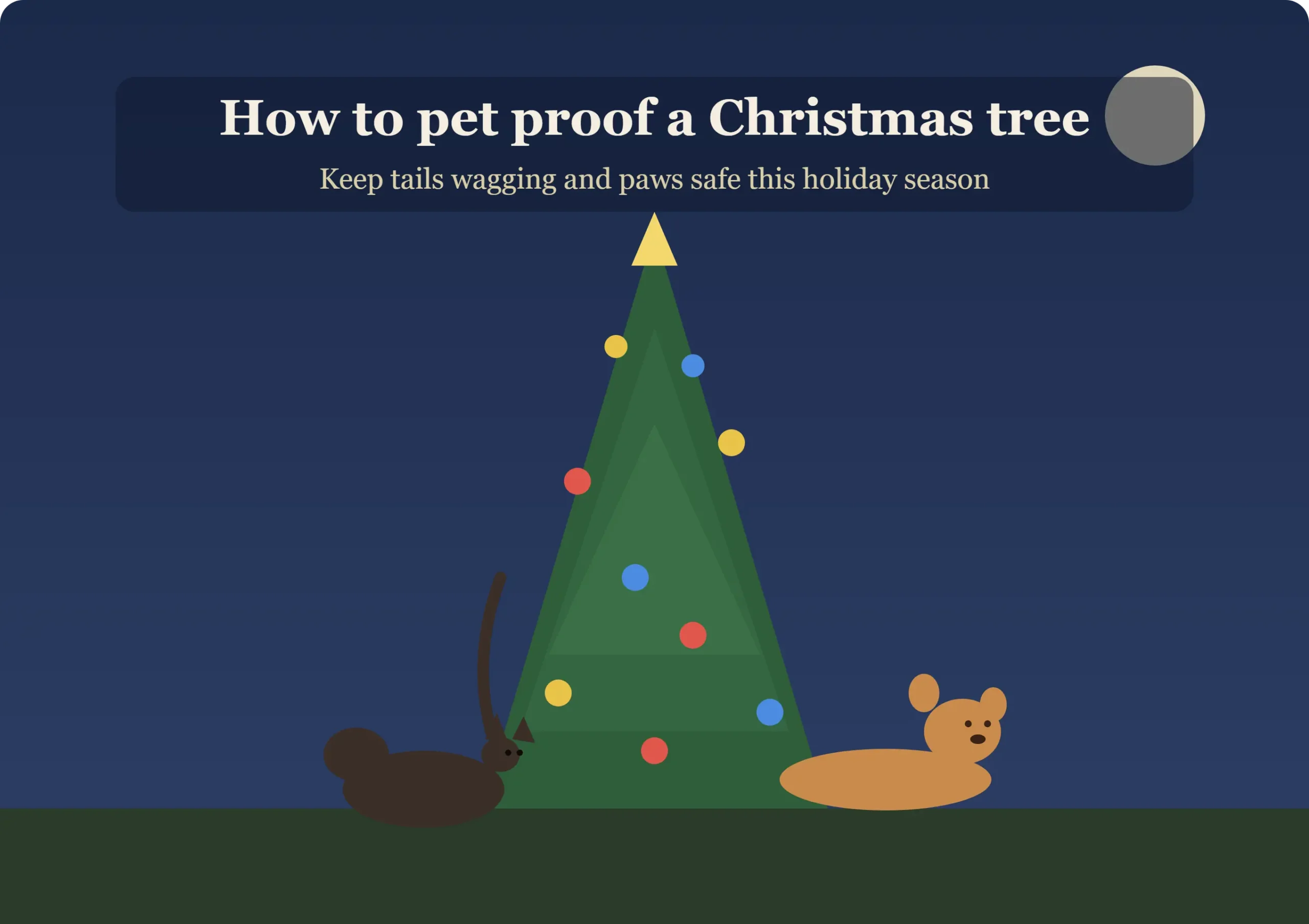
Every December, veterinary clinics see a predictable spike in visits: dogs who swallowed tinsel, cats who knocked over trees chasing ornaments, and puppies who decided pine needles looked like a chew toy How to Pet Proof a Christmas Tree. If you’ve ever walked into your living room to find your tree tipped sideways with a guilty-looking cat sitting nearby, you already know why learning how to pet proof a Christmas tree matters just as much as picking the “right” tree in the first place.
The good news is that a beautifully decorated tree and a houseful of curious pets aren’t mutually exclusive. With a bit of planning — and an understanding of what actually tempts cats and dogs toward trouble — you can enjoy the holidays without a trip to the emergency vet. This guide walks through exactly how to secure, decorate, and monitor your tree so it stays standing (and your pet stays safe) all season long.
Why Christmas Trees Are So Tempting to Pets
To a dog or cat, a Christmas tree isn’t a symbol of holiday cheer — it’s a giant, fascinating new object that smells different, sways when touched, and is covered in shiny, dangling things that move. From a pet’s perspective, that’s basically an invitation.
Cats in particular are drawn to trees because of their natural climbing and hunting instincts. Ornaments that catch the light and swing gently mimic prey movement, which is exactly why cats bat at them. Dogs, especially puppies and younger adult dogs, are more likely to be drawn in by smell — tree water, food-based ornaments, or even the scent of sap can trigger investigative chewing.
Understanding this behavior is the first step in pet proofing a Christmas tree, because it helps you predict where problems are likely to start rather than reacting after something’s already gone wrong.
Step 1: Choose the Right Tree Type and Placement
Real vs. Artificial Trees
Both real and artificial trees come with their own pet-related considerations.
- Real trees: Pine needles can cause mouth and paw irritation, and tree water often contains bacteria, sap, or added preservatives that are unsafe if a pet drinks from the stand.
- Artificial trees: Generally safer overall, but smaller plastic parts or shed “needles” from cheaper models can still be a choking hazard if chewed and swallowed.
If you go with a real tree, consider skipping any commercial tree preservative packets and use plain water only, changed regularly, with the base covered so pets can’t access it directly.
Where You Place It Matters
Where you put the tree can prevent 80% of pet-related tree disasters before you even hang a single ornament.
- Avoid placing the tree near furniture, shelves, or stairs a cat could use to jump onto branches.
- Keep it away from high-traffic walking paths where a wagging tail or running pet could bump it.
- Position it in a corner so it only needs to be stabilized from fewer directions.
Step 2: Secure the Tree So It Can’t Tip Over
A wobbly tree is a pet-safety issue waiting to happen, especially with cats who like to climb or dogs who bump into things while playing. Here’s how to anchor it properly.
- Use a heavy, weighted tree stand. Lightweight stands are the #1 reason trees topple when a pet leans, climbs, or brushes against them.
- Anchor it to the wall or ceiling. A thin, clear fishing line or picture-hanging wire attached from a sturdy upper branch to a hook in the wall or ceiling adds serious tip-resistance without being visible.
- Add extra base weight. Sandbags, bricks wrapped in fabric, or a decorative tree skirt weighted underneath can help stabilize the stand further.
- Test it yourself. Before decorating, gently push the tree from a few angles to confirm it doesn’t rock or lean easily.
This single step — securing the tree itself — prevents the most common and most dangerous incident: a full tree collapse onto a pet or a shattered ornament pile on the floor.
Step 3: Decorate With Pet Safety in Mind
Once your tree is stable, the next priority is choosing and placing decorations strategically.
Ornament Placement Strategy
- Keep fragile, glass, or small ornaments on the top two-thirds of the tree, out of paw and mouth reach.
- Use only shatterproof or fabric ornaments on lower branches where pets can easily reach.
- Avoid hanging anything edible-looking (like popcorn strings, candy canes, or gingerbread ornaments) on lower branches — these are the most common ornaments dogs and cats try to eat.
Tinsel, Ribbon, and String Lights
Tinsel and thin ribbon are especially risky for cats because their tongues have backward-facing barbs that make it hard to spit out string-like material once they start swallowing it. This can lead to a serious intestinal blockage requiring surgery, so many veterinarians recommend skipping tinsel entirely in homes with cats.
For string lights:
- Tuck cords along the trunk and secure them with clips rather than letting them dangle loosely.
- Unplug lights when you’re not home or not in the room, reducing both chewing risk and fire risk.
- Consider cord protectors or bitter-tasting pet deterrent spray on any exposed sections near the base.
Ornament Hooks
Standard metal ornament hooks are sharp and easy for a pet to bat off a branch and step on or swallow. Swap them for ribbon loops or plastic hooks wherever pets can reach, especially on the bottom third of the tree.
Step 4: Manage the Base of the Tree
The base is ground zero for most pet-tree incidents because it’s the most accessible area.
- Cover the tree stand and water reservoir with a skirt, fabric wrap, or a specifically designed cover so pets can’t drink stagnant tree water or chew the base.
- Keep wrapped gifts with ribbons or bows away from the very bottom branches, since curling ribbon is another common swallowing hazard.
- Vacuum fallen needles daily if you have a real tree — dried needles can cause mouth irritation or minor gastrointestinal upset if ingested in quantity.
- Use a pet gate or exercise pen around the tree base if you have a particularly persistent chewer or climber, especially during the first week when curiosity is highest.
Step 5: Train and Redirect Early
Pet proofing isn’t just physical — a bit of consistent, positive training in the first few days after setting up the tree makes a big difference for the rest of the season.
- Supervise your pet closely during the tree’s first 48–72 hours, since this is when curiosity and testing behavior are strongest.
- Use a firm but calm verbal cue (like “leave it”) consistently when your pet approaches the tree, paired with redirection to a toy or treat.
- Reward calm behavior near the tree with praise or a treat so pets learn that ignoring it is the “correct” choice.
- For cats specifically, providing an alternative tall perch or cat tree nearby can reduce the temptation to climb your Christmas tree instead.
Warning Signs to Watch For
Even with precautions, it’s worth knowing what symptoms suggest your pet may have ingested something from the tree. Contact your veterinarian promptly if you notice:
- Repeated vomiting or retching
- Drooling combined with pawing at the mouth
- Difficulty swallowing or refusing food and water
- Visible string or tinsel near or hanging from the mouth or rear end (never pull on visible string — this can cause internal damage)
- Lethargy, bloating, or signs of abdominal discomfort
These symptoms can indicate a blockage or irritation that requires professional evaluation. This article is meant for general prevention purposes only, so if you ever suspect your pet has ingested tree decorations, water, or preservatives, contact your veterinarian or an emergency animal hospital right away rather than waiting to see if symptoms resolve on their own.
Quick Pet-Proofing Checklist
- [ ] Heavy, weighted tree stand
- [ ] Tree anchored to wall or ceiling
- [ ] Fragile ornaments placed high, shatterproof ones low
- [ ] No tinsel or thin ribbon (especially with cats in the home)
- [ ] Cords secured, lights unplugged when unattended
- [ ] Tree stand base covered and water inaccessible
- [ ] Needles vacuumed daily (real trees)
- [ ] Gifts with ribbon kept away from lower branches
- [ ] Supervision during the first few days
- [ ] Alternative climbing perch available for cats
Conclusion
Pet proofing a Christmas tree comes down to a few consistent principles: stabilize the tree, choose pet-safe decorations, manage the base carefully, and supervise closely during those first curious days. None of these steps require giving up a beautifully decorated tree — they just require thinking through the season from your pet’s point of view.
With a secure stand, thoughtfully placed ornaments, and a little early training, you can enjoy a festive, photo-worthy tree while keeping your dog or cat safe from tipped trees, swallowed decorations, and unnecessary vet visits. A few minutes of prevention now can save a stressful emergency later — and that’s a gift for both of you this holiday season.
Read This
Is Pet Insurance Worth It? A Realistic Look at the Costs and Benefits
FAQS
Are Christmas trees actually poisonous to dogs and cats?
Real fir and pine trees aren’t typically considered highly toxic, but the needles can irritate the mouth and digestive tract, and tree water with sap or preservatives can cause stomach upset. The bigger risks usually come from decorations, tinsel, and electrical cords rather than the tree itself.
How do I stop my cat from climbing the Christmas tree?
Secure the tree well, avoid dangling ornaments low enough to tempt climbing, and provide a tall cat tree or perch nearby as an appealing alternative. Consistent redirection in the first few days often reduces the behavior significantly.
Is tinsel really that dangerous for pets?
Yes — tinsel and similar string-like decorations are a well-known cause of intestinal blockages in cats, often requiring surgical removal. Many pet owners choose to skip tinsel entirely if they have cats or dogs prone to chewing.
Can I use a real Christmas tree if I have a puppy?
You can, but puppies chew more indiscriminately than adult dogs, so extra supervision, a secured base, and pet-safe (non-edible-looking) ornaments on lower branches are especially important during the first few weeks.
What should I do if I think my pet swallowed part of an ornament?
Don’t wait for symptoms to worsen — contact your veterinarian or an emergency animal clinic promptly. Avoid trying to induce vomiting or remove visible string yourself, since this can sometimes cause more harm.
- Why Every Pet Owner Needs an Emergency Pet First Aid Kit
- Affordable Pet Care on a Budget: A Real Owner’s Guide
- Moving House With a Cat: Tips to Keep Your Feline Calm and Safe
- Flea and Tick Prevention Guide: How to Protect Your Pet Year-Round
- How to Pet Proof a Christmas Tree: A Complete Guide for Dog and Cat Owners