If you’ve walked into your living room to find fresh claw marks shredded down the arm of your favorite couch, you already know the frustration How to Stop Cat Scratching Furniture. Learning how to stop cat scratching furniture is one of the most common challenges new and longtime cat owners face — and it’s rarely about your cat being “bad.” Scratching is a deeply ingrained, biologically necessary behavior, which means yelling at your cat or banishing them to another room almost never solves the problem long-term.
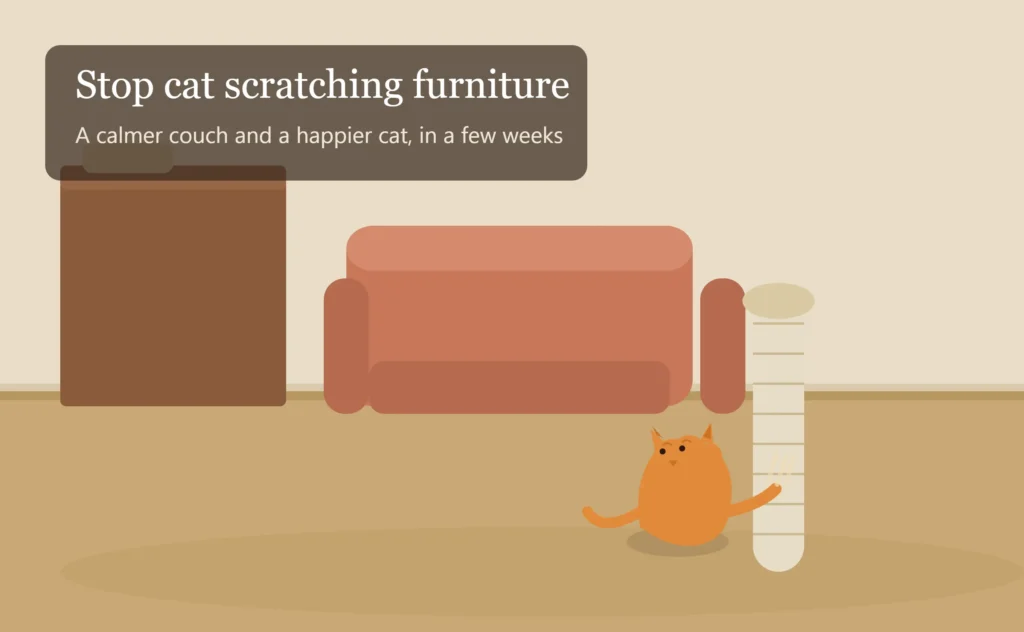
The good news is that with the right combination of understanding, environment setup, and consistency, most cats can be redirected away from your furniture and onto appropriate scratching surfaces within a few weeks. This guide walks through exactly why cats scratch, how to identify what’s driving the behavior in your home, and the specific, actionable steps that actually work — without resorting to punishment or declawing, both of which can create bigger behavioral and welfare problems down the line.
Why Cats Scratch Furniture in the First Place
Before you can redirect the behavior, it helps to understand what’s actually driving it. Scratching isn’t misbehavior — it’s a hardwired feline need that serves several distinct purposes.
It’s a Physical Necessity, Not a Choice
Cats scratch to remove the dead outer layer of their claw sheaths, revealing the sharp new claw underneath. Unlike trimming, this shedding process happens naturally and cats are instinctively driven to do it regularly, often once every few days.
Scratching also stretches the muscles in a cat’s shoulders, back, and legs — similar to how a person might stretch after sitting for a long period. That’s why you’ll often see cats scratch right after waking up from a nap.
It’s a Communication Tool
Cats have scent glands in their paw pads. When they scratch, they’re not just leaving visible marks — they’re depositing pheromones that mark territory. This is why cats often gravitate toward prominent objects like the corner of a couch, a doorway, or a piece of furniture near an entrance: these are high-traffic “billboard” locations in the home.
It’s Tied to Emotional State
Scratching can spike during moments of excitement, stress, or frustration. A cat that scratches furniture heavily after a loud noise, a new pet’s arrival, or a change in routine may be using the behavior to self-soothe or release nervous energy.
Understanding which of these motivations is driving your cat’s behavior helps you pick the right fix — a bored, under-stimulated cat needs a different solution than an anxious one.
Step 1: Give Your Cat the Right Scratching Outlet
The single most effective strategy for how to stop cat scratching furniture is to provide scratching surfaces that are more appealing than your couch — and to place them correctly.
Choose the Right Type of Scratcher
Not all scratching posts are created equal, and a mismatched post is one of the top reasons redirection efforts fail. Consider:
- Material preference: Sisal rope or sisal fabric mimics the texture cats naturally seek out. Cardboard scratchers are also popular and tend to be budget-friendly. Carpet-covered posts are the least recommended, since they can confuse cats into thinking your actual carpet is fair game.
- Orientation: Some cats prefer vertical posts (allowing a full-body stretch), while others strongly prefer horizontal scratchers or angled ramps. If you’re not sure which your cat likes, offer both initially.
- Stability: A wobbly post will be abandoned quickly. Look for a scratching post with a wide, heavy base that doesn’t tip or slide when your cat digs in with full force.
- Height: Vertical posts should be tall enough — generally at least 28 to 32 inches — for an adult cat to fully extend upward without reaching the top.
Placement Matters More Than Most People Realize
Even the best scratching post will be ignored if it’s tucked away in a low-traffic corner. Cats want to scratch in visible, central locations — which is exactly why they choose your furniture in the first place.
- Place the first post directly next to or in front of the furniture your cat currently scratches.
- Add a second scratcher near your cat’s sleeping area, since post-nap stretching is a common scratching trigger.
- Keep at least one scratcher in a shared, high-traffic family space, like near the living room entrance.
Once your cat is consistently using the post in its “wrong” location for two to three weeks, you can gradually move it — a few inches per day — toward a more permanent spot, if desired.
Step 2: Make the Furniture Itself Less Appealing
While you’re building the habit of using scratching posts, it helps to simultaneously make the furniture temporarily unattractive. This isn’t punishment — it’s environmental redirection.
- Double-sided tape: Cats dislike the sticky sensation on their paws. Furniture-safe double-sided tape strips (sold specifically for this purpose) can be applied to previously scratched areas.
- Aluminum foil or plastic carpet runner (nub-side up): Both create textures cats tend to avoid, and can be draped temporarily over problem areas.
- Citrus-scented sprays: Many cats dislike citrus smells. Pet-safe deterrent sprays formulated for this purpose can be applied to furniture edges (always spot-test on fabric first).
- Furniture covers or throws: A simple washable throw over the arm of a couch can protect fabric while training is underway.
These deterrents work best as a temporary bridge — once your cat has reliably transferred their scratching habit to the post, most can be removed.
Step 3: Reinforce the Behavior You Want
Cats respond far better to positive reinforcement than correction. When your cat uses the scratching post — even by accident — reward it immediately.
- Use treats strategically. Keep a small stash of treats near the new scratching post and offer one the moment your cat interacts with it.
- Add catnip or silvervine. Rubbing a small amount of catnip (or silvervine, for cats less responsive to catnip) into the post’s surface can draw curious sniffing that often turns into scratching.
- Play near the post. Dragging a wand toy toward and around the scratching post encourages your cat to associate the object with fun, rewarding activity.
- Praise calmly. A soft, happy tone of voice when you see appropriate scratching helps reinforce the association without startling your cat.
Avoid physical punishment, shouting, or spraying your cat with water as a correction. These methods are widely discouraged by veterinary behaviorists because they tend to increase anxiety, which can worsen scratching or trigger other stress-related behaviors like inappropriate urination.
Step 4: Manage Claws Without Declawing
Routine nail care reduces the damage furniture sustains even while training is in progress, and it’s a healthy long-term habit regardless.
- Regular trimming: Trimming the sharp tip of each claw every two to three weeks reduces the damage from incidental scratching.
- Soft nail caps: Vinyl nail caps, applied by a groomer, vet, or trained owner, blunt the claw tip for several weeks at a time and are a popular alternative for households with valuable furniture.
- Never consider declawing as a solution. Declawing is a surgical amputation of the last bone in each toe, not a simple nail removal, and it’s associated with long-term pain, altered gait, and increased behavioral issues. Most veterinary organizations now discourage it except in rare medical circumstances. If nail management feels overwhelming, ask your veterinarian or a professional groomer to demonstrate proper trimming technique.
Step 5: Address the Root Cause if Scratching Persists
If you’ve set up appropriate scratching posts, applied deterrents, and reinforced good behavior but your cat is still going after the furniture, it’s worth stepping back to look at the bigger picture.
Consider Environmental Stress
Cats that are under-stimulated or stressed often scratch more. Look for:
- A recent change in the household (new pet, new baby, moving furniture, houseguests)
- Limited vertical space or hiding spots
- Not enough daily interactive play (aim for two short play sessions most days)
- Boredom from a lack of environmental enrichment, like window perches or puzzle feeders
Rule Out Underlying Anxiety
Excessive or sudden-onset scratching, especially paired with other changes like altered appetite, excessive vocalization, or hiding, can sometimes point to underlying anxiety or a medical issue rather than a simple habit problem.
If scratching behavior changes suddenly, becomes destructive beyond typical wear, or is accompanied by other behavioral shifts, it’s best to consult your veterinarian. A vet can rule out any underlying discomfort or illness and, if needed, refer you to a veterinary behaviorist for a more tailored plan.
A Realistic Timeline for Change
Most cats show noticeable improvement within two to four weeks of consistent redirection, though timelines vary based on age, temperament, and how established the furniture-scratching habit is. Older cats with years of habit reinforcement may take longer than kittens just developing their preferences. Patience and consistency — not speed — are what make this training stick.
Key Takeaways
- Scratching is a natural, necessary behavior tied to claw health, stretching, and communication — not defiance.
- Offering the right type, texture, and placement of scratching posts is the foundation of successful redirection.
- Temporary deterrents on furniture, paired with positive reinforcement on scratchers, speed up the transition.
- Routine nail trims or nail caps reduce damage without resorting to declawing.
- Persistent or sudden changes in scratching behavior are worth discussing with your veterinarian.
Read This
Why Does My Cat Knead Blankets? The Real Reasons Behind This Cozy Cat Habit
FAQS
How long does it take to stop a cat from scratching furniture?
A: Most cats show meaningful improvement within two to four weeks of consistent training, though older cats with long-established habits may take longer.
Do cats grow out of scratching furniture on their own?
A: Not typically. Scratching is a lifelong instinctual behavior, so without an appropriate outlet and some redirection, most cats will continue targeting furniture indefinitely.
Is declawing a good solution for furniture scratching?
A: No. Declawing is a surgical procedure with significant welfare concerns and is discouraged by most veterinary organizations. Nail trims, nail caps, and proper scratching posts are safer, effective alternatives.
My cat only scratches one specific piece of furniture — why?
A: Cats often target furniture in high-visibility or high-traffic areas because scratching also serves a scent-marking purpose. Placing a scratching post directly next to that item is usually the fastest fix.
What if my cat ignores every scratching post I buy?
A: Try varying the material (sisal vs. cardboard), orientation (vertical vs. horizontal), and location before giving up on redirection. If a cat continues to reject all scratching alternatives or scratching behavior escalates suddenly, consult your veterinarian to rule out a stress or medical component.
- Why Every Pet Owner Needs an Emergency Pet First Aid Kit
- Affordable Pet Care on a Budget: A Real Owner’s Guide
- Moving House With a Cat: Tips to Keep Your Feline Calm and Safe
- Flea and Tick Prevention Guide: How to Protect Your Pet Year-Round
- How to Pet Proof a Christmas Tree: A Complete Guide for Dog and Cat Owners