
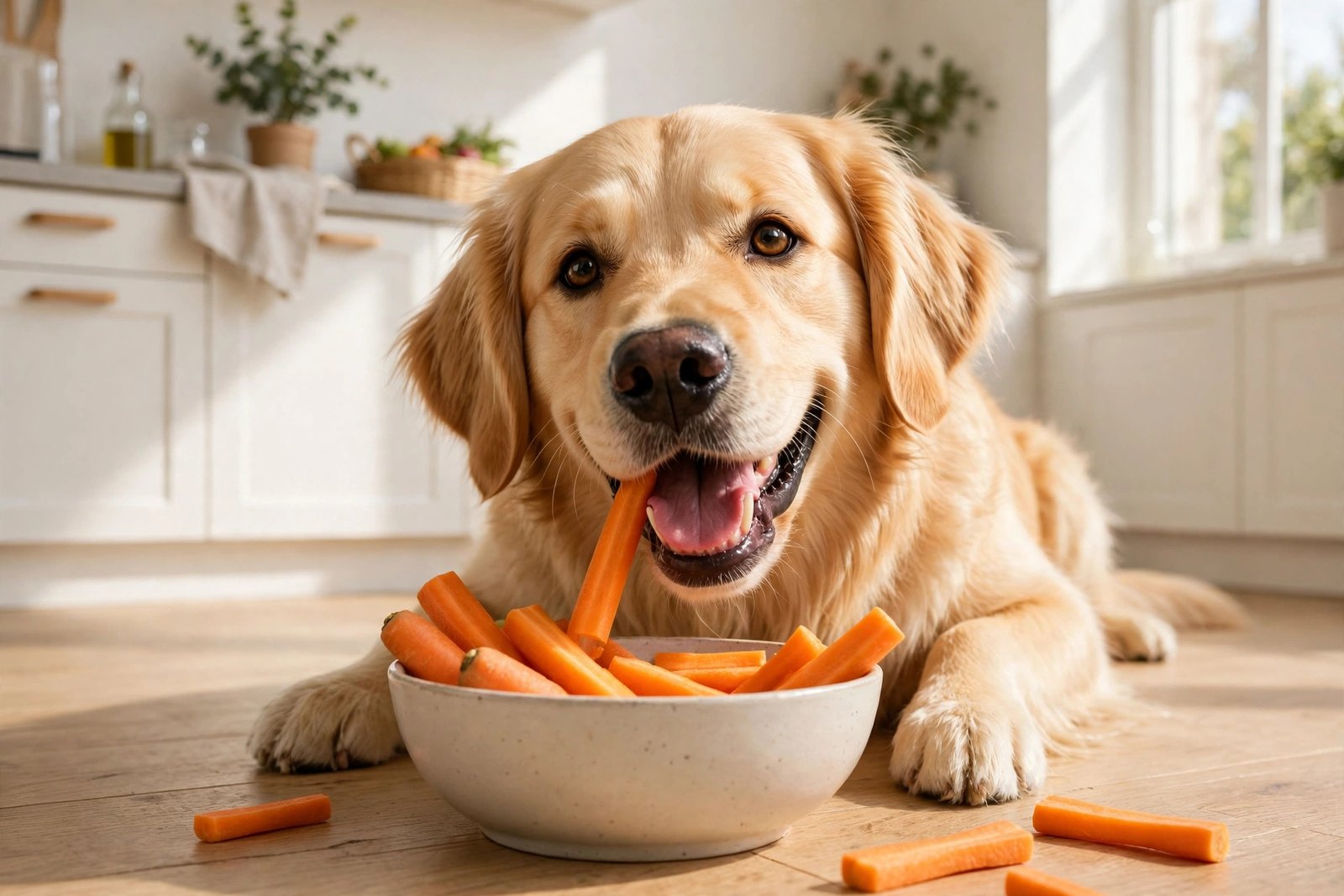
Can Dogs Eat Carrots? The Short Answer
Can dogs eat carrots? Yes — carrots are one of the safest and healthiest treats you can give your dog. Raw, cooked, frozen, or grated, carrots are low in calories, high in fiber, and rich in vitamin A and beta-carotene. Most dogs love their sweet taste and satisfying crunch, and veterinarians in the United States routinely recommend carrots as a smart alternative to high-calorie commercial treats. That said, carrots are not a complete food, and how you serve them matters — especially for puppies, small dogs, and dogs that gulp their food without chewing. In this guide, we cover the real benefits, the risks worth knowing, exact serving sizes by dog size, and the safest ways to prepare carrots for your dog.
Carrots have earned their place on almost every veterinarian-approved treat list for a simple reason: they deliver a lot of nutrition for very few calories. A medium carrot contains only about 25 calories, yet it provides fiber that supports digestion, vitamin A for vision and immune health, and potassium for normal muscle and nerve function. For dogs that need to lose weight or maintain a healthy weight, swapping a biscuit for a carrot stick can make a real difference over weeks and months. The crunch also helps scrape plaque from teeth, although carrots are no substitute for brushing or professional dental care.
Health Benefits of Carrots for Dogs
Carrots are not a miracle food, but they are a genuinely useful one. Here is what they actually offer your dog, without the hype.
Low-Calorie Treats That Help With Weight Control
Obesity is one of the most common health problems in American dogs. According to the Association for Pet Obesity Prevention, more than half of dogs in the United States are overweight or obese, and extra weight shortens lives and increases the risk of arthritis, diabetes, and heart disease. Treats are a major culprit, because many commercial biscuits pack 30 to 50 calories each and owners hand out several a day without adjusting meals. A baby carrot has about 4 calories. A full medium carrot has about 25. That makes carrots an easy swap: your dog still gets a treat, still gets to chew something satisfying, and you have not blown the daily calorie budget. If your dog is on a weight-loss plan from your veterinarian, ask whether carrots can replace some of their current treats — for most dogs, the answer is yes.
Vitamin A and Eye Health
Carrots are famous for beta-carotene, which the body converts to vitamin A. Vitamin A supports healthy vision, skin, coat, and immune function in dogs, just as it does in people. Dogs eating a complete and balanced commercial diet already get enough vitamin A, so carrots should be seen as a bonus, not a supplement you need to add. You do not need to feed carrots every day for your dog to benefit, and you should never give vitamin A supplements without veterinary advice, because too much vitamin A can be toxic. Food sources like carrots, in normal treat amounts, are safe.
Fiber for Digestion
Carrots contain soluble and insoluble fiber, which helps keep stools firm and supports regular bowel movements. For dogs with mild digestive upset, a small amount of cooked, mashed carrot is gentle on the stomach and easy to digest. Fiber also helps dogs feel full, which is another reason carrots work well for dogs that are always begging for more food. If your dog has chronic diarrhea, vomiting, or a diagnosed digestive condition, talk to your veterinarian before changing anything — carrots help mild cases, but they do not treat disease.
A Natural Chew That Supports Dental Health
The crunch of a raw carrot gives teeth a mild scrubbing action and encourages chewing, which stimulates saliva and helps wash away food particles. Many owners notice fresher breath and less tartar buildup when their dog chews raw carrots regularly. This is a helpful bonus, not a dental plan. The American Veterinary Medical Association recommends daily tooth brushing and regular veterinary dental checkups as the foundation of dog dental care, and carrots cannot replace either one. Still, as a chew, a raw carrot is far better for teeth than a soft, sticky treat that clings to enamel.
Hydration and a Cool Summer Snack
Carrots are about 88 percent water, so they contribute a little hydration along with their crunch. Frozen carrots are especially popular in summer: they last longer, soothe teething puppies, and give hot dogs a cool, refreshing chew. Many owners freeze baby carrots or carrot sticks in a bowl of water or low-sodium broth to make a simple frozen enrichment toy. Just supervise your dog with frozen treats, and skip the broth version if your dog is on a low-sodium diet.
Are Carrots Safe for All Dogs?
For the vast majority of healthy dogs, carrots are safe. There are a few exceptions and precautions worth knowing before you hand over a whole carrot.
Dogs with diabetes can usually eat carrots in small amounts, but carrots do contain natural sugars, so your veterinarian may want you to count them as part of your dog’s daily carbohydrate intake. Dogs with kidney disease or on a prescription diet should only get treats your veterinarian has approved, because even healthy foods can interfere with a therapeutic diet. Dogs with a known allergy to carrots are rare, but allergies can develop to almost any food — if your dog has never eaten carrots before, start with a small piece and watch for itching, swelling, vomiting, or diarrhea over the next 24 hours.
The biggest real risk is choking, not toxicity. Carrots are not toxic to dogs. The danger comes from size and chewing style. A dog that inhales food without chewing can choke on a large chunk of raw carrot, and small dogs and puppies are at higher risk. Always cut carrots to an appropriate size for your dog, supervise the first few times, and never give a whole raw carrot to a puppy or a small breed until you know how carefully they chew. If your dog has very few teeth, missing teeth, or dental pain, cooked carrots are the safer choice because they are soft.
Can Dogs Eat Carrots Every Day?
Yes, most dogs can eat carrots every day, as long as treats — including carrots — stay within 10 percent of your dog’s total daily calories. That 10 percent rule comes from veterinary nutrition guidance and is the simplest way to keep treats from unbalancing a complete diet. A 50-pound dog eating about 1,000 calories a day can have up to 100 calories of treats, which is roughly four medium carrots. In practice, most owners give far less than that, and one or two carrots a day is plenty.
Variety still matters. Carrots are a great regular treat, but they should not be the only treat your dog ever gets, and they should never replace meals. Rotate carrots with other vet-approved options such as green beans, cucumber slices, blueberries, and apple slices without seeds. If your dog gets bored of carrots, try serving them a different way — frozen, lightly steamed, grated over kibble, or stuffed into a puzzle toy — before assuming they dislike them.
How Much Carrot Can My Dog Eat?
Serving size depends on your dog’s size, weight, and total daily calories. Use these guidelines as a starting point and adjust with your veterinarian if your dog is overweight, diabetic, or on a restricted diet.
Serving Guide by Dog Size
Small dogs (under 20 pounds): 1 to 2 baby carrots, or 2 to 3 tablespoons of chopped carrot, per day. Cut pieces small enough that your dog must chew them, not swallow them whole.
Medium dogs (20 to 50 pounds): 2 to 3 baby carrots, or about half a medium carrot, per day. A whole baby carrot is usually a good single treat.
Large dogs (50 to 90 pounds): 3 to 4 baby carrots, or one medium carrot, per day. Large dogs can handle a whole medium carrot stick, but supervise the first time.
Giant breeds (over 90 pounds): Up to 2 medium carrots per day, still within the 10 percent treat rule. Even big dogs should not eat unlimited carrots — too much fiber at once can cause gas and loose stools.
Start small. The first time you offer carrots, give one small piece and wait a day to see how your dog’s stomach handles it. Some dogs get soft stools or extra gas when they eat a lot of fiber suddenly, and that is your signal to cut back. Increase gradually over a week if everything looks normal.
Raw vs. Cooked Carrots: Which Is Better?
Both raw and cooked carrots are safe for dogs, and the best choice depends on your dog. Raw carrots keep their crunch, which dogs love and which helps teeth. Cooked carrots are softer, easier to digest, and better for puppies, senior dogs, and dogs with dental problems. Cooking also breaks down the cell walls in carrots, which can make the beta-carotene slightly more available to the body — though the difference is small and not a reason to cook them if your dog prefers them raw.
Never season carrots for your dog. No salt, butter, garlic, onion, sugar, or sauces. Plain is the rule. Boiled, steamed, or roasted carrots are all fine as long as they are served plain and cooled to room temperature. Avoid glazed or honey-roasted carrots, candied carrots, and carrot dishes made for people, which often contain butter, sugar, or seasonings that are unhealthy or toxic for dogs.
How to Feed Carrots to Your Dog Safely
Preparation is simple, but a few steps make carrots safer and more enjoyable for your dog.
1. Wash and Peel
Wash carrots thoroughly under running water to remove dirt and pesticide residue. Peeling is optional but recommended for conventionally grown carrots, and it is a good idea if your dog has a sensitive stomach. Organic carrots still need washing.
2. Cut to the Right Size
For small dogs and puppies, cut carrots into thin coins or small cubes no wider than your dog’s mouth can comfortably chew. For medium and large dogs, sticks about 3 to 4 inches long work well. Avoid round chunks that are exactly the size of your dog’s throat — long sticks and thin coins are safer shapes than cubes for gulpers.
3. Supervise the First Few Times
Watch how your dog chews. If they crunch and chew properly, you can relax. If they try to swallow large pieces whole, switch to smaller pieces, grated carrot, or cooked carrot, and stay nearby while they eat.
4. Try Different Servings
Some dogs prefer raw carrot sticks as a chew, while others like grated carrot mixed into their kibble or a spoonful of mashed cooked carrot as a topper. Frozen carrot sticks are excellent for teething puppies — the cold soothes sore gums. You can also stuff a Kong or puzzle feeder with grated carrot and a little plain peanut butter (xylitol-free) for enrichment. If your puppy is teething and chewing everything in sight, our guide to the best toys for teething puppies pairs well with frozen carrots as a soothing chew.
Can Puppies Eat Carrots?
Yes, puppies can eat carrots, and they are one of the best first treats for a young dog. Start after weaning, once your puppy is eating solid food — usually around 8 weeks old — and offer only a tiny piece at first. Frozen carrot sticks are a classic teething remedy: the cold numbs sore gums, the chewing satisfies the urge to gnaw, and the carrot is low-calorie, so it will not spoil your puppy’s appetite for meals.
Keep portions very small for puppies. A puppy’s stomach is tiny, and treats should be an even smaller share of their daily calories than for an adult dog, because puppies need every calorie to come from balanced puppy food for proper growth. One baby carrot a day, cut into small pieces, is plenty for a young puppy. Always supervise a puppy with a raw carrot, and switch to cooked or grated carrot if your puppy tries to swallow pieces whole. For feeding amounts and schedules, see how much to feed your puppy so treats do not crowd out proper meals.
Carrots vs. Other Dog Treats
Compared with most store-bought treats, carrots win on calories, price, and nutrition. A typical commercial dog biscuit has 25 to 40 calories and often contains added sugar, salt, and preservatives. A baby carrot has about 4 calories and one ingredient. Carrots also beat many other human foods owners share: grapes and raisins are toxic to dogs, onions and garlic are toxic, and cooked bones can splinter. Carrots, green beans, and cucumber are among the few human foods veterinarians recommend without hesitation.
That does not mean every dog will love carrots. Some dogs sniff a carrot and walk away, and that is fine. Taste is individual, and no single treat works for every dog. If your dog refuses carrots, do not force it — try green beans, blueberries, or a small piece of plain cooked chicken instead. The goal is a healthy treat your dog actually enjoys, not a battle over a vegetable.
Signs Your Dog Ate Too Many Carrots
Too many carrots at once usually causes mild digestive upset rather than anything dangerous. Watch for soft or loose stools, extra gas, stomach gurgling, or a reduced appetite at the next meal. These signs usually clear up within a day once you cut back. Very large amounts of carrots over a long period could theoretically contribute to vitamin A excess, but that would require eating far more carrots than any dog would normally eat as treats, so it is not a practical concern for most owners.
Call your veterinarian if your dog is choking, gagging, pawing at their mouth, vomiting repeatedly, has bloody diarrhea, or seems lethargic after eating. Choking is the one urgent risk with carrots, and it is preventable with proper sizing and supervision. If your dog swallows a large piece whole and seems fine, monitor them closely for the next few hours and call your vet if you notice coughing, retching, or trouble breathing.
What About Carrot Tops, Juice, and Baby Food?
Carrot tops — the green leafy part — are not toxic to dogs in small amounts, but they are bitter, fibrous, and can cause stomach upset, so most owners discard them. There is no nutritional reason to feed them. Carrot juice is safe in small amounts but removes the fiber and the chewing benefit, so whole carrots are the better choice. Baby food containing carrots is usually safe if the only ingredients are carrots and water, but always read the label: some baby foods contain onion powder or other additives that are unsafe for dogs. Plain, single-ingredient carrot baby food is fine as an occasional topper for a sick or senior dog that will not eat, but whole carrots are better for everyday treats.
If you are exploring other safe vegetables for your dog, carrots pair well with other vet-approved options. Sweet potatoes are another favorite — read our guide on whether dogs can eat sweet potatoes for serving sizes and preparation tips — and pumpkin is a classic for digestion, covered in our article on can dogs eat pumpkin.
The Bottom Line on Carrots for Dogs
Carrots are a safe, healthy, low-calorie treat for most dogs, and they are one of the easiest upgrades you can make to your dog’s treat routine. Offer them raw for crunch, cooked for sensitive stomachs, or frozen for teething puppies and hot summer days. Keep portions within the 10 percent treat rule, cut pieces to a safe size for your dog, and supervise the first few servings. If your dog has diabetes, kidney disease, or a prescription diet, check with your veterinarian first. For healthy dogs, the answer to “can dogs eat carrots” is a clear yes — and your dog will probably tell you so by crunching happily through the whole bowl. For more on safe feeding, the American Kennel Club’s guidance on can dogs eat carrots is a helpful, vet-reviewed reference.
Frequently Asked Questions
Can dogs eat carrots every day?
Yes, most healthy dogs can eat carrots daily as long as all treats stay within 10 percent of their daily calories. One to two carrots a day is plenty for most dogs, and you should still vary treats so your dog gets different nutrients and flavors.
Are raw or cooked carrots better for dogs?
Both are safe. Raw carrots provide crunch and dental benefits, while cooked carrots are softer and easier to digest for puppies, seniors, and dogs with dental problems. Serve them plain, with no salt, butter, or seasoning.
Can puppies eat carrots?
Yes. Puppies can eat small pieces of carrot after weaning, usually from about 8 weeks old. Frozen carrot sticks are excellent for teething. Keep portions tiny, cut pieces small, and always supervise your puppy while they chew.
How many carrots can a dog eat in a day?
It depends on size: small dogs 1–2 baby carrots, medium dogs 2–3, large dogs 3–4 or one medium carrot, and giant breeds up to 2 medium carrots per day. Stay within the 10 percent treat rule and watch for soft stools or gas, which mean you should cut back.
Can carrots cause diarrhea in dogs?
Eating too many carrots at once can cause loose stools or gas because of the fiber, especially if your dog is not used to them. Start with a small amount, increase gradually, and cut back if stools soften. Persistent diarrhea should be checked by a veterinarian.
1 thought on “Can Dogs Eat Carrots? Benefits, Risks, and How Much to Feed”