
Puppy First Vet Visit: What to Expect and What It Costs
Puppy first vet visit — what actually happens, what should you bring, and how much will it cost? Your puppy’s first vet visit should happen within a few days of bringing them home, usually at 6 to 8 weeks old, or within 48 to 72 hours if you adopted an older puppy. At that visit, the veterinarian will do a full nose-to-tail exam, check for parasites, start or continue vaccinations, talk about feeding, training, and spay or neuter timing, and answer your questions. In the United States, a first puppy visit typically costs $75 to $200, depending on your location, the vaccines given, and whether lab tests are included. This guide explains every step so you can walk in prepared, keep costs predictable, and give your puppy a calm, positive first experience at the vet.
The first vet visit sets the tone for your puppy’s lifelong relationship with veterinary care. A puppy that has a gentle, positive first visit — with treats, calm handling, and a vet who takes time to let them sniff and explore — is far more likely to be relaxed at future visits. A puppy that is frightened, rushed, or in pain at the first visit may develop fear that makes every later visit harder. That is why choosing the right clinic, preparing in advance, and knowing what to expect matters as much as the medical care itself.
When Should a Puppy Have Their First Vet Visit?
Schedule the first visit within a few days of bringing your puppy home, and no later than a week after adoption. If you bought your puppy from a breeder, ask for the health records, vaccination history, and deworming schedule before you leave, and bring those records to the first visit. If you adopted from a shelter or rescue, they will usually give you records and may have already given the first vaccines — bring those too, so your vet does not repeat vaccines unnecessarily.
If your puppy shows any signs of illness before the scheduled visit — vomiting, diarrhea, lethargy, coughing, sneezing, loss of appetite, or discharge from the eyes or nose — call the clinic right away and ask whether you should come in sooner. Puppies dehydrate quickly, and a small problem can become serious in a day. Learn the warning signs in our guide to 7 signs a puppy is sick so you know when to call urgently rather than waiting for the scheduled appointment.
How to Choose a Veterinarian for Your Puppy
If you do not already have a vet, choose one before your puppy comes home. Ask friends, family, and local dog owners for recommendations, and check online reviews for clinics near you. Visit the clinic in person if you can: is the waiting room clean and calm? Is the staff friendly and willing to answer questions? Does the clinic separate dogs and cats in the waiting area? Does it offer puppy wellness plans or packages?
Consider practical factors too: location, hours, emergency availability, and whether the clinic offers after-hours care or refers to a nearby emergency hospital. Ask about prices for a standard puppy visit, vaccines, and spay or neuter surgery, so there are no surprises. A good vet for a puppy is one who explains things clearly, does not rush you, and welcomes your questions — you will have a lot of them in the first year, and you should feel comfortable asking.
What to Bring to Your Puppy’s First Vet Visit
Preparation makes the visit smoother for you, your puppy, and the vet. Bring the following:
Health and vaccination records. Any paperwork from the breeder, shelter, or rescue, including vaccine dates, deworming dates, and the food your puppy has been eating. If you do not have records, tell the vet — they will start from scratch rather than guessing.
A fresh stool sample. Collect a small sample, about a tablespoon, in a clean plastic bag or container within 12 hours of the visit, and keep it refrigerated if you cannot bring it immediately. The vet will test it for intestinal parasites, which are very common in puppies and easy to treat once identified.
A list of questions. Write down your questions before the visit, because you will forget half of them in the exam room. Common questions include what food to feed and how much, when to start training classes, when to spay or neuter, how to handle biting and housetraining, and what to do about fleas and ticks in your area. For feeding questions, our guide to how much to feed your puppy gives you a baseline to discuss with your vet.
Your puppy’s food and treats. Bring a small bag of the food your puppy is currently eating, so the vet can check the label, and bring small, soft treats the vet and staff can use to reward your puppy during the exam. Avoid switching food right before the visit — a diet change plus vet stress is a recipe for an upset stomach.
A leash, collar, and carrier if needed. A well-fitting collar and leash, or a carrier for a very small puppy, keeps your puppy safe in the waiting room. Bring a blanket or towel that smells like home to put on the exam table — it helps your puppy feel more secure.
What Happens During the Puppy First Vet Visit?
A first puppy visit usually lasts 30 to 45 minutes. Here is what to expect, step by step.
The Full Physical Exam
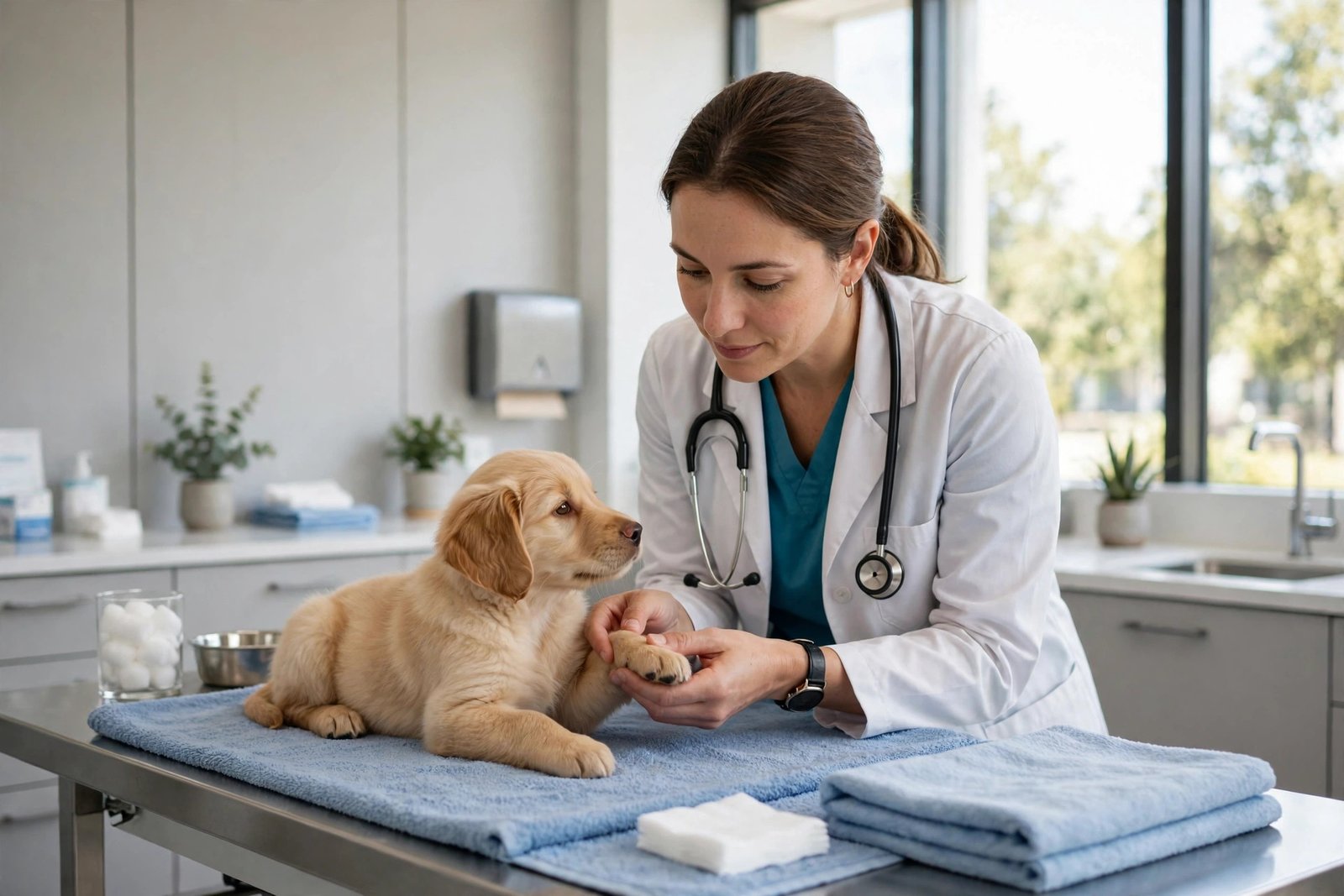
The veterinarian will examine your puppy from nose to tail. They will check weight and body condition, listen to the heart and lungs with a stethoscope, feel the abdomen, check the eyes, ears, nose, and mouth, look at the teeth and gums, examine the skin and coat for fleas or rashes, and check the legs and joints for pain or abnormalities. They will also check for a hernia, feel the lymph nodes, and, for male puppies, check that both testicles have descended. This exam establishes a baseline — what is normal for your puppy — so the vet can spot changes at future visits.
The vet will also ask about your puppy’s history: where they came from, what they eat, how they are eating and drinking, whether they have had vomiting or diarrhea, how housetraining is going, and whether they have been exposed to other dogs. Answer honestly, even if the answer is not perfect — vets have heard it all, and accurate information helps them give better advice.
Vaccinations
Vaccines are the most important part of the first visit. In the United States, the American Animal Hospital Association (AAHA) and the American Veterinary Medical Association (AVMA) recommend a core set of vaccines for all puppies, given in a series every 3 to 4 weeks until the puppy is 16 weeks old or older.
Core vaccines for puppies: Canine distemper, canine adenovirus (hepatitis), canine parvovirus, and rabies. The first three are usually given together in one combination vaccine, often called DHPP or DA2PP. Rabies is given once, usually at 12 to 16 weeks, and is required by law in most US states.
Non-core vaccines, depending on risk: Bordetella (kennel cough), canine influenza, leptospirosis, and Lyme disease. Your vet will recommend these based on where you live, whether your puppy will go to daycare, boarding, or dog parks, and local disease risk. For example, leptospirosis is more common in wet, rural areas, and Lyme disease is a bigger concern in the Northeast and upper Midwest.
Your puppy will need boosters at 12 weeks and 16 weeks, and sometimes a fourth visit, to build full immunity. Until the vaccine series is complete, avoid high-risk areas such as dog parks, pet stores, and sidewalks where many unknown dogs walk. Your vet will tell you when it is safe to start socializing more widely — usually a week after the final puppy vaccines.
Parasite Testing and Prevention
Most puppies have intestinal parasites, even if they look healthy. Roundworms and hookworms are extremely common, and they can be passed from mother to puppy before birth or through milk. The vet will test the stool sample you brought, and will usually deworm your puppy as a routine precaution even if the test is negative, because a single stool sample can miss parasites.
The vet will also talk about flea and tick prevention and heartworm prevention. In most of the United States, puppies should start heartworm prevention by 8 weeks old, and stay on it year-round. Flea and tick prevention depends on your region and season — in warm states such as Florida, Texas, and California, it is a year-round need; in colder states, it may be seasonal. Do not buy over-the-counter flea products without asking your vet first: some are ineffective, some are unsafe for puppies under a certain age or weight, and some dog products are toxic to cats in the household.
Microchip, Spay or Neuter, and Future Planning
Many vets recommend microchipping at the first or second visit. A microchip is a tiny device, about the size of a grain of rice, implanted under the skin between the shoulder blades. It carries a unique number linked to your contact information, and it greatly increases the chance your puppy will be returned if they are lost. The procedure is quick, similar to a vaccine injection, and costs $25 to $75 in most US clinics, sometimes including registration.
Your vet will also discuss spay or neuter timing. For most puppies, the recommendation is around 6 months old, but timing varies by breed and size — large and giant breeds may benefit from waiting until they are older, while small breeds are often spayed or neutered earlier. Our guide on when to spay or neuter covers the timing discussion for kittens, and your vet can explain the equivalent considerations for your puppy’s breed. The first visit is also a good time to ask about pet insurance, which is cheapest when your puppy is young and healthy.
How Much Does a Puppy’s First Vet Visit Cost?
Costs vary by location — vet care in New York City or San Francisco costs more than in a small town in the Midwest — but these are typical ranges in the United States in 2026:
Exam fee: $50 to $100. This is the basic charge for the physical exam and consultation.
Vaccines: $25 to $50 per vaccine, or $75 to $100 for a combination DHPP vaccine plus other shots given at the same visit.
Fecal test for parasites: $30 to $60.
Deworming medication: $10 to $30.
Microchip: $25 to $75, sometimes including registration.
Flea, tick, and heartworm prevention: $30 to $80 for the first month’s supply, depending on the product and your puppy’s size.
All together, a first puppy visit typically costs $75 to $200 if it includes an exam and vaccines, and $150 to $300 if it also includes a fecal test, deworming, microchip, and a month of preventives. If your puppy needs treatment for parasites, an ear infection, or another problem found at the exam, the cost will be higher. Many clinics offer puppy wellness packages that bundle the first three or four visits, all vaccines, deworming, and the fecal test for a flat fee of $250 to $500 — ask whether your clinic offers one, as it can save money and makes budgeting easier.
For a detailed breakdown of routine and emergency vet prices, including spay or neuter surgery, see our guide to how much a vet visit costs. If cost is a concern, ask your clinic about payment plans, CareCredit, or low-cost vaccination clinics in your area. Your local animal shelter and humane society often run low-cost vaccine clinics, and the cost of prevention is always far lower than the cost of treating parvovirus or heartworm disease.
How to Keep Your Puppy Calm at the Vet
Your puppy takes cues from you. If you are tense, your puppy will be tense. Stay calm, speak in a relaxed voice, and let your puppy explore the exam room before the vet starts. Bring treats and offer them throughout the visit, so your puppy associates the clinic with good things. Ask the vet and staff to go slowly, let your puppy sniff their hands first, and give your puppy a break if they become frightened.
Do not force your puppy onto the exam table if they are terrified — many vets will examine a small puppy on the floor or on your lap, which is perfectly fine. If your puppy is wiggly, hold them gently and securely rather than gripping them tightly. After the visit, take your puppy for a short walk or play session, and give them a special treat at home. A positive end to the visit helps them remember the vet as a place where good things happen.
If your puppy is sore after vaccines, that is normal. A small, tender lump at the injection site, mild lethargy, and a slightly reduced appetite for 24 hours are common side effects. Offer a comfortable place to rest, do not press on the injection site, and call your vet if your puppy develops facial swelling, vomiting, difficulty breathing, or a fever — these are rare signs of an allergic reaction and need urgent care.
What Comes After the First Visit?
The first visit is the start of a series, not a one-time event. Your puppy will need follow-up visits every 3 to 4 weeks until 16 weeks old for vaccine boosters, deworming, and growth checks. At 6 months, your vet will discuss spay or neuter surgery and adult dental care. After the puppy series, most healthy adult dogs need a wellness exam once a year, with vaccines as needed.
Between visits, keep a simple health notebook or phone note for your puppy: vaccine dates, weight at each visit, any medications, and any symptoms you notice. Bring it to every appointment. It helps your vet track growth and spot trends, and it helps you remember when boosters are due. Set reminders on your phone for the next vaccine appointment before you leave the clinic — it is easy to forget, and a missed booster can leave your puppy unprotected.
The first few weeks with a new puppy are busy, and vet visits are just one part of settling in. Our bringing home a puppy guide and first week checklist cover feeding, sleeping, housetraining, and socialization alongside vet care, so you can keep everything on track without feeling overwhelmed.
The Bottom Line
Your puppy’s first vet visit should happen within a few days of bringing them home. Bring health records, a fresh stool sample, a list of questions, and treats. Expect a full physical exam, the start of the vaccine series, parasite testing and deworming, and a conversation about feeding, prevention, microchipping, and spay or neuter timing. Budget $75 to $200 for a basic first visit in the United States, or $150 to $300 if it includes tests, microchip, and preventives, and ask about puppy wellness packages to save money over the first few months. Choose a vet who explains things clearly and treats your puppy gently, stay calm during the visit, and book the next booster appointment before you leave. A good first visit is an investment in your puppy’s health for the next 10 to 15 years. For authoritative vaccine guidance, the American Veterinary Medical Association’s puppy care resources at avma.org are a reliable reference.
Frequently Asked Questions
When should a puppy have their first vet visit?
Within a few days of bringing your puppy home, usually at 6 to 8 weeks old, or within 48 to 72 hours if you adopted an older puppy. If your puppy shows signs of illness, call the clinic right away rather than waiting.
How much does a puppy’s first vet visit cost?
In the US, a first visit typically costs $75 to $200 for an exam and vaccines, or $150 to $300 with a fecal test, deworming, microchip, and preventives. Prices vary by location, and many clinics offer puppy wellness packages for $250 to $500.
What vaccines does a puppy need at the first visit?
Core vaccines are distemper, adenovirus, parvovirus (usually combined as DHPP), and rabies at 12 to 16 weeks. Your vet may also recommend bordetella, leptospirosis, canine influenza, or Lyme disease depending on where you live and your puppy’s lifestyle.
What should I bring to my puppy’s first vet visit?
Bring health and vaccination records from the breeder or shelter, a fresh stool sample, a list of questions, your puppy’s current food, and small treats. Bring a leash or carrier and a blanket that smells like home.
Is it normal for a puppy to be sore after vaccines?
Yes. A small tender lump at the injection site, mild tiredness, and a reduced appetite for 24 hours are common. Call your vet urgently if your puppy develops facial swelling, vomiting, or difficulty breathing.
2 thoughts on “Puppy’s First Vet Visit: What to Expect and What It Costs”