
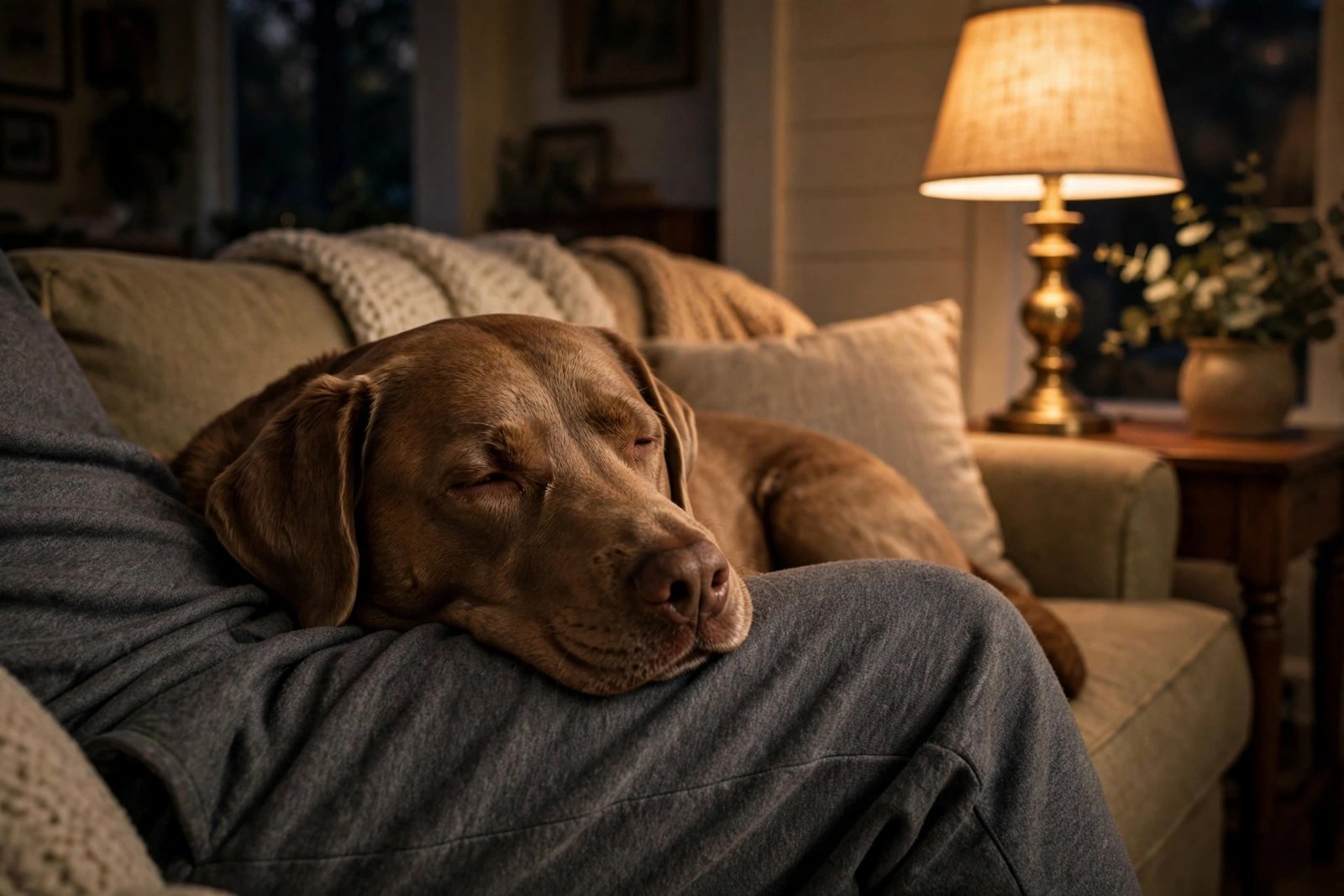
Learning how to calm dog during fireworks is essential for any dog owner in the United States. The Fourth of July is the biggest night of the year for lost and frightened dogs. Animal shelters across the country report that July 5 is their busiest intake day of the entire year, with thousands of dogs arriving after bolting from their homes in terror. New Year’s Eve, Memorial Day weekend, and local festivals add more fireworks nights throughout the year. A dog’s hearing is far more sensitive than ours, and the sudden booms, flashes, and vibrations of fireworks can trigger genuine panic: shaking, drooling, pacing, hiding, destructive chewing, and even jumping through windows or over fences. The good news is that you can make fireworks far less frightening for your dog. With preparation, a safe space, and the right calming techniques, most dogs get through fireworks night with far less stress.
This guide covers everything you need: what to do weeks before fireworks season, how to set up a safe room on the night itself, what to do in the moment when your dog panics, and when to talk to your veterinarian about medication. Whether your dog is mildly nervous or completely terrified, these proven tips will help. Start early. The best results come from preparation, not from scrambling at 9 p.m. on the Fourth of July.
Why Are Dogs So Afraid of Fireworks?
Dogs are afraid of fireworks for good reasons. First, their hearing is much sharper than ours. Dogs can hear sounds at frequencies up to 65,000 hertz, compared to about 20,000 hertz for humans, and they hear distant sounds about four times better. A firework that sounds loud to you sounds far louder and more shocking to your dog. Second, fireworks are unpredictable. Dogs cannot predict when the next boom will come, and they cannot understand what is causing it. Third, the flashes, the smell of gunpowder, and the vibrations through the floor all add to the sensory overload.
Some dogs are more sensitive than others. Herding breeds, hunting breeds, and rescue dogs with unknown histories are often more fearful. Puppies that were not exposed to loud noises during their socialization window, roughly 3 to 14 weeks of age, are more likely to develop noise phobia as adults. Fear of fireworks often gets worse with age if it is not addressed, because each bad experience reinforces the panic. That is why it is worth working on this problem every year, even if your dog only seems “a little nervous.”
Fireworks fear is not a training failure and it is not your dog being dramatic. It is a real, involuntary fear response, closer to a panic attack than to disobedience. The American Kennel Club’s guidance on calming dogs during fireworks stresses that punishment never helps a frightened dog and that comfort, preparation, and professional help are the right tools.
How to Calm Dog During Fireworks: Preparation Weeks Before
The best time to prepare for fireworks is weeks or months in advance, not the night before. If your dog has a serious fireworks phobia, talk to your veterinarian well ahead of the Fourth of July. Your vet can discuss medication options, such as situational anxiety medications, and can refer you to a veterinary behaviorist if needed. A behavior consultation typically costs $150 to $300 in the United States, and medication for a single fireworks night usually costs $20 to $60. That is a small price for a dog that would otherwise spend the night in terror.
Desensitization and Counterconditioning
Desensitization is the gold standard for treating noise phobia. It works by playing firework sounds at a very low volume while your dog does something pleasant, like eating treats or playing, and then gradually increasing the volume over many sessions. You can find free fireworks sound recordings on YouTube and Spotify, or buy a desensitization CD from a pet behavior supplier for $15 to $25.
Start at a volume so low your dog barely notices it. Play the sounds for 5 to 10 minutes while you feed your dog high-value treats: small pieces of cheese, hot dog, or freeze-dried liver. If your dog stays relaxed, increase the volume slightly at the next session. If your dog shows any sign of stress, such as lip licking, yawning, turning away, or freezing, turn the volume down and try again tomorrow. The process takes weeks, not days, so start in May or June for the Fourth of July. Never play the sounds loudly to “get your dog used to it.” Flooding a fearful dog with loud sounds makes the fear worse, not better.
Pair the sound work with a “safe place” routine. Teach your dog that a specific bed, crate, or room is the best place in the house. Feed meals there, give long-lasting chews there, and practice settling there on cue. On fireworks night, your dog will already know where to go. For puppies still learning about the world, our guide on how to socialize a puppy covers the early noise exposure that prevents fireworks phobia from developing in the first place.
Try Calming Products in Advance
Do not try a new calming product for the first time on fireworks night. Test it on a normal evening a week or two before, so you know how your dog reacts. Common options include calming music designed for dogs, pheromone diffusers such as Adaptil, which costs about $25 to $35 for a diffuser and refill, and anxiety wraps such as the Thundershirt, which costs about $40 to $50 depending on size. Some owners use calming supplements containing L-theanine or melatonin, which cost $10 to $20, but check with your veterinarian before giving any supplement, especially if your dog takes other medication.
Calming music deserves a special mention. Studies and shelter experience show that classical music, soft rock, and music specifically composed for dogs can lower heart rate and reduce stress behaviors. Make a playlist before the holiday and test it on a normal evening. On fireworks night, play it at a comfortable volume in your dog’s safe room to mask the sound of the booms.
Update ID Tags and Microchip Information
Before fireworks season, check that your dog’s collar fits and the ID tag is readable. Make sure your microchip registration is up to date with your current phone number. If your dog is not microchipped, ask your veterinarian about it. Microchipping costs $25 to $50 at most clinics in the United States, and many shelters and rescue groups offer low-cost microchip clinics for $15 to $25. A microchip is the single best way to get a lost dog back, and fireworks night is the night dogs are most likely to run.
Setting Up a Safe Room for Fireworks Night
A safe room is the single most important thing you can do on fireworks night. Choose an interior room with as few windows as possible, such as a basement room, a bathroom, or a bedroom in the center of the house. Close the curtains or blinds to block the flashes. Turn on the television, a fan, or calming music to mask the sound. Put your dog’s bed or crate in the room, along with water, a few favorite toys, and a long-lasting chew such as a stuffed Kong or a bully stick.
Stay with your dog if you can. Your calm presence is the most powerful calming tool you have. Sit on the floor, read a book, and let your dog lean against you. Do not try to force your dog to “face their fear” by taking them outside to watch the fireworks. Do not drag a hiding dog out from under the bed. Let your dog choose where to be in the safe room. If they want to hide in the closet, let them. If they want to press against you on the sofa, let them.
Exercise your dog earlier in the day. A long walk, a game of fetch, or a swim in the morning will tire your dog out and help them rest during the fireworks. Feed dinner a little earlier than usual, and give your dog a bathroom break well before dark, before the fireworks start. Once the fireworks begin, keep your dog indoors. Even a fenced yard is not safe, because a panicked dog can jump or dig under a fence that has always held them before.
What to Do in the Moment When Fireworks Start
When the first booms start, stay calm. Your dog reads your body language. If you jump up, rush around, or fuss over your dog in a worried voice, your dog learns that something really is wrong. Speak in a normal, cheerful voice. Offer treats and play as if nothing unusual is happening. This is not “rewarding fear.” You cannot reinforce an emotion with a treat. You are teaching your dog that good things happen even when fireworks are going off.
Give your dog something to do. A stuffed Kong, a lick mat smeared with peanut butter, or a puzzle feeder keeps a dog’s brain busy and reduces anxiety. Licking is naturally calming for dogs, so a lick mat is one of the best tools for fireworks night. Freeze the Kong or lick mat in advance so it lasts longer. Rotate in a new chew every 30 to 45 minutes to keep your dog occupied through the worst of the noise.
Put on the anxiety wrap or Thundershirt if your dog has one and is used to it. The gentle, constant pressure can help some dogs feel more secure, similar to swaddling a baby. It does not work for every dog, but for the dogs it helps, it helps a lot. Do not put it on for the first time during fireworks. Your dog needs to be comfortable wearing it on a normal day first.
If your dog panics despite your preparation, do not punish them. Do not scold a dog for shaking, drooling, pacing, or hiding. Do not try to hold a panicking dog still unless they are in immediate danger. Stay nearby, speak softly, and let the panic pass. If your dog is destroying furniture, trying to escape through a window, or hurting themselves, call your veterinarian or an emergency vet clinic for advice. Severe panic can be dangerous, and your dog may need medication even on the night itself.
Medication Options: When to Talk to Your Vet
For dogs with moderate to severe fireworks anxiety, medication is often the kindest option. It is not a failure, and it is not “drugging your dog.” It is medical treatment for a real fear disorder. Your veterinarian may prescribe a situational anxiety medication such as trazodone, gabapentin, or a fast-acting medication like Sileo, which is FDA-approved specifically for noise aversion in dogs. Sileo is applied to the gums and starts working in about 30 minutes. A dose costs roughly $25 to $40 depending on your dog’s size.
Talk to your vet at least two weeks before fireworks season so you can do a trial dose on a normal evening. Every dog responds differently, and your vet needs to know the right dose for your dog’s size, age, and health. Some medications make dogs drowsy, and that is expected. A drowsy dog is a dog that is not panicking. Never use leftover medication from another dog, never use human anxiety medication, and never give your dog Benadryl as a sedative without asking your vet first. Benadryl does not reliably calm dogs, and it can cause the opposite effect in some dogs.
If your dog’s fireworks fear is severe or getting worse every year, ask for a referral to a board-certified veterinary behaviorist. You can find one through the American College of Veterinary Behaviorists. A behaviorist can build a full treatment plan that combines medication, desensitization, and long-term behavior modification. It costs more upfront, but it can transform your dog’s quality of life for every fireworks season to come.
After the Fireworks: The Morning After
Do not let your guard down when the noise stops. The morning after the Fourth of July is one of the most common times for dogs to go missing. Fireworks debris, including spent firework casings and unexploded fireworks, can be lying on sidewalks and in yards. Spent fireworks contain chemicals that are toxic if eaten, and unexploded fireworks can go off if a dog picks them up. Walk your dog on a leash the next morning and scan the ground ahead. Check your yard for debris before letting your dog out unsupervised.
Keep your dog’s ID tag and microchip information current all year, not just on the Fourth. If your dog did escape, check with your local animal shelter and post on local lost-pet groups right away. Many shelters waive or reduce reclaim fees during the July 5 surge, and most lost dogs are found within a few miles of home. For more on preparing for pet emergencies of every kind, read our guide on why every pet owner needs an emergency plan.
Fireworks Safety for Dogs at Outdoor Events
The simplest rule is this: leave your dog at home. Even a dog that seems fine with fireworks can panic at a crowded public display, where the booms are louder and the dog cannot escape. Dogs have been lost, injured, and even killed at public fireworks shows. If you must bring your dog to an outdoor event, keep them on a secure leash and harness, never a retractable leash, and stay far from the launch area. Bring water, and watch for signs of heat exhaustion in summer. But honestly, the best fireworks plan for a dog is a quiet evening at home with their favorite person.
If your neighbors set off fireworks for days before and after the holiday, talk to them if you have a good relationship. A friendly heads-up, such as “We have a dog that is terrified of fireworks, could you let us know when you plan to set them off?” often works. Some neighborhoods agree on a single fireworks window, which is far easier on pets than random booms for a week. Check your local laws too. Many cities and counties in the United States restrict fireworks to certain dates, and your local animal control or non-emergency police line can help if someone is setting off illegal fireworks late at night.
Helping a Dog With Separation Anxiety During Fireworks
Dogs with separation anxiety have a harder time on fireworks night, because the noise adds to the stress of being alone. If you must leave your dog alone during fireworks, set up the safe room, leave the television or music on, and consider a pet camera so you can check in. A camera that lets you talk to your dog, such as a Furbo, costs about $100 to $200 and can be useful year-round. But the best option is to stay home, or to arrange for a trusted friend, family member, or pet sitter to stay with your dog. Our guide on dog separation anxiety solutions covers long-term strategies that also help on fireworks night, including independence training and gradual desensitization to departures.
If you are traveling over the Fourth of July, plan your dog’s care carefully. Boarding facilities can be loud and stressful during fireworks, so ask how they handle the holiday. A pet sitter who stays in your home is often the calmest option. Read our guide on traveling with a dog by car if you are taking your dog with you, and bring their bed, familiar toys, and calming supplies along.
Frequently Asked Questions
Should I comfort my dog during fireworks or will that make it worse?
Comfort your dog. You cannot reinforce fear with comfort or treats. A calm, reassuring presence and gentle petting help your dog feel safe. What does make it worse is panicking yourself, punishing your dog for being afraid, or forcing them to face the noise.
What is the best medication to calm a dog during fireworks?
There is no single best medication for every dog. Veterinarians commonly prescribe trazodone, gabapentin, or Sileo, which is FDA-approved for noise aversion. The right choice depends on your dog’s size, age, health, and anxiety level. Talk to your vet at least two weeks before fireworks season and do a trial dose first.
Does a Thundershirt really work for fireworks anxiety?
It works for some dogs and not for others. Studies and owner reports suggest it helps roughly half of dogs that try it, especially when combined with other strategies like a safe room and calming music. It is worth trying, but buy it weeks in advance and let your dog get used to wearing it on normal days first.
Can I take my dog outside during fireworks if they seem okay?
It is risky. Even a calm dog can bolt at a sudden loud boom, and a frightened dog can clear a fence or slip a collar. Keep your dog indoors during fireworks, and take them out on a leash for bathroom breaks before the fireworks start and after they end.
How do I help my puppy not be afraid of fireworks?
Expose your puppy to firework sounds at a low volume during their socialization window, between 3 and 14 weeks of age, while feeding treats and playing. Pair the sounds with positive experiences, increase the volume very gradually over weeks, and never scare your puppy on purpose. Early positive exposure prevents phobia from developing.
Fireworks night does not have to be the worst night of your dog’s year. With a safe room, calming music, something good to chew, and a plan made weeks in advance, most dogs get through it with far less fear. Start your preparation early, talk to your veterinarian if your dog’s anxiety is severe, and stay calm yourself. Your dog takes their cues from you, and a relaxed owner is the best calming tool of all. Next Fourth of July, you will both be ready.