
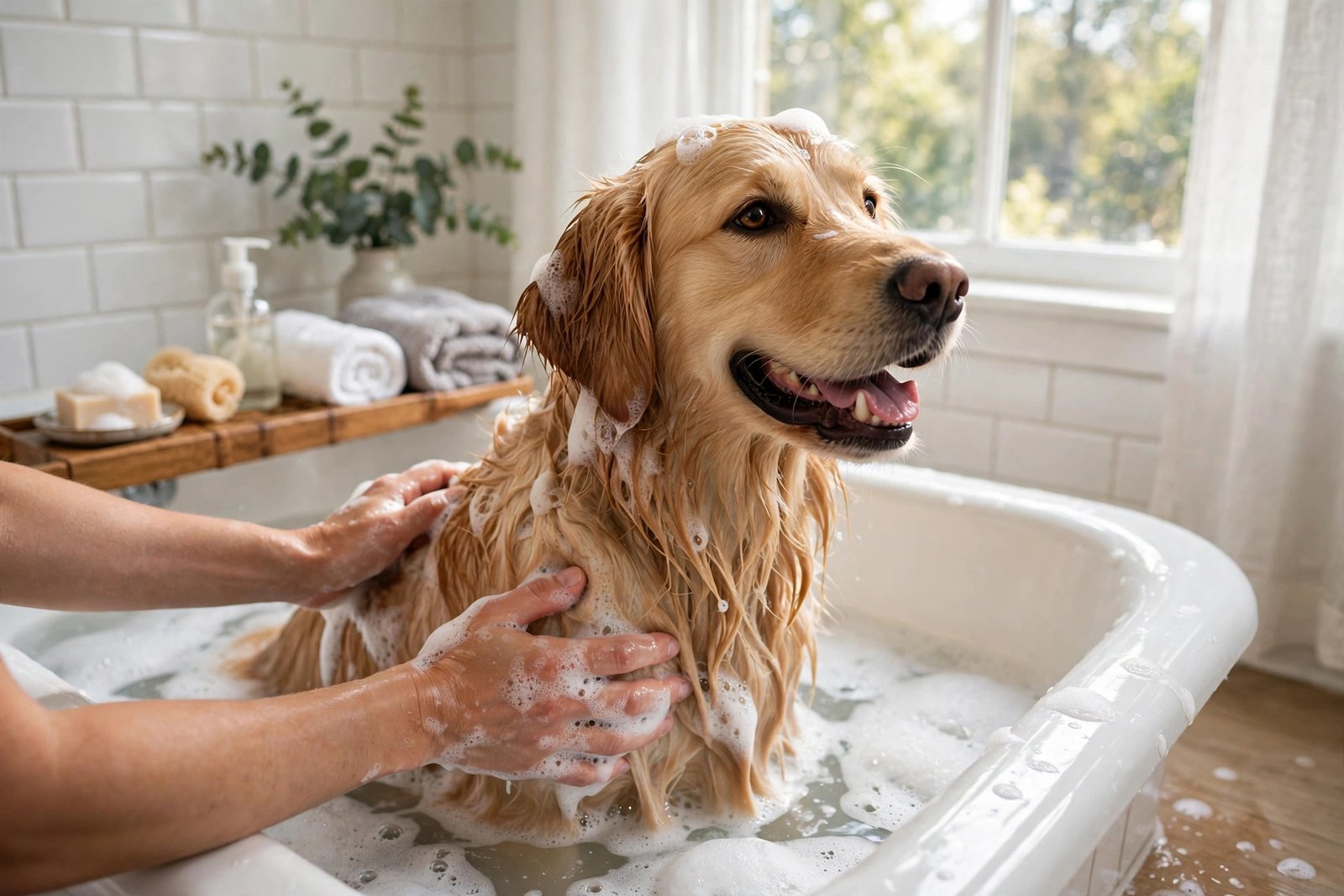
How often should you bathe your dog? It is one of the most common questions dog owners ask their veterinarian, and the honest answer is: it depends. A short-haired Beagle that spends most of its time indoors needs a bath far less often than a shaggy Doodle that swims in a lake every weekend. Bathe your dog too rarely and they get smelly, itchy, and matted. Bathe them too often with the wrong shampoo and you can strip the natural oils from their skin and coat, causing dryness, flaking, and irritation. The good news is that there is a simple way to find the right schedule for your dog, and this guide will walk you through it step by step.
In this article, you will learn the general bathing guidelines veterinarians and groomers recommend, how to adjust the schedule for your dog’s breed, coat type, skin condition, and lifestyle, how to choose a safe shampoo, and how to give a proper bath at home without the wrestling match. You will also learn the warning signs that mean your dog needs a bath more often, or less often, and when a skin problem needs a veterinarian instead of a bottle of shampoo.
The Short Answer: How Often Should You Bathe Your Dog?
For most healthy adult dogs, a bath every 4 to 6 weeks is a good starting point. That is the schedule recommended by many veterinarians and professional groomers in the United States, and it works well for the average indoor dog with a normal coat. Dogs with short, smooth coats, such as Beagles, Boxers, and Labrador Retrievers, can often go 6 to 8 weeks between baths. Dogs with long, curly, or double coats, such as Poodles, Doodles, Golden Retrievers, and Huskies, usually need a bath every 3 to 4 weeks to prevent matting and keep the coat healthy.
But the calendar is only a starting point. Your dog’s real bathing schedule should be based on how they look, smell, and feel. If your dog smells like a dog, has a dull or greasy coat, or is scratching more than usual, it is time for a bath. If your dog’s coat is shiny, their skin is calm, and they do not smell, you can wait. A good rule of thumb: bathe your dog when they need it, not on a rigid schedule, and never bathe them just because you think you should.
The American Kennel Club’s guidance on bathing frequency agrees that the right interval depends on breed, coat, and lifestyle, and that over-bathing with harsh products is a bigger risk than under-bathing for most dogs. The key is using a dog-specific shampoo and a gentle technique, which this guide covers below.
Bathing Frequency by Breed and Coat Type
Coat type is the biggest factor in how often your dog needs a bath. Here is a practical breakdown.
Short, Smooth Coats: Every 6 to 8 Weeks
Beagles, Boxers, Dalmatians, French Bulldogs, and Labrador Retrievers have short, smooth coats that do not trap much dirt. A quick brush once a week and a bath every 6 to 8 weeks is usually enough. These dogs are also the easiest to bathe, because their coats dry quickly and do not mat. Watch out for skin folds in breeds like Bulldogs and French Bulldogs. The folds need to be cleaned and dried regularly, even between baths, to prevent yeast and bacterial infections.
Medium and Double Coats: Every 4 to 6 Weeks
Golden Retrievers, German Shepherds, Australian Shepherds, and Huskies have medium or double coats that shed heavily and trap dirt, pollen, and loose fur. A bath every 4 to 6 weeks, combined with brushing 2 to 3 times a week, keeps the coat healthy and reduces shedding around the house. Huskies and other double-coated breeds should never be shaved. Their double coat regulates temperature in both summer and winter, and shaving it can cause permanent coat damage. A bath and a thorough blow-dry, often called a “blow-out” at the groomer, is the right way to manage a double coat.
Long, Curly, or Continuously Growing Coats: Every 3 to 4 Weeks
Poodles, Doodles, Shih Tzus, Maltese, and Bichon Frises have hair that grows continuously and mats easily. These dogs need a bath every 3 to 4 weeks, along with brushing every day or every other day. If you skip baths, the coat mats close to the skin, which is painful and can hide skin infections. Many owners of these breeds use a professional groomer every 4 to 6 weeks, which costs $50 to $100 per visit in most parts of the United States, and give a maintenance bath at home in between.
Hairless and Wrinkled Breeds: Every 1 to 2 Weeks
Chinese Crested dogs, Xoloitzcuintli, and Sphynx cats have little or no hair, so their skin needs more frequent care. Hairless dogs often need a bath every 1 to 2 weeks to remove oil buildup and prevent blackheads and acne. Use a very gentle, moisturizing shampoo and follow with a dog-safe moisturizer if your veterinarian recommends one. Shar-Peis and Bulldogs need their skin folds cleaned and dried several times a week, even if a full bath is less frequent.
Other Factors That Change the Bathing Schedule
Your Dog’s Lifestyle
An indoor dog that sleeps on the sofa and walks on sidewalks needs far fewer baths than an outdoor dog that hikes, swims, and rolls in mud. If your dog swims in a lake, a river, or the ocean, rinse them with clean water after every swim, and give them a full bath with shampoo if they smell like algae or lake water. Salt water and lake water can dry out the skin and coat, so a rinse matters even when a full bath does not.
Dogs that go to dog parks, daycare, or the groomer regularly may need baths more often, simply because they pick up smells and dirt from other dogs. Farm dogs, hunting dogs, and dogs that roll in smelly things, which is most dogs at some point, need a bath whenever they get into something. There is no schedule for a dog that just rolled in a dead fish. That is an immediate bath, and every dog owner knows the look.
Your Dog’s Skin and Health
Dogs with allergies, skin infections, or hot spots often need medicated baths on a schedule prescribed by their veterinarian, sometimes as often as twice a week. Medicated shampoos containing chlorhexidine, ketoconazole, or oatmeal are commonly prescribed in the United States and cost $15 to $30 per bottle. Always follow your veterinarian’s instructions for medicated baths, including how long to leave the shampoo on, usually 5 to 10 minutes, before rinsing.
Puppies need baths less often than adult dogs, because their skin is sensitive and they are still building up their natural oils. A puppy can usually go 6 to 8 weeks between baths, unless they get into a mess. Use a puppy-specific shampoo, which is gentler than adult formulas, and keep the water warm but not hot. Senior dogs also need gentler, less frequent baths, and you should watch for arthritis or mobility problems that make standing in a tub uncomfortable. A non-slip mat in the tub is essential for older dogs.
The Season
Season matters more than most owners realize. In summer, dogs sweat through their paw pads, swim more, and pick up pollen and dust, so they may need baths every 3 to 4 weeks. In winter, dry indoor air and cold weather can dry out the skin, so stretching baths to every 6 to 8 weeks and using a moisturizing shampoo is often better. Winter also brings salt and de-icers on sidewalks, which irritate paws. Rinse your dog’s paws after every winter walk, even if you skip a full bath. Our guide on winter paw care for dogs covers paw rinses, balms, and booties in detail.
Signs Your Dog Needs a Bath
Your dog will tell you when it is bath time, if you know what to look for. The most obvious sign is smell. A healthy dog has a mild doggy smell, but a strong, sour, or yeasty odor usually means it is time for a bath, or that your dog has a skin problem that needs a vet. A dull, greasy, or flaky coat is another sign. Run your hands through your dog’s coat. If it feels oily, sticky, or gritty, a bath will help.
Excessive scratching, licking, or chewing can mean your dog’s skin is irritated by dirt, pollen, or allergens, and a bath can wash the irritants away. But if the itching continues after a bath, or if you see redness, sores, hair loss, or a rash, see your veterinarian. Those are signs of allergies, a skin infection, or parasites, not just a dirty dog. Flea and tick problems also show up as itching and skin irritation. If you suspect parasites, read our guide on flea and tick prevention and talk to your veterinarian about the right treatment for your area.
Choosing the Right Shampoo for Your Dog
Never use human shampoo on your dog, not even baby shampoo. Human skin has a pH of about 5.5, while dog skin has a pH of about 6.5 to 7.5. Human shampoo is too acidic for dogs and can dry out their skin, cause irritation, and disrupt the skin barrier. Always use a shampoo made specifically for dogs. Good dog shampoos cost $10 to $25 at pet stores like Petco and PetSmart, or on Chewy and Amazon, and a single bottle lasts for months.
For a normal, healthy dog, a gentle oatmeal shampoo is a great all-purpose choice. Oatmeal soothes the skin and adds moisture. For dogs with dry or flaky skin, look for a moisturizing shampoo with coconut oil, aloe vera, or shea butter. For dogs with allergies, a hypoallergenic shampoo with no fragrance or dyes is best. For puppies, use a puppy-specific formula, which is tear-free and extra gentle. Avoid shampoos with harsh chemicals, artificial fragrances, or flea-killing ingredients unless your veterinarian recommends them. Flea shampoos are not a substitute for proper flea prevention.
If your dog has a skin condition, your veterinarian may prescribe a medicated shampoo. Use it exactly as directed. Medicated shampoos need to sit on the skin for several minutes to work, so be patient and keep your dog calm during the wait. Reward them with treats during the bath so they learn that bath time is a good thing.
How to Bathe Your Dog at Home: Step by Step
Bathing a dog at home is simple once you have a routine. Gather everything before you start: shampoo, towels, a non-slip mat, a cup or a handheld shower head, and treats. Put cotton balls gently in your dog’s ears to keep water out, and brush your dog before the bath to remove tangles and loose fur. Brushing a matted dog before a bath prevents the mats from tightening into painful knots.
Step 1: Wet the Coat Thoroughly
Use lukewarm water, about the temperature you would use for a baby’s bath. Wet your dog from the neck down, avoiding the head and ears at first. A handheld shower head or a large cup works well. Make sure the coat is fully wet, all the way to the skin, especially for thick-coated dogs. This can take a minute or two for a Husky or a Golden Retriever.
Step 2: Shampoo and Massage
Apply a line of shampoo along your dog’s back and massage it into a lather, working from the neck to the tail and down the legs. Use your fingertips, not your nails. Wash the belly, the armpits, and between the toes, where dirt and yeast build up. Save the head and face for last, using a small amount of shampoo on a washcloth or your hand, and keep shampoo out of the eyes. If your dog has a skin condition, follow the contact time your veterinarian recommended.
Step 3: Rinse, Rinse, Rinse
Rinse thoroughly, until the water runs completely clear and you cannot feel any soap in the coat. Leftover shampoo is one of the most common causes of itching after a bath. Rinse at least twice as long as you think you need to, especially for thick-coated dogs. A handheld shower head makes rinsing far easier than a cup.
Step 4: Dry Properly
Towel dry first, then let your dog shake, then towel dry again. For short-coated dogs, air drying in a warm room is fine. For long or thick-coated dogs, use a hair dryer on the lowest heat setting, held at least 12 inches away, and brush while you dry to prevent tangles. Never use a high-heat dryer on a dog. It can burn the skin and cause stress. In winter, make sure your dog is completely dry before going outside. A damp dog in cold weather can get chilled quickly.
Reward your dog with a treat and praise after the bath. If bath time is always followed by something good, your dog will learn to tolerate it, and some dogs even learn to enjoy it. Keep the whole bath to 15 to 20 minutes for most dogs. Longer baths are stressful and unnecessary.
Common Bathing Mistakes to Avoid
Bathing too often with the wrong shampoo. Bathing every week with a harsh shampoo strips natural oils and dries out the skin. If your dog needs frequent baths, use a gentle, moisturizing shampoo and consider a leave-in conditioner. In the United States, brands like Earthbath, Burt’s Bees for Dogs, and TropiClean make gentle formulas that are widely available.
Using water that is too hot or too cold. Dogs are sensitive to temperature. Lukewarm water is right. Hot water can burn the skin and cause stress, and cold water is unpleasant and can chill a small or senior dog.
Getting water in the ears. Water trapped in the ear canal can cause ear infections, especially in floppy-eared breeds like Cocker Spaniels and Basset Hounds. Put cotton balls in the ears before the bath and dry the ears gently afterward. If your dog shakes their head, scratches their ears, or has a smelly discharge, see your veterinarian.
Skipping the rinse. Shampoo residue causes itching, flaking, and irritation. Rinse until the water is clear and the coat feels squeaky clean, not slippery.
Bathing a matted dog. Water tightens mats and makes them worse. Always brush out tangles and mats before the bath. If the mats are severe, take your dog to a professional groomer. Cutting mats out yourself is dangerous, because it is easy to cut the skin underneath.
Bathing right after flea or tick treatment. Most topical flea and tick treatments need 24 to 48 hours to spread across the skin and become effective. Bathing too soon can wash the treatment off. Check the product label or ask your veterinarian before bathing a recently treated dog.
When to Use a Professional Groomer Instead
Home baths are great for maintenance, but some dogs need a professional groomer. Dogs with long, curly, or continuously growing coats need regular haircuts that are hard to do at home. Dogs with severe matting, skin conditions, or anxiety about bathing are often safer and more comfortable with a groomer who has the right tools and experience. A full grooming session in the United States typically costs $40 to $100 depending on your dog’s size, coat, and location, and it usually includes a bath, a haircut, nail trimming, ear cleaning, and a blow-dry.
Choose a groomer who is patient with nervous dogs, uses gentle handling, and is willing to let you stay for the first visit. Ask about their experience with your dog’s breed. A good groomer will tell you how often your dog should come in and what you should do at home between visits. If your dog is anxious about grooming, read our guide on dog separation anxiety solutions, because many of the same calming techniques, such as gradual exposure and positive reinforcement, help anxious dogs at the groomer too.
Bathing and Your Dog’s Overall Health
Bathing is one part of your dog’s overall grooming and health routine. Regular brushing, nail trimming, ear cleaning, and dental care matter just as much. While you bathe your dog, take the opportunity to check their skin for lumps, bumps, rashes, ticks, or fleas. Early detection of a skin problem, a lump, or a parasite saves money and stress later. If you find something unusual, take a photo and show your veterinarian at the next visit, or call sooner if it looks urgent.
Good nutrition also affects the coat. A dog that eats a high-quality diet with omega-3 and omega-6 fatty acids will have a shinier, healthier coat and may need fewer baths. If your dog’s coat is dull, dry, or shedding excessively despite regular baths, ask your veterinarian about their diet. Sometimes a coat problem is a nutrition problem, not a bathing problem. Our guide on is pet insurance worth it can help you plan for the cost of vet visits, including skin and allergy care, so a surprise skin problem does not become a financial crisis.
Frequently Asked Questions
Can I bathe my dog once a week?
You can, if you use a gentle, dog-specific shampoo and your dog’s skin stays healthy. Weekly baths are fine for dogs that get dirty often, such as active outdoor dogs or dogs with allergies on a vet-prescribed schedule. But weekly baths with a harsh shampoo can dry out the skin, so watch for flaking, redness, or itching and space baths out if you see them.
Is it okay to bathe my dog with dish soap?
No, not as a regular practice. Dish soap strips natural oils from the skin and coat and can cause severe dryness and irritation. It is sometimes used once in an emergency, such as after a skunk spray or an oil spill, but it should never replace a proper dog shampoo.
How often should I bathe a puppy?
Puppies usually need a bath every 6 to 8 weeks, unless they get into a mess. Use a puppy-specific, tear-free shampoo and lukewarm water. Keep the bath short and positive, and dry your puppy thoroughly afterward so they do not get chilled.
How often should I bathe a dog with allergies?
Dogs with allergies often need more frequent baths, sometimes twice a week, with a medicated or hypoallergenic shampoo prescribed by their veterinarian. The bath washes allergens like pollen and dust off the skin. Always follow your vet’s schedule and contact time for medicated shampoos.
Can I bathe my dog in winter?
Yes, but take extra care. Use a moisturizing shampoo, keep the bath short, dry your dog completely before going outside, and consider stretching baths to every 6 to 8 weeks in winter. Rinse your dog’s paws after every walk to remove salt and de-icers, even when you skip a full bath.
So, how often should you bathe your dog? For most dogs, every 4 to 6 weeks is the sweet spot, adjusted for coat type, lifestyle, season, and skin health. Pay attention to your dog’s coat and skin, use a gentle dog-specific shampoo, rinse thoroughly, and dry properly. Bathing is not just about smell. It is a chance to check your dog’s health, strengthen your bond, and keep their coat in the best condition possible. Find the rhythm that works for your dog, and stick with it.