
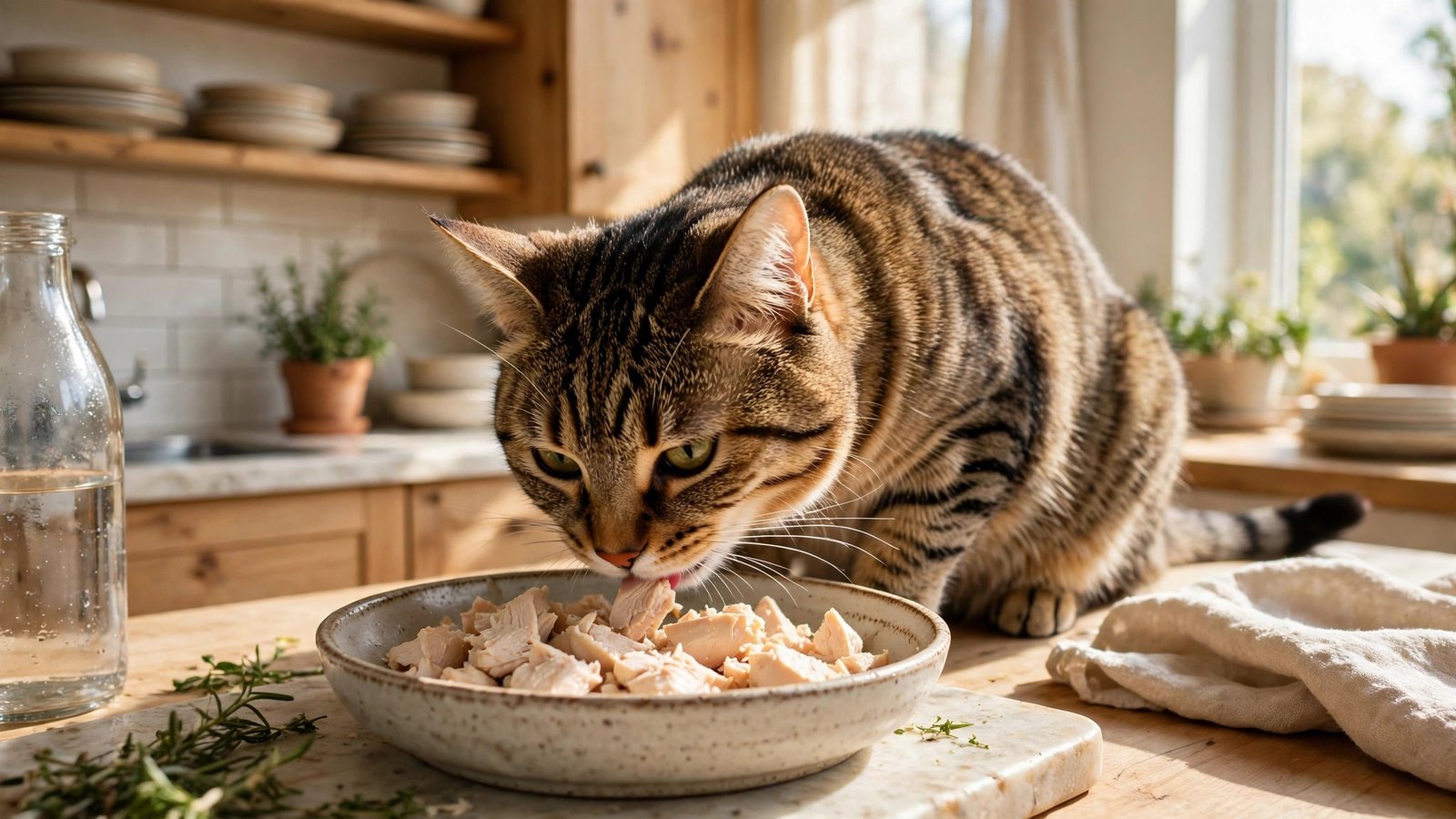
Chicken is the first ingredient in countless cat foods, so it is natural to ask: can cats eat chicken straight from your kitchen? The answer is yes — plain, cooked, boneless chicken is one of the safest and healthiest human foods you can offer your cat. Cats are obligate carnivores, which means their bodies are built to run on animal protein, and chicken delivers exactly that: lean protein, essential amino acids, and nutrients that support muscle, vision, and heart health. But the chicken on your dinner plate is not always cat-safe. Fried chicken, rotisserie chicken skin, seasoned or marinated chicken, and any chicken with bones attached can all cause problems. This guide explains how to serve chicken safely, how much is appropriate, what to avoid, and when a vet visit is warranted.
Can Cats Eat Chicken? The Short Answer
Yes, cats can eat chicken — as long as it is cooked thoroughly, served plain, and free of bones, skin, fat, and seasoning. Plain boiled, baked, grilled, or poached chicken breast is an excellent occasional treat or meal topper for most healthy cats. It is the same protein many commercial cat foods are built around, just in its simplest form.
Chicken should be a supplement to a complete and balanced cat food, not a replacement for it. Cats need a precise balance of nutrients — including taurine, arachidonic acid, vitamin A, and vitamin D — that plain chicken alone does not provide in the right amounts. The 10 percent rule applies here too: treats, including chicken, should make up no more than 10 percent of your cat’s daily calories. A typical adult cat eats roughly 200 to 250 calories per day, and a single ounce of cooked chicken breast contains about 45 calories, so a little goes a long way.
The forms of chicken to avoid are just as important as the safe ones. Raw chicken, bones, skin, fried coatings, and seasoning blends are all off the table, and we cover each of them in detail below.
Why Chicken Is Good for Cats
Cats are obligate carnivores, meaning they must eat meat to survive. Unlike dogs, cats cannot produce certain nutrients on their own and must get them from animal tissue. Chicken is a natural fit for their biology:
Complete protein. Chicken provides all the essential amino acids cats need, including taurine, which is critical for heart function, vision, and reproduction. Taurine deficiency can cause serious heart disease (dilated cardiomyopathy) and blindness, which is why it is added to every complete cat food. Chicken is a good natural source of taurine, especially dark meat and hearts.
Lean and digestible. Skinless chicken breast is low in fat and highly digestible, making it gentle on sensitive stomachs. It is often one of the first proteins veterinarians recommend in a bland or elimination diet when a cat has digestive issues or a suspected food sensitivity.
Vitamins and minerals. Chicken supplies B vitamins (niacin, B6, and B12), which support energy metabolism and nervous system health, plus phosphorus for bones and teeth, selenium for immune function, and zinc for skin and coat health.
Hydration support. Boiled or poached chicken retains moisture, and the cooking liquid (unsalted, unseasoned broth made from the chicken itself) can encourage cats to drink more — helpful for cats prone to urinary issues. Just be sure the broth contains no onion, garlic, or added salt.
For cats that turn their nose up at kibble, a few shreds of warm chicken mixed into their regular food can tempt them to eat. If your cat is a fussy eater, you may also want to check our guide to the best cat food for hairballs, since hairball issues and picky eating often show up together in indoor cats.
Can Cats Eat Raw Chicken?
No, raw chicken is not recommended for cats. Raw chicken can carry salmonella and campylobacter, bacteria that cause vomiting, diarrhea, fever, and lethargy. Cats can also carry these bacteria without symptoms and spread them to people in the household through their stool, litter box, or saliva — a particular concern for households with children, elderly people, or anyone with a weakened immune system.
Some raw-feeding advocates argue that cats evolved eating raw prey, and it is true that a healthy cat’s digestive system is more acidic than a human’s. But the American Veterinary Medical Association (AVMA) advises against raw meat diets for pets because of the documented risk of bacterial contamination, for both the animal and the humans around it. Commercially prepared raw diets are not risk-free either.
If your cat steals a small piece of raw chicken, do not panic — monitor them for vomiting, diarrhea, or lethargy over the next 24 to 72 hours and call your veterinarian if symptoms appear. Do not make raw chicken a regular part of their diet.
How to Cook Chicken for Your Cat
The rule is simple: plain, fully cooked, and boneless. These methods all work well:
Boiled chicken
Boiling is the easiest and safest method. Place boneless, skinless chicken breast in a pot of plain water, bring to a boil, then simmer for 15 to 20 minutes until the internal temperature reaches 165°F (74°C) and the meat is white all the way through with no pink. Let it cool, then shred or dice it into small, cat-sized pieces. The cooking water, once cooled, can be offered as a light broth if it contains no salt or seasoning.
Baked or grilled chicken
Bake or grill boneless, skinless chicken breast at 375°F until it reaches 165°F internally. Do not use oil, butter, marinades, rubs, or sauces. Let it cool completely, then cut it into small pieces. Remove any browned or charred edges, which can be hard to digest.
Poached chicken
Poaching in simmering water keeps the chicken moist without added fat. Cook until the center reaches 165°F, cool, and shred. Poached chicken is a good choice for senior cats or cats with dental problems, since it is soft and easy to chew.
Always use a food thermometer if you are unsure, and always let the chicken cool to room temperature before serving. Cut pieces small enough for your cat to eat comfortably — about the size of a pea is ideal. Never serve chicken straight from the oven or microwave.
How Much Chicken Can a Cat Eat?
Portion size matters because cats are small and their calorie budgets are tight. A typical indoor adult cat needs roughly 200 to 250 calories per day. One ounce of cooked chicken breast has about 45 calories, so even a small serving is a meaningful share of the day’s intake.
Kittens: a few tiny shreds as an occasional treat only. Kittens need a carefully balanced kitten food for growth, and treats should stay under 10 percent of daily calories. Our kitten feeding schedule by age explains how to structure meals and treats as your kitten grows.
Adult cats: one to two tablespoons of diced cooked chicken, a few times per week, is plenty. If you use chicken as a meal topper, reduce the regular food by an equivalent amount to avoid weight gain.
Senior cats: small, soft portions of poached or boiled chicken can help seniors with reduced appetite or dental issues. Check with your veterinarian if your senior cat has kidney disease, since protein levels may need to be managed.
Overfeeding chicken — or any treat — is one of the most common causes of weight gain in indoor cats. An overweight cat faces higher risks of diabetes, arthritis, and urinary problems, so keep servings modest and consistent.
What to Avoid: Bones, Skin, Seasoning, and More
Most chicken-related emergencies in cats come not from the meat itself but from what comes with it. Keep these off your cat’s plate:
Cooked bones. Cooked chicken bones splinter easily and can puncture the mouth, throat, stomach, or intestines. They are a choking hazard and can cause a life-threatening intestinal blockage or perforation. Never give your cat a chicken wing, drumstick, or any bone-in piece, and keep cooked bones out of the trash where a curious cat might find them.
Raw bones. Even raw bones are not recommended for cats by most veterinarians, since they can still splinter, break teeth, or cause blockages. The safest choice is boneless meat only.
Skin and fat. Chicken skin is high in fat and can trigger vomiting, diarrhea, or pancreatitis, a painful inflammation of the pancreas. Always remove the skin before serving, and trim visible fat.
Seasoning and marinades. Salt, pepper, garlic, onion, onion powder, garlic powder, and chives are all harmful to cats — onion and garlic damage red blood cells and can cause anemia, even in small amounts. Sauces, rubs, and marinades often contain these ingredients plus sugar and excess salt. Serve chicken completely plain.
Fried chicken and breading. The coating on fried chicken adds fat, salt, and seasonings, and the frying oil can upset your cat’s stomach. Fried chicken is not a safe treat.
Rotisserie chicken. Rotisserie chicken is convenient for people but usually seasoned, brined in salt, and served with the skin on. If you want to share rotisserie chicken, take meat from the breast, remove all skin and seasoning, and rinse it if needed — but plain home-cooked chicken is a better choice.
Deli chicken and processed chicken. Deli slices, chicken nuggets, and canned chicken are high in sodium and often contain preservatives, flavorings, and onion or garlic powder. Skip them.
Chicken Allergies and Sensitivities in Cats
Chicken is one of the most common food allergens in cats, which surprises many owners because it is also one of the most common ingredients in cat food. A cat with a chicken allergy may develop itchy skin, overgrooming, hair loss, ear infections, vomiting, or chronic diarrhea. If your cat shows these symptoms and eats a chicken-based diet, your veterinarian may recommend an elimination diet using a novel protein to confirm the allergy.
Food sensitivities are different from allergies and usually cause digestive symptoms only — soft stool, gas, or occasional vomiting after eating chicken. If your cat consistently has digestive trouble after eating chicken, stop offering it and mention it at your next vet visit. There are many other protein options, and your veterinarian can help you find one that agrees with your cat.
When introducing chicken for the first time, start with a very small amount and watch your cat for 24 to 48 hours. Look for itching, vomiting, diarrhea, or changes in appetite before offering it again.
Can Cats Eat Chicken Every Day?
A small amount of plain cooked chicken every day is fine for most healthy cats, as long as it stays within the 10 percent treat limit and their main diet remains a complete and balanced cat food. In practice, most owners offer chicken a few times a week as a treat or topper rather than daily, which keeps the diet varied and the calorie budget in check.
Chicken alone is not a complete diet for a cat. A cat fed only chicken will develop deficiencies in taurine, calcium, vitamin A, vitamin E, and essential fatty acids over time. Never replace your cat’s regular food with chicken, and never feed a homemade chicken-only diet without a veterinary nutritionist’s guidance. If you enjoy cooking for your cat, our guide to whether cats can eat tuna covers another popular protein and the mercury limits that come with it.
Chicken for Cats with Health Conditions
Kidney disease. Cats with chronic kidney disease often need controlled protein and phosphorus levels. Chicken is moderate in phosphorus, so your veterinarian may limit it or recommend specific portions.
Pancreatitis. Cats with pancreatitis need low-fat food. Skinless chicken breast is low in fat and often tolerated, but only with veterinary approval.
Diabetes. Plain chicken is low in carbohydrates and can be a good treat for diabetic cats, but portion control and consistency matter — discuss it with your veterinarian.
Food allergies. If your cat is on an elimination diet or a prescription hypoallergenic food, do not add chicken unless your veterinarian approves it, since even a small amount can invalidate the trial.
When in doubt, ask your veterinarian before making chicken a regular part of your cat’s diet, especially if your cat has any chronic condition or takes medication.
When to Call Your Vet
Call your veterinarian if your cat shows any of the following after eating chicken: vomiting or diarrhea lasting more than 24 hours, blood in vomit or stool, difficulty breathing, facial swelling, intense itching or hives, lethargy, loss of appetite, or signs of pain. Seek emergency care immediately if your cat may have swallowed a cooked bone, is choking, drooling excessively, pawing at the mouth, or showing signs of distress. The ASPCA Animal Poison Control Center is available at (888) 426-4435 for urgent questions, though a consultation fee may apply. For general guidance on safe human foods for cats, the ASPCA’s guide to people foods to avoid feeding your pets is a reliable reference to bookmark.
The Bottom Line
Can cats eat chicken? Yes — plain, cooked, boneless, skinless chicken is safe and healthy for most cats, and it is one of the best human foods you can share with them. It delivers lean protein and nutrients that fit a cat’s carnivore biology perfectly. Keep servings small, keep the chicken plain, never offer bones, skin, or seasoning, and never let chicken replace a complete and balanced cat food. If your cat has allergies, kidney disease, or another health condition, check with your veterinarian first. Served the right way, a few shreds of chicken a few times a week are a simple, affordable way to spoil your cat safely.
Frequently Asked Questions
Can cats eat chicken bones?
No. Cooked chicken bones splinter and can puncture the mouth, throat, stomach, or intestines, and they pose a choking and blockage risk. Always serve boneless chicken only, and keep bones out of the trash where your cat could reach them.
Can cats eat raw chicken?
No, raw chicken is not recommended. It can carry salmonella and campylobacter, which can make your cat sick and spread to people in the household. Always cook chicken to 165°F before serving it to your cat.
Can cats eat rotisserie chicken?
Only the plain breast meat with all skin and seasoning removed. Most rotisserie chicken is brined in salt and seasoned with garlic or onion, which are toxic to cats. Plain home-cooked chicken breast is a much safer choice.
Can kittens eat chicken?
Yes, kittens can eat tiny shreds of plain cooked chicken once they are weaned and eating solid food. Keep portions very small and treats under 10 percent of daily calories so the chicken does not displace their balanced kitten food.
Is chicken a common allergen for cats?
Yes, chicken is one of the most common food allergens in cats. If your cat develops itchy skin, overgrooming, ear infections, or chronic digestive upset on a chicken-based diet, talk to your veterinarian about an elimination diet to confirm the allergy.