
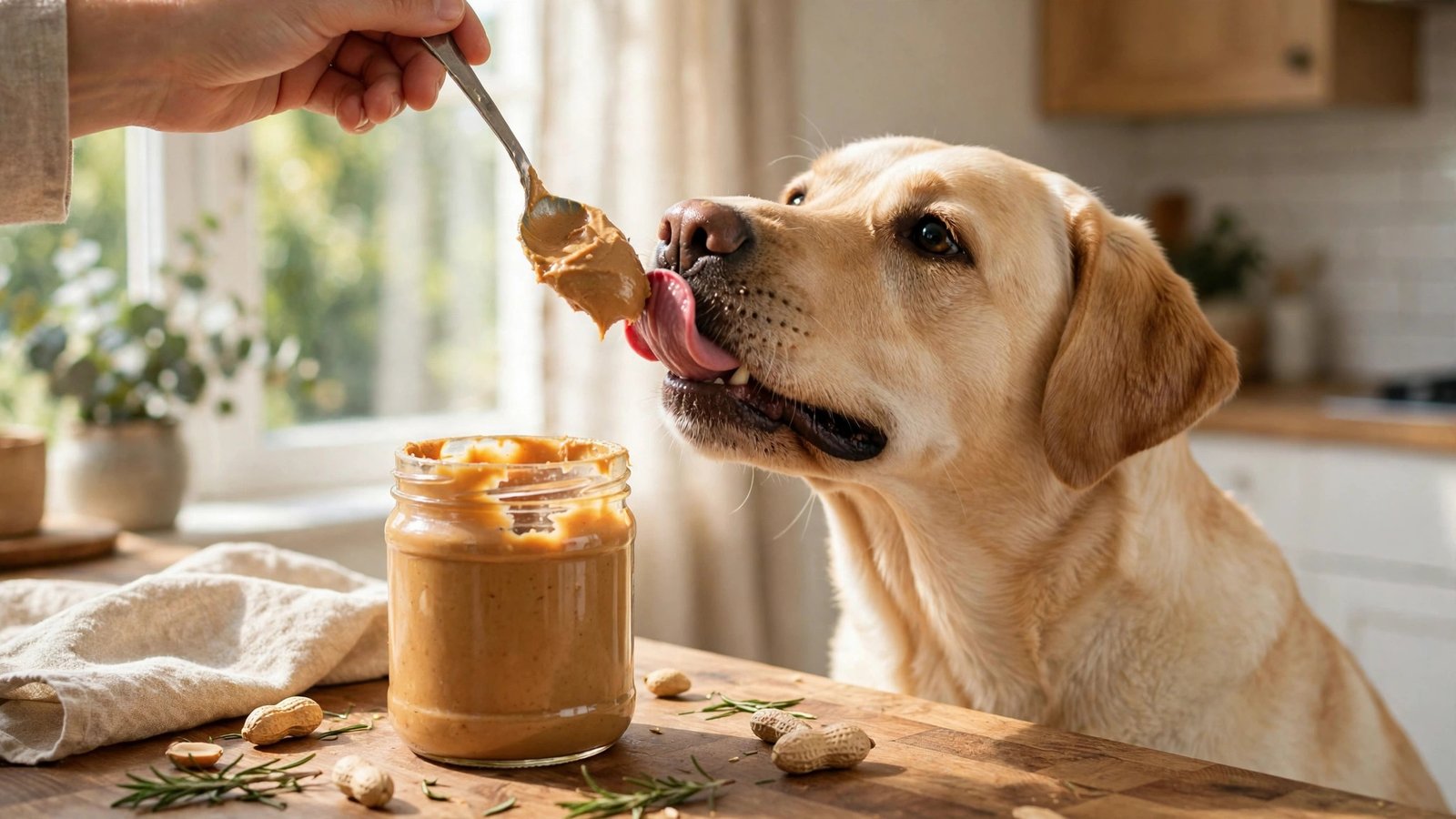
Peanut butter is the treat that launched a thousand dog videos — smeared on a Kong, spread on a lick mat, or offered straight from the spoon. So it is no surprise that owners ask: can dogs eat peanut butter? The answer is yes, with one critical condition: the peanut butter must be xylitol-free. Most peanut butter is safe and healthy for dogs in moderation, providing protein, healthy fats, and vitamins. But a growing number of brands now use xylitol, an artificial sweetener that is extremely toxic to dogs — even a small amount can cause a life-threatening drop in blood sugar and liver failure. This guide explains how to choose safe peanut butter, how much to serve, the best ways to use it, and the warning signs that mean an emergency vet visit.
Can Dogs Eat Peanut Butter? The Short Answer
Yes, dogs can eat peanut butter — as long as it contains no xylitol (also labeled as birch sugar) and no chocolate. Plain peanut butter made from just peanuts, or peanuts and salt, is safe for most healthy dogs and is one of the most useful treats in a dog owner’s toolkit. It is high in protein and healthy fats, it is highly palatable, and its sticky texture makes it perfect for stuffing toys and slowing down fast eaters.
Peanut butter is calorie-dense, so moderation matters. A single tablespoon of peanut butter contains roughly 90 to 100 calories — for a small dog, that can be 20 percent or more of the entire day’s calorie budget. The 10 percent treat rule applies: treats, including peanut butter, should make up no more than 10 percent of your dog’s daily calories.
The danger is not the peanuts — it is the sweetener. Xylitol is now found in some “sugar-free,” “light,” or “reduced-sugar” peanut butters, as well as in sugar-free gum, candy, and baked goods. Always read the ingredient label before giving your dog any peanut butter, even a brand you have bought before, because manufacturers change formulas without warning.
Nutritional Benefits of Peanut Butter for Dogs
Peanut butter is more than just a tasty bribe. In moderation, it offers real nutrition:
Protein. Peanut butter is about 25 percent protein, which supports muscle maintenance and repair. It is a useful way to add protein to a treat for active dogs.
Healthy fats. Most of the fat in peanut butter is monounsaturated and polyunsaturated fat — the same heart-healthy fats found in olive oil. These fats support skin and coat health and provide concentrated energy.
Vitamin E. Peanut butter is a good source of vitamin E, an antioxidant that supports immune function and skin health.
B vitamins. It contains niacin (B3) and vitamin B6, which support energy metabolism and nervous system health.
Minerals. Peanut butter supplies magnesium, phosphorus, potassium, and zinc in useful amounts.
Peanut butter’s real superpower, though, is behavioral: its sticky texture makes dogs work for it, which provides mental stimulation and slows down eating. That is why it is the classic Kong stuffing and the go-to for lick mats, puzzle toys, and pill-hiding. For dogs that need medication, a small smear of peanut butter is often the easiest way to get a pill down — just check with your veterinarian that the medication can be given with food.
The Xylitol Danger: What Every Owner Must Know
Xylitol is a sugar alcohol used as a sweetener in sugar-free and low-sugar products. It is safe for humans, but in dogs it triggers a rapid, massive release of insulin, causing blood sugar to crash within 30 to 60 minutes. Symptoms of xylitol poisoning include vomiting, weakness, stumbling, collapse, tremors, and seizures. In larger amounts, xylitol can cause acute liver failure, which can be fatal even with treatment.
As little as 0.1 grams of xylitol per kilogram of body weight can cause hypoglycemia in dogs — for a 10-pound dog, that is less than half a gram, an amount easily contained in a single spoonful of xylitol-sweetened peanut butter. There is no safe dose, and there is no home remedy. If your dog eats any product containing xylitol, call your veterinarian or an emergency animal hospital immediately — do not wait for symptoms to appear. Time matters: treatment is far more effective when started early.
How to spot xylitol on a label. Check the ingredients list for “xylitol,” “birch sugar,” “birch bark extract,” or “E967” (its European food additive number). It can appear in peanut butters marketed as sugar-free, light, reduced-sugar, or natural. Some brands that have used xylitol include certain varieties of Go Nuts, Krush Nutrition, Nuts ‘N More, P28 Foods, and Protein Plus — but formulas change, so never rely on a brand list. Read the label every time you open a new jar. The ASPCA and the Pet Poison Helpline both maintain updated warnings about xylitol, and the FDA has issued consumer warnings about xylitol in peanut butter specifically.
Other sweeteners to watch. Sorbitol and mannitol are generally less dangerous than xylitol, but they can still cause digestive upset. Chocolate-flavored peanut butter and peanut butter cups are unsafe because chocolate is toxic to dogs. Stick with plain peanut butter.
How to Choose Safe Peanut Butter for Your Dog
Choosing safe peanut butter takes about ten seconds at the store if you know what to look for:
Read the ingredients. The safest peanut butter has one or two ingredients: peanuts, and optionally salt. If the list is long, or if it contains xylitol, birch sugar, chocolate, or artificial sweeteners, put it back.
Prefer natural or unsweetened varieties. Natural peanut butter — the kind with oil on top that you stir — is usually just peanuts and salt. Major US brands such as Jif Natural, Smucker’s Natural, and store-brand natural varieties are typically xylitol-free, but always verify the label, since product lines change.
Avoid “sugar-free,” “light,” and “reduced-fat” labels. These are the products most likely to contain xylitol or other sugar alcohols. Regular creamy or crunchy peanut butter is safer than a diet version.
Skip added sugar when possible. Regular peanut butter with added sugar is not toxic, but the extra sugar adds empty calories. Unsweetened is the better choice for your dog’s waistline and teeth.
Check for salt content. A small amount of salt is fine, but unsalted peanut butter is the best choice, especially for dogs with heart or kidney conditions. Avoid peanut butter with added oils beyond peanut oil.
Price guide. A 16-ounce jar of regular creamy peanut butter costs about $3 to $5 in US grocery stores, while natural and organic varieties run about $5 to $8. You do not need to buy a premium brand for your dog — the cheapest plain peanut butter with a clean label is just as safe as the expensive one.
How Much Peanut Butter Can a Dog Eat?
Peanut butter is calorie-dense, so serving size matters more than with most treats:
Small dogs (under 20 pounds): about half a teaspoon to one teaspoon per day at most. A single tablespoon is too much for a small dog’s calorie budget.
Medium dogs (20 to 50 pounds): one teaspoon to one tablespoon per day, depending on activity level and the rest of their diet.
Large dogs (50 to 90 pounds): one to two tablespoons per day at most.
Giant breeds (over 90 pounds): up to two tablespoons per day.
A good rule of thumb: a Kong stuffed with a tablespoon of peanut butter is a reasonable daily treat for a medium or large dog, but it should replace — not add to — other treats that day. If you use peanut butter daily, reduce your dog’s kibble slightly or cut back on other treats to keep total calories steady. Overfeeding peanut butter is a common cause of weight gain, and it can also trigger pancreatitis in susceptible dogs because of its high fat content. Puppies can have small amounts of peanut butter as a training reward — our guide to the best treats for training dogs explains how to use high-value rewards without overfeeding a growing puppy.
Best Ways to Serve Peanut Butter
Peanut butter’s versatility is its greatest strength. Here are the best ways to use it:
Stuffed Kong or puzzle toy. Fill a Kong with peanut butter, freeze it for a few hours, and give it to your dog for a long-lasting, mentally stimulating treat. Freezing makes it last much longer and is perfect for hot days or for dogs that need to be kept busy.
Lick mat. Spread a thin layer on a lick mat and stick it to the floor or a wall. Licking is calming for dogs and releases endorphins, making lick mats great for anxious dogs, bath time, or nail trims.
Pill pocket. Hide medication in a small ball of peanut butter. Most dogs swallow it without noticing the pill. Check with your veterinarian first that the medication can be taken with food.
Training reward. A small smear on a spoon or your finger is a high-value reward for difficult training tasks such as recall. Because it is sticky, it keeps the dog focused on you for a few extra seconds.
Mixed with plain food. Stir a teaspoon into plain cooked pumpkin or plain yogurt for a nutritious topper. Our guide to whether dogs can eat pumpkin explains the fiber benefits of that combination.
Frozen treats. Mix peanut butter with mashed banana and plain yogurt, freeze in a silicone mold, and serve as a summer treat. Keep portions small and skip any added sugar.
Always supervise your dog with peanut butter the first few times, especially with Kongs and lick mats, to make sure they do not chew off pieces of the toy itself.
Risks and Side Effects
Peanut butter is safe for most dogs, but it has real risks if overfed or chosen badly:
Xylitol poisoning. The most serious risk, covered above. Always check the label, and if your dog eats a xylitol-containing product, seek emergency veterinary care immediately.
Weight gain. At roughly 100 calories per tablespoon, peanut butter adds up fast. Daily overfeeding leads to obesity, which raises the risk of joint disease, diabetes, and heart disease.
Pancreatitis. High-fat foods can trigger pancreatitis in susceptible dogs. Dogs with a history of pancreatitis should only eat peanut butter if their veterinarian approves, and in very small amounts.
Peanut allergies. Peanut allergy is rare in dogs but possible. Signs include itchy skin, facial swelling, vomiting, or diarrhea after eating peanut butter. If your dog has a known nut allergy, skip peanut butter and ask your veterinarian about alternatives such as sunflower seed butter.
Digestive upset. Too much peanut butter at once can cause gas, soft stool, or diarrhea, especially in dogs trying it for the first time. Start with a small amount.
Aflatoxins. Peanuts can carry aflatoxins, toxins produced by mold that grows on peanuts stored in warm, humid conditions. Commercial peanut butter in the US is tested for aflatoxins and regulated by the FDA, so this is a very low risk with store-bought brands — but do not feed moldy, rancid, or expired peanut butter, and store it in a cool, dry place.
Salt. Salted peanut butter is fine in small amounts, but dogs with heart or kidney disease should get unsalted varieties only.
Peanut Butter Alternatives
If your dog is allergic to peanuts, or you want a lower-fat option, try these alternatives — always checking labels for xylitol first:
Sunflower seed butter. Similar texture and taste, nut-free, and usually safe for dogs with peanut allergies. Check the label for xylitol and added sugar.
Almond butter. Safe in small amounts for most dogs, but higher in fat than peanut butter and more expensive. Avoid sweetened or flavored varieties.
Cashew butter. Safe in small amounts, but also high in fat. Use sparingly.
Pumpkin puree. Not a nut butter, but a great low-calorie, high-fiber alternative for stuffing a Kong — and far fewer calories than peanut butter. Our guide to whether dogs can eat pumpkin covers serving sizes.
Never use Nutella or other chocolate-hazelnut spreads — chocolate is toxic to dogs. And never use a “peanut butter” product that lists xylitol, no matter how small the amount.
What to Do If Your Dog Eats Xylitol Peanut Butter
If you discover your dog ate peanut butter containing xylitol, act immediately:
1. Do not wait for symptoms. Xylitol poisoning can progress rapidly. Call your veterinarian or the nearest emergency animal hospital right away, or call the Pet Poison Helpline at (855) 764-7661 or the ASPCA Animal Poison Control Center at (888) 426-4435. A consultation fee may apply.
2. Bring the packaging. Take the jar or a photo of the ingredient label so the veterinarian can see exactly how much xylitol it contains and estimate the dose your dog received.
3. Do not induce vomiting unless told to. Your veterinarian will decide whether vomiting should be induced, based on how much was eaten and how long ago. Inducing vomiting at home can be dangerous.
4. Expect hospitalization. Dogs that ingest xylitol often need IV dextrose to manage blood sugar, bloodwork to monitor liver function, and monitoring for 12 to 72 hours. Early treatment dramatically improves the outcome.
Prevention is simple: keep xylitol-containing products — sugar-free gum, candy, mints, baked goods, and peanut butter — out of your dog’s reach, and check every label before sharing food. The American Kennel Club (AKC) has a detailed guide to xylitol poisoning in dogs, including the products that commonly contain it.
The Bottom Line
Can dogs eat peanut butter? Yes — plain, xylitol-free peanut butter is a safe, nutritious, and wonderfully useful treat for most dogs. It provides protein, healthy fats, and vitamins, and its sticky texture makes it ideal for training, enrichment, and hiding medication. The rules are simple: read the label every time, never buy a variety containing xylitol or chocolate, keep servings small because of the calories, and introduce it gradually. With those precautions, peanut butter is one of the best treats in your kitchen — and your dog already knows it.
Frequently Asked Questions
Can dogs eat peanut butter every day?
Yes, most healthy dogs can eat a small amount of xylitol-free peanut butter daily, as long as it fits within the 10 percent treat rule. Small dogs should get no more than a teaspoon, medium dogs up to a tablespoon, and large dogs up to two tablespoons per day. Reduce other treats or kibble to compensate for the calories.
What peanut butter brands are safe for dogs?
Any plain peanut butter with no xylitol is safe, including most regular creamy and crunchy varieties from major US brands. Natural peanut butter made from just peanuts and salt is the safest choice. Avoid sugar-free, light, or reduced-sugar varieties, which are most likely to contain xylitol, and always read the label before buying.
Is xylitol in peanut butter really that dangerous?
Yes. Xylitol causes a rapid insulin release in dogs that can crash blood sugar within 30 to 60 minutes, causing vomiting, weakness, seizures, and collapse. Larger amounts can cause liver failure and death. Even a small amount is dangerous, so if your dog eats xylitol-containing peanut butter, seek emergency veterinary care immediately.
Can puppies eat peanut butter?
Yes, puppies can eat small amounts of xylitol-free peanut butter as a training treat. Start with a tiny smear and watch for digestive upset. Peanut butter is a great high-value reward for puppy training, but keep portions small because puppies have limited calorie budgets.
Can dogs eat crunchy peanut butter?
Yes, crunchy peanut butter is safe for most dogs as long as it is xylitol-free. Some dogs prefer the texture, but the small peanut pieces can be a choking risk for toy breeds or dogs that gulp food. Creamy peanut butter is the safer default for small dogs and puppies.