If you’ve spent any time in dog-owner Facebook groups or scrolling through pet influencer accounts lately, you’ve probably seen someone raving about switching their dog to a raw diet Raw Diet for Dogs. Shinier coats, smaller stools, more energy — the claims sound almost too good to be true. But then you scroll a little further and see a warning about salmonella, bacteria, or a vet horror story, and suddenly you’re not so sure.
That back-and-forth is exactly why so many pet parents feel stuck when it comes to the raw diet for dogs pros and cons conversation. It’s not a simple yes-or-no topic, and honestly, it shouldn’t be treated like one. A raw diet can work beautifully for some dogs and households, while creating real risks for others.
This guide breaks down what raw feeding actually involves, the legitimate benefits some owners and dogs experience, the risks you need to take seriously, and how to make a safer, more informed decision — without the hype or the scare tactics.
What Is a Raw Diet for Dogs, Exactly?
A raw diet, sometimes called BARP (Biologically Appropriate Raw Food) or simply “raw feeding,” is built around uncooked ingredients that mimic what a dog’s wild ancestors might have eaten. It’s the opposite of the cooked kibble or canned food most dogs grow up on.
A typical raw diet usually includes a combination of:
- Raw muscle meat (chicken, beef, turkey, lamb)
- Raw meaty bones (chicken necks, wings, or backs)
- Organ meat (liver, kidney, spleen)
- A small amount of vegetables or fruit
- Occasionally raw eggs or dairy like plain yogurt
Owners generally feed raw in one of two ways: commercially prepared raw food (frozen patties, freeze-dried nuggets, or refrigerated rolls from companies that formulate the diet to meet nutritional standards), or a homemade raw diet, where the owner sources and balances the ingredients themselves.
That second option — homemade raw — is where most of the nutritional risk lives, because it’s easy to accidentally leave out key nutrients without realizing it.
The Pros of a Raw Diet for Dogs
Let’s start with why so many owners are drawn to this feeding style in the first place. These benefits are reported frequently enough by raw-feeding households and some veterinary professionals that they’re worth taking seriously.
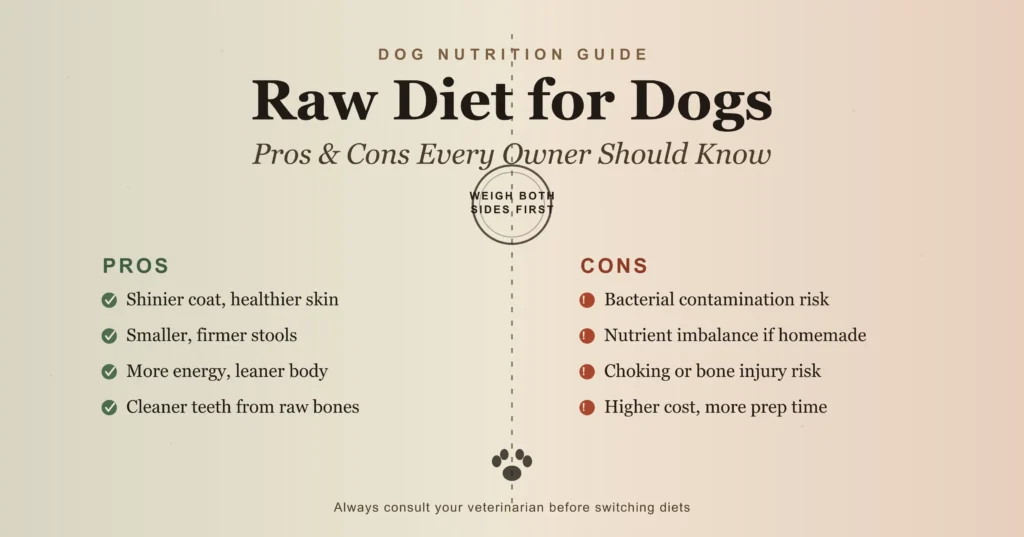
1. Shinier Coat and Healthier Skin
Many owners notice a visible difference in coat texture and shine within a few weeks to a couple of months of switching to raw. The higher fat content and unprocessed nutrients in raw meat can support skin and coat health, especially in dogs who previously ate lower-quality kibble.
2. Smaller, Firmer Stools
This is one of the most consistently reported changes. Because raw diets are highly digestible and contain fewer fillers like corn or wheat, dogs often produce smaller, less smelly, and firmer stools. Some owners describe going from picking up large, soft piles to small, easy-to-scoop ones within the first two weeks.
3. Improved Dental Health
Chewing on raw meaty bones (under supervision) can help scrape plaque off teeth naturally. Owners of raw-fed dogs often report less tartar buildup and fresher breath, though this isn’t a replacement for regular dental checkups or professional cleanings.
4. More Energy and Leaner Body Condition
Some dogs — particularly those who were overweight or sluggish on high-carb commercial food — seem to slim down and become more active on a raw diet. This is likely tied to the higher protein content and lower carbohydrate load compared to many kibble formulas.
5. Fewer Digestive Issues for Some Dogs
Dogs with certain food sensitivities or chronic soft stool issues sometimes do better on raw diets, possibly because there are fewer processed additives, grains, or fillers that could be triggering digestive upset.
The Cons of a Raw Diet for Dogs
Now for the part that doesn’t get nearly enough attention in raw-feeding social media posts. These are real, documented risks — not just theoretical ones.
1. Bacterial Contamination Risk
Raw meat can carry Salmonella, Listeria, and E. coli. This isn’t just a risk to your dog — it’s a risk to your household, especially if you have young children, elderly family members, or anyone who’s immunocompromised. Studies from veterinary microbiology labs have repeatedly found bacterial contamination in a notable percentage of commercial raw pet food samples.
2. Nutritional Imbalances (Especially with Homemade Raw)
This is the risk that concerns veterinarians the most. A homemade raw diet that isn’t properly balanced can lead to deficiencies or excesses in calcium, phosphorus, vitamin D, or essential fatty acids over time. These issues often don’t show up right away — they build slowly over months and can affect bone development, especially in puppies.
3. Choking and Internal Injury from Bones
While raw meaty bones are softer than cooked bones, they can still splinter, cause choking, or lead to internal injuries like punctured intestines in rare but serious cases. Bone fragments can also cause painful constipation or blockages requiring emergency veterinary care.
4. Higher Cost and Time Commitment
Raw feeding is rarely cheaper than a quality commercial kibble. Between sourcing meat, freezer space, thawing time, and potential supplements, it can be both more expensive and more logistically demanding than scooping kibble from a bag.
5. Not Ideal for Every Dog
Dogs with compromised immune systems, certain digestive conditions, or a history of pancreatitis may be poor candidates for raw feeding. Puppies, senior dogs, and pregnant or nursing dogs have more specific and less forgiving nutritional needs, which makes an unbalanced raw diet riskier for them.
How to Transition a Dog to Raw Food Safely
If you’ve weighed the pros and cons and decided raw feeding might be right for your dog, a slow, structured transition matters far more than most people expect.
- Talk to your veterinarian first. Ideally, work with a vet who has experience with raw diets or consult a board-certified veterinary nutritionist, especially for puppies or dogs with existing health conditions.
- Choose a properly formulated product first. Commercial raw diets that meet AAFCO (Association of American Feed Control Officials) nutritional standards remove much of the guesswork of home formulation.
- Transition gradually over 7–10 days. Mix a small amount of raw into the current food, slowly increasing the raw portion each day to avoid digestive upset.
- Practice strict food safety. Use separate cutting boards, wash bowls thoroughly after every meal, and refrigerate or freeze raw food properly — treat it the way you would raw meat for your own family’s meals.
- Watch for warning signs. Vomiting, diarrhea lasting more than a day or two, lethargy, or refusal to eat should prompt a call to your veterinarian rather than a wait-and-see approach.
- Reassess every few months. Track your dog’s weight, energy, coat condition, and stool quality, and bring these observations to regular veterinary checkups.
Signs a Raw Diet Might Not Be Working
Not every dog thrives on raw food, and it’s important to recognize when it’s time to reconsider. Watch for:
- Persistent loose stool or constipation beyond the initial adjustment period
- Noticeable weight loss or gain that doesn’t match your feeding amounts
- Dull coat or increased shedding instead of improvement
- Reluctance to eat or sudden pickiness
- Any recurring digestive upset that doesn’t resolve after a few weeks
If you notice any of these, it’s worth checking in with your veterinarian rather than pushing through, since prolonged nutritional imbalance can have lasting effects.
Raw Diet vs. Commercial Kibble: A Quick Comparison
| Factor | Raw Diet | Commercial Kibble |
|---|---|---|
| Nutritional balance | Depends heavily on formulation | Generally consistent (AAFCO-certified) |
| Cost | Usually higher | Usually lower to moderate |
| Convenience | Requires prep, thawing, storage | Ready to scoop and serve |
| Bacterial risk | Present, requires careful handling | Minimal |
| Shelf life | Short, needs refrigeration/freezing | Long, shelf-stable |
| Dental benefits | Some, from raw meaty bones | Limited unless dental-specific formula |
Final Thoughts
Choosing between a raw diet and traditional dog food isn’t about following a trend — it’s about matching your dog’s individual needs, your household’s ability to handle raw food safely, and your budget and schedule. The raw diet for dogs pros and cons list shows real benefits like improved coat health and digestion for some dogs, alongside real risks like bacterial contamination and nutritional imbalance if not done carefully.
The safest path forward is a slow transition, a properly formulated diet, and an open conversation with your veterinarian, who can help tailor the decision to your dog’s age, health history, and lifestyle. Whatever you choose, the goal is the same one every pet owner shares: a happy, healthy dog who thrives on what’s in their bowl.
Read This
Best Cat Food for Hairballs: A Complete Owner’s Guide
FAQS
Is a raw diet healthier than kibble for dogs?
It depends on the individual dog and how well the raw diet is formulated. Some dogs do well on raw food, while others thrive equally on high-quality commercial kibble. Neither option is universally “healthier” — balance and quality matter more than the category itself.
Can puppies eat a raw diet?
Puppies can eat raw food, but their nutritional needs are more precise than adult dogs, particularly around calcium and phosphorus ratios for healthy bone growth. Speak with your veterinarian before starting a puppy on raw food.
How do I know if raw dog food is safe to buy?
Look for products that state they meet AAFCO nutritional adequacy standards and follow proper food safety handling guidelines during manufacturing. Reputable brands will typically list this information clearly on the packaging.
Can I mix raw food with kibble?
Many owners do combine raw and kibble meals, though opinions vary on digestion speed differences between the two. If you choose to mix, introduce changes gradually and monitor your dog’s stool and energy levels.
What should I do if my dog gets sick after eating raw food?
Contact your veterinarian promptly if your dog shows vomiting, diarrhea, lethargy, or loss of appetite after starting raw food. These symptoms can indicate a bacterial issue, an ingredient sensitivity, or an unrelated health concern that needs professional evaluation.
- Why Every Pet Owner Needs an Emergency Pet First Aid Kit
- Affordable Pet Care on a Budget: A Real Owner’s Guide
- Moving House With a Cat: Tips to Keep Your Feline Calm and Safe
- Flea and Tick Prevention Guide: How to Protect Your Pet Year-Round
- How to Pet Proof a Christmas Tree: A Complete Guide for Dog and Cat Owners