
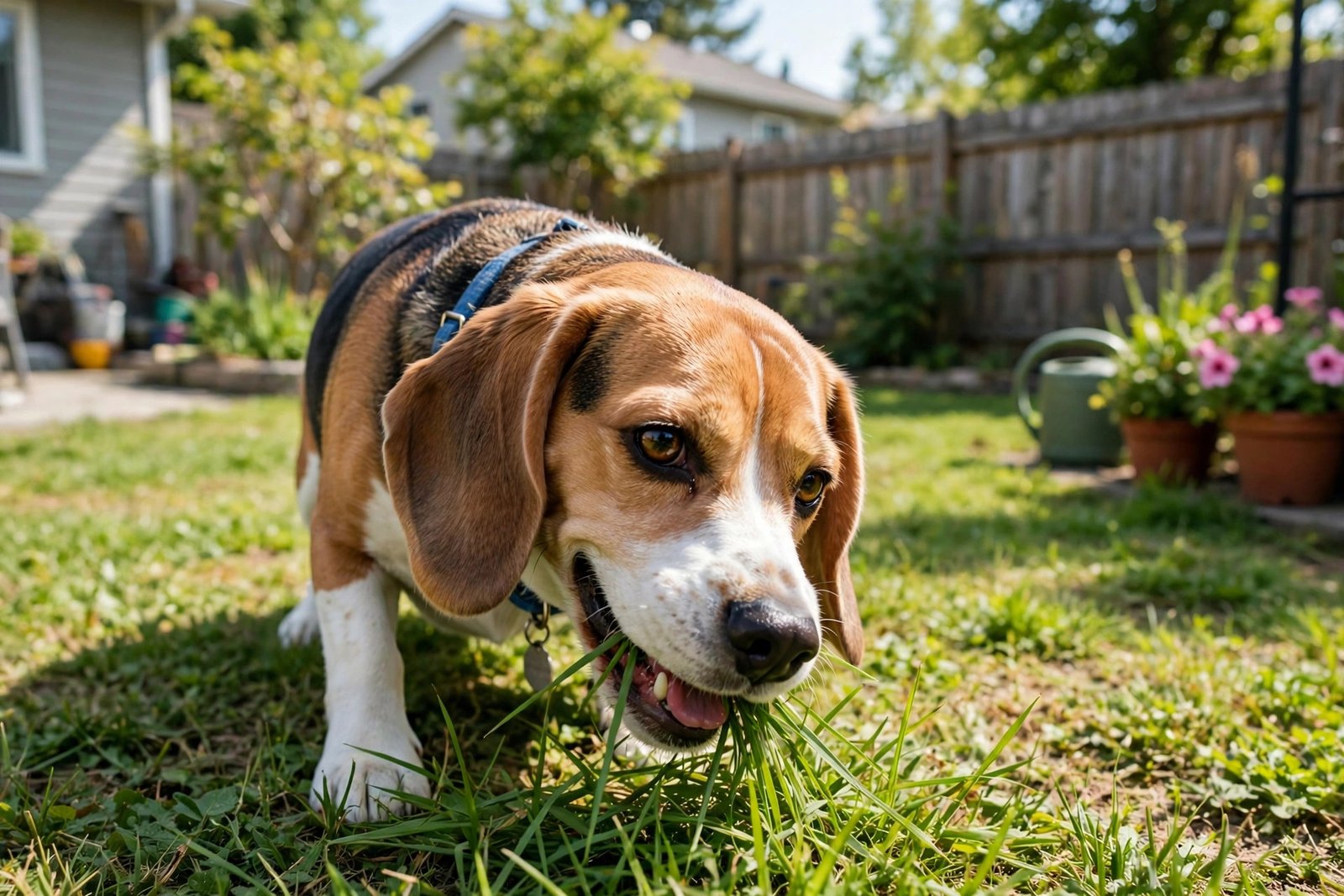
Why Does My Dog Eat Grass? The Short Answer
If you are wondering why does my dog eat grass, you are not alone — it is one of the most common questions dog owners ask their veterinarians. The short answer is that grass eating is normal behavior for most dogs, and in most cases it is nothing to worry about. Studies of pet dogs have found that the large majority eat grass at least sometimes, and most of them do not vomit afterward. Dogs are not strict carnivores; they are omnivores, and their wild ancestors ate the stomach contents of prey animals, which included plant matter. Grass eating may simply be a leftover instinct, a way to add fiber to the diet, a response to boredom, or a way to soothe a mildly upset stomach.
That said, grass eating is not always harmless. The context matters: a dog that occasionally nibbles grass on a walk is very different from a dog that frantically eats large amounts of grass every day, vomits repeatedly, or eats grass from lawns treated with pesticides and herbicides. This guide covers the real reasons dogs eat grass, what the research actually says, when it is a red flag, and what you can do about it — including how to make your yard safer and when to pick up the phone and call your veterinarian.
Reason 1: It Is Simply Normal Dog Behavior
The most likely explanation for why your dog eats grass is the simplest one: dogs eat grass because they are dogs. Research published in veterinary journals has consistently found that grass eating is widespread and normal. In one well-known study of dog owners, nearly 80 percent reported that their dog ate grass, and only a small minority of those dogs showed signs of illness beforehand or vomited afterward. Puppies and young dogs do it more often than older dogs, which suggests it is partly exploratory — young dogs explore the world with their mouths, and grass is everywhere.
Evolution offers a clue too. Wolves, the dog’s closest wild relatives, have been observed eating grass and other plant matter. Their prey’s stomachs contained partially digested vegetation, so plant matter was a regular part of the ancestral diet. Domestic dogs retained that omnivorous flexibility. Modern dog food is complete and balanced, so your dog does not need grass nutritionally — but the instinct to graze has not disappeared. For many dogs, grass is just an interesting texture and taste, the way some people chew gum. If your dog eats a few blades here and there, seems happy, and shows no other symptoms, there is usually nothing to fix.
Reason 2: An Upset Stomach or Nausea
The oldest folk explanation for grass eating is that dogs eat grass to make themselves vomit when their stomach is upset. There is some truth to this, but it is more complicated than the folk wisdom suggests. Some dogs do eat grass frantically — gulping large amounts quickly — and then vomit. In those cases, the dog may be feeling nauseous and eating grass in an attempt to feel better, or the grass itself may irritate the stomach lining and trigger vomiting.
But the research paints a more nuanced picture. In the studies mentioned above, only about a quarter of grass-eating dogs vomited afterward, and fewer than 10 percent of owners reported that their dog seemed sick before eating grass. So vomiting after grass eating is the exception, not the rule. That does not mean stomach upset is never the cause — it means you should look at the pattern. If your dog eats grass only occasionally and seems fine, it is probably not stomach trouble. If your dog suddenly starts eating grass frantically, especially combined with lip licking, drooling, restlessness, or refusing food, that pattern suggests nausea, and it is worth a vet visit.
Common causes of mild nausea in dogs include eating something they should not have, a sudden diet change, eating too fast, and certain medications. If the grass eating is new, intense, and paired with vomiting more than once, diarrhea, lethargy, or loss of appetite, do not wait it out — call your veterinarian. Persistent vomiting and diarrhea can dehydrate a dog quickly, especially puppies and small breeds.
Reason 3: They Need More Fiber
Another plausible reason dogs eat grass is fiber. Grass is a source of roughage, and some dogs may seek it out when their diet is low in fiber or when they are constipated. Fiber helps move food through the digestive tract, firms up stool, and supports gut health. Most commercial dog foods in the United States contain adequate fiber, but some dogs — especially those on low-quality diets, homemade diets that are not properly balanced, or diets heavy in treats — may not be getting enough.
If you suspect fiber is the issue, look at your dog’s stool. Hard, dry, pellet-like stools or straining to defecate can indicate constipation. Loose stools that never quite firm up can indicate the opposite problem. Before changing your dog’s diet, talk to your veterinarian. They may recommend a diet with a higher fiber content, or a safe fiber supplement such as plain canned pumpkin (not pumpkin pie filling) — a small spoonful mixed into meals is a classic vet-recommended trick. You can read more about safe plant foods in our guide to whether dogs can eat pumpkin. Never add fiber supplements without veterinary guidance, because too much fiber can interfere with nutrient absorption and cause gas and bloating.
Reason 4: Boredom, Anxiety, or Attention-Seeking
Sometimes grass eating has nothing to do with the stomach at all — it is a behavior problem, or rather, a boredom problem. Dogs left alone in a yard with nothing to do will find their own entertainment, and grass is right there. Dogs that do not get enough physical exercise or mental stimulation may graze compulsively, the same way a bored person might snack mindlessly. Anxious dogs may also eat grass as a displacement behavior — something to do with their mouths when they feel stressed, similar to a person biting their nails.
Pay attention to when your dog eats grass. Is it mostly when they are alone in the yard? When you are on your phone during a walk instead of engaging with them? When they are waiting for you to come back inside? If the pattern points to boredom, the fix is enrichment, not discipline. Increase daily exercise, add puzzle feeders and sniff games, rotate toys, and practice leash training that keeps walks engaging instead of letting your dog wander aimlessly. A tired, mentally satisfied dog is far less likely to graze obsessively. If the grass eating is paired with other signs of anxiety — pacing, whining, destructive behavior when left alone — read our guide to separation anxiety solutions or talk to your vet about an anxiety assessment.
Reason 5: They Simply Like the Taste
Some dogs genuinely enjoy grass. Fresh spring grass, in particular, is sweet and tender, and many dogs will seek it out the way a person reaches for a salad. Certain grasses may taste better than others, which is why some dogs will graze in one patch of the yard and ignore another. Dogs also have individual preferences — one dog may love grass, another may be indifferent, and a third may prefer to eat leaves, sticks, or dirt. None of this is abnormal.
There is also a social learning element. Puppies that watch their mother or another dog eat grass are more likely to do it themselves. If you have two dogs and one is a grazer, do not be surprised when the second one picks up the habit. As long as the grass is clean and untreated, a dog that enjoys a few mouthfuls of grass is doing nothing wrong. The American Kennel Club notes that grass eating is generally considered normal behavior, and most veterinarians agree.
Is Eating Grass Dangerous? What to Watch For
For most dogs, eating untreated grass in small amounts is harmless. But there are real dangers you need to know about. The biggest one is lawn chemicals. Herbicides, pesticides, and fertilizers can be toxic to dogs, and a dog that eats treated grass can ingest enough to cause vomiting, diarrhea, drooling, tremors, or worse. If you use a lawn care service, ask exactly what products they apply and how long dogs should stay off the lawn afterward — and consider switching to pet-safe lawn care products. If you hire a company, tell them you have a dog; many US lawn care companies offer pet-safe programs. Never let your dog eat grass on public land, golf courses, parks, or neighbors’ lawns where you do not know what has been sprayed.
The second danger is the grass itself. Some ornamental grasses and plants are toxic, and sharp grass seed awns (like foxtails, common in the western United States) can burrow into a dog’s skin, ears, nose, or paws and cause serious infections. Foxtails are a genuine veterinary emergency when inhaled or embedded. If you live in an area where foxtails grow, check your dog’s paws and ears after walks and keep them away from dry, seed-heavy grass.
The third danger is parasites. Grass in areas where other animals defecate can carry intestinal parasite eggs, including roundworms and hookworms. This is one reason regular deworming and annual fecal tests matter. It is also why you should discourage your dog from eating grass in dog parks or other high-traffic areas. And finally, some dogs eat grass so aggressively that they ingest long blades that can cause choking or intestinal blockage — rare, but possible, especially in small dogs.
When Grass Eating Is a Red Flag: Call the Vet
Most grass eating is fine, but certain patterns should send you to the veterinarian. Call your vet if your dog eats grass frantically and vomits repeatedly; eats grass every day in large quantities; has started eating grass suddenly after never doing it before, especially if paired with appetite loss, lethargy, or weight loss; shows signs of abdominal pain such as hunching, whining, or a tense belly; has bloody vomit or diarrhea; or eats grass and non-food items compulsively — a condition called pica that can signal nutritional deficiency, gastrointestinal disease, or anxiety.
Your veterinarian may run blood work, check a fecal sample, or recommend an abdominal exam or X-ray to rule out a blockage or underlying disease. Conditions that can drive grass eating include inflammatory bowel disease, pancreatitis, intestinal parasites, and acid reflux. These are treatable, but they need a diagnosis first. Do not try to treat suspected stomach disease at home with over-the-counter human medications — many are unsafe for dogs, and the wrong one can make things worse. The AVMA’s dog care guidance is a good starting point for understanding when a behavior change warrants veterinary attention.
How to Reduce Grass Eating Safely
If your dog’s grass eating is frequent enough to bother you, or you want to reduce it for safety reasons, there are gentle, effective approaches. First, make sure the diet is right. Feed a high-quality, AAFCO-approved dog food appropriate for your dog’s age and size, and keep treats to no more than 10 percent of daily calories. Ask your vet whether a fiber boost — like plain canned pumpkin or green beans — would help your individual dog.
Second, increase enrichment and exercise. A dog that gets a good walk, a training session, and a puzzle feeder in the morning is far less likely to spend the afternoon grazing. Third, manage the environment. If your dog grazes in one particular spot, block it off or supervise yard time. When your dog starts eating grass on a walk, redirect with a treat or a toy and keep moving — and reinforce the redirect so your dog learns that walking past grass pays better than eating it. A solid “leave it” cue is invaluable here, and it is one of the easiest commands to teach: hold a treat in your closed fist, say “leave it,” and reward your dog the moment they look away.
What you should not do is punish grass eating. Yelling at or jerking your dog’s leash when they eat grass will not teach them anything except to fear you — and it can make anxious grass eating worse. Also do not assume that grass eating means your dog is sick and rush to change their diet or buy supplements without veterinary input. Most of the time, the right response is to check the pattern, clean up the environment, and mention it at your dog’s next routine vet visit if it continues.
Frequently Asked Questions
Is it normal for dogs to eat grass every day?
Daily grass eating is common and usually normal, especially in young dogs and dogs that spend a lot of time outdoors. It becomes a concern only if the amounts are large, the behavior is frantic, or it is paired with vomiting, diarrhea, appetite loss, or lethargy. If your dog eats grass every day and seems healthy and happy, it is almost certainly fine — just make sure the grass is untreated and free of chemicals.
Why does my dog eat grass and then throw up?
Some dogs eat grass when they feel nauseous, and the grass can irritate the stomach lining and trigger vomiting. But most dogs that eat grass do not vomit, so vomiting after grass eating is the exception rather than the rule. If your dog vomits after eating grass more than occasionally, or vomits repeatedly, contact your veterinarian — it may be a sign of gastritis, parasites, or another stomach issue.
Can eating grass make my dog sick?
Untreated grass itself is rarely harmful, but grass treated with herbicides, pesticides, or fertilizer can be toxic. Grass in public areas may also carry parasite eggs. Foxtail seed awns, common in parts of the western US, can cause serious injuries. Keep your dog away from treated lawns, check paws and ears after walks in dry grass, and keep up with regular deworming and fecal tests.
Does grass eating mean my dog is missing something in their diet?
Not usually. Most dogs on a complete, balanced commercial diet get everything they need, and grass eating is driven by instinct, taste, boredom, or mild stomach upset rather than a deficiency. However, if your dog eats grass compulsively along with other non-food items, or has digestive symptoms, your veterinarian may check for nutritional or gastrointestinal issues. Never start supplements without veterinary advice.
How do I stop my dog from eating grass?
You can reduce grass eating by feeding a balanced diet, increasing exercise and mental enrichment, teaching a reliable “leave it” cue, and supervising yard time. Redirect your dog with a treat or toy when they start grazing on walks. Do not punish the behavior. If the grass eating is sudden, frantic, or paired with illness, see your veterinarian first — training cannot fix a medical problem.