
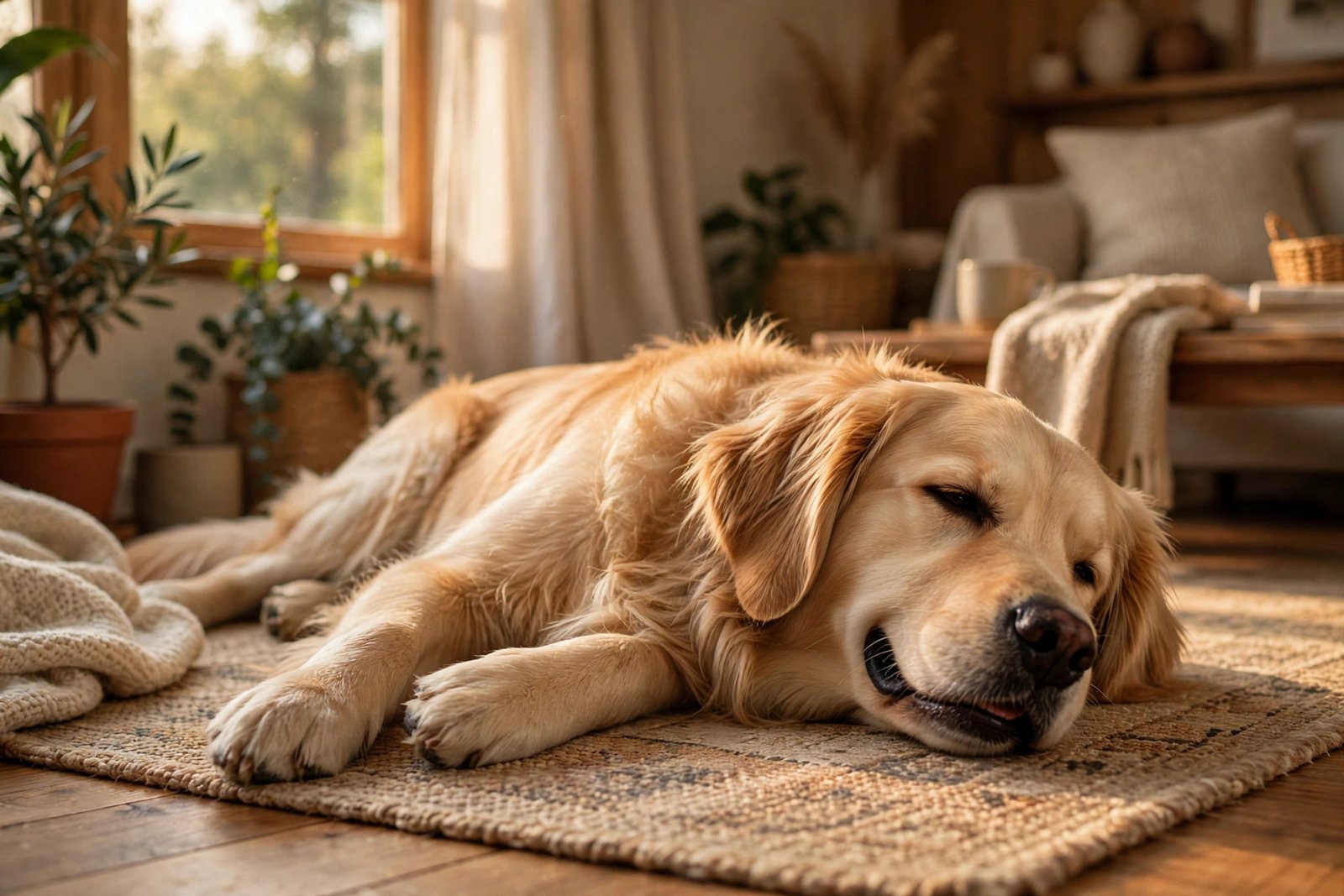
If you have ever wondered why does my dog sigh, you are not imagining things. Dogs sigh a lot, and they do it for real reasons. A sigh is one of the clearest sounds in a dog’s communication toolkit, right up there with barking, whining, and growling — except a sigh is quieter, subtler, and much easier to misread. Some sighs mean your dog is perfectly happy. Others mean your dog is bored, frustrated, or even uncomfortable. Learning to tell the difference takes a little observation, but once you know what to look for, you will understand your dog better than ever.
A dog sigh is a long, audible exhale, usually through the nose or mouth, that lasts a second or two. It is different from a groan, which is lower and more vocal, and different from panting, which is rapid and rhythmic. Puppies sigh, adult dogs sigh, and senior dogs sigh — it is a normal part of canine body language across every breed, from Chihuahuas to Great Danes. The sound itself is simple. The meaning depends entirely on context: what your dog was doing just before the sigh, what their body looked like, and what happened right after.
Why Does My Dog Sigh? The Main Reasons
Most dog sighs fall into a handful of categories. The good news is that the majority of them are completely normal and nothing to worry about. Here is what your dog is most likely telling you.
1. Contentment and Relaxation
This is the most common reason dogs sigh, and it is the one every owner hopes for. When a dog settles down after a walk, flops onto their bed, circles once or twice, and lets out a long, soft sigh, they are saying, in effect, “Ah, this is the life.” The sigh is a physical release — the body relaxing, muscles loosening, tension leaving. You will often see it paired with half-closed eyes, a loose body, ears in a neutral position, and maybe a slow tail wag or a contented groan as they shift into a comfortable position.
Contentment sighs usually happen during transitions: after exercise, after a meal, when you sit down on the couch and your dog curls up beside you, or at bedtime. If your dog sighs while their eyes are drooping and their breathing slows, they are settling in for a nap. Enjoy it. It means your dog feels safe and comfortable in your home, which is exactly what you want.
2. Boredom
Dogs sigh when they are bored, too — and this sigh sounds and looks different. A boredom sigh tends to happen when your dog is lying down but not settling: head up, eyes open, ears pricked, maybe looking at you or toward the door. It is the canine equivalent of a human sighing at a long meeting. Your dog might sigh, shift position, sigh again, and then get up and wander to another spot, only to sigh again.
Boredom sighs are common in high-energy breeds like Border Collies, Australian Shepherds, and Labradors, especially on rainy days or when the family is busy and the dog has been left to entertain itself. If you notice a pattern of boredom sighs, your dog is asking for something to do. A 20-minute training session, a puzzle feeder, a sniffy walk, or a game of fetch can turn the sighs off quickly. Mental stimulation tires a dog out faster than physical exercise alone, so even a short session of practicing teaching your dog to stay or working on a new trick can make a real difference.
3. Frustration or Disappointment
Dogs also sigh when something they wanted did not happen. You put the leash away instead of going for a walk. You finished your sandwich without sharing. The squirrel ran up a tree. The sigh in these moments is sharper and shorter than a contentment sigh, and it often comes with a hard stare, ears pinned slightly back, or a dramatic flop onto the floor. Some dogs even sigh and then huff — a louder, more theatrical exhale — when they are truly annoyed.
Frustration sighs are normal as long as they are occasional. Dogs, like people, have preferences, and they are allowed to be disappointed. The key is frequency. If your dog sighs in frustration constantly, it may be a sign that their expectations and their reality are badly mismatched — for example, a dog that is used to getting a treat every time they sit by the table, and now never does. Consistent, calm boundaries help here. Reward the behavior you want, ignore the sigh, and your dog will adjust.
4. Attention-Seeking
Some dogs learn that sighing gets a reaction. If you have ever turned around, laughed, or said “what’s wrong, buddy?” after a dramatic sigh, your dog noticed. Dogs are excellent at connecting cause and effect, and a sigh that earns attention, a pat, or a treat will be repeated. This is not manipulation in the human sense — it is just learning. Your dog found a sound that works, and they use it.
Attention-seeking sighs usually happen when you are focused on something else: your phone, your laptop, the television. The dog sighs, looks at you, and waits. If you respond, the behavior is reinforced. There is nothing wrong with giving your dog attention when they sigh — most of us do — but if the sighing becomes constant, you may want to reward calm, quiet behavior instead, so your dog learns that lying quietly is what earns the good stuff.
5. Tiredness
A sigh is often part of the winding-down process. After a long hike, a big play session, or a busy day at daycare, dogs sigh as their breathing and heart rate return to normal. It is similar to the way you might exhale deeply after sitting down at the end of a long day. Tired sighs come with yawning, slow blinking, and a dog that is clearly ready to sleep. Let them rest.
What Does a Sigh Sound Like — and How Do You Read It?
Not all sighs are created equal, and the sound itself carries information. A soft, slow exhale through the nose, with a relaxed body, almost always means contentment or tiredness. A sharp, audible exhale through the mouth, sometimes with a slight head turn or an eye roll, leans toward frustration or boredom. A sigh followed immediately by a groan or a grunt usually means your dog is getting comfortable — or, in older dogs, that they are a little stiff and shifting position takes effort.
Body language is your best decoder. Read the whole dog, not just the sound:
- Eyes: Soft, half-closed eyes mean relaxation. Wide eyes with a hard stare mean frustration or a demand.
- Ears: Neutral or slightly back ears usually mean calm. Ears pinned flat or pushed forward can signal stress or fixation.
- Body: A loose, wiggly body means a happy dog. A stiff body, a tucked tail, or lip licking alongside a sigh can signal anxiety or discomfort.
- Timing: A sigh right after lying down means settling in. A sigh while staring at the treat jar means something else entirely.
Context matters more than any single signal. A sigh at 10 p.m. on the dog bed is not the same as a sigh at 3 p.m. while your dog stares at the front door. If you want to get good at reading your dog, spend a week noting when the sighs happen and what surrounds them. You will spot the pattern fast.
When a Sigh Is a Warning Sign
Most sighs are harmless, but some deserve attention. A sigh can occasionally be a sign of pain, breathing trouble, or stress, and the difference is usually in what accompanies it.
Pain or Discomfort
Dogs in pain often sigh, groan, or grunt when they lie down or stand up. If the sigh happens every time your dog changes position, or if it is paired with stiffness, limping, reluctance to jump or climb stairs, or a loss of appetite, pain is a real possibility. Older dogs with arthritis are especially prone to this — the sigh is the sound of a body that hurts when it moves. If you notice this pattern, book a vet visit. According to the American Veterinary Medical Association (AVMA), pain in pets often shows up as subtle behavior changes long before it becomes obvious, and early treatment makes a big difference.
Breathing Problems
A sigh is a normal exhale, but labored breathing is not. If the sigh sounds like a wheeze, a grunt, or a struggle to move air, or if your dog is breathing fast while resting, panting heavily without exercise, or showing blue or pale gums, treat it as urgent and call your vet the same day. Flat-faced breeds like Bulldogs, Pugs, and French Bulldogs are more prone to breathing issues, and any change in their breathing sounds warrants a check. A routine vet visit in the United States typically costs $50 to $80 for an exam, and catching a respiratory problem early is almost always cheaper than treating it late — you can read more about what to expect in our guide to how much a vet visit costs.
Stress and Anxiety
Dogs under stress sigh, yawn, lick their lips, and pace. If the sighing comes in clusters — sigh, yawn, lip lick, sigh again — your dog may be anxious rather than relaxed. Common triggers include thunderstorms, fireworks, visitors, a new baby, a move, or being left alone. If your dog sighs heavily every time you pick up your keys or put on your shoes, they may be dealing with separation-related stress. Our guide to dog separation anxiety solutions covers practical steps for that, including gradual desensitization and enrichment that genuinely helps.
When to Call the Vet
Call your vet if sighing is paired with any of these red flags: loss of appetite, lethargy, vomiting or diarrhea, coughing, limping, reluctance to move, rapid breathing at rest, or a sudden change in how often your dog sighs. A single sigh is never an emergency. A new pattern of sighing combined with other symptoms is worth a conversation with your veterinarian. Trust your gut — you know your dog’s normal better than anyone.
What to Do When Your Dog Sighs
For most sighs, the right response is simple: nothing. A contentment sigh needs no fix. A tired sigh needs a comfortable place to sleep. But if the sighs are telling you something, here is how to respond to each type.
If it is boredom: Add enrichment. Rotate toys, use a snuffle mat or a stuffed Kong, scatter kibble in the yard for a sniffing game, or add a second short walk. Puzzle feeders cost $10 to $25 and can keep a dog busy for 20 minutes. Training sessions of 5 to 10 minutes, a few times a day, are even better — they tire a dog’s brain out.
If it is frustration: Stay consistent. Do not give in to the sigh by handing over the treat or opening the door every time. Wait for calm behavior, then reward that. Dogs learn quickly when the rules are predictable.
If it is attention-seeking: Give your dog structured attention on your terms — a scheduled play session, a training game, a walk — and ignore the dramatic sighs. Reward quiet settling with a calm pat or a chew.
If it is stress: Identify the trigger and reduce it where you can. For noise anxiety, a safe room, a white noise machine, and a long-lasting chew can help. For separation stress, practice short absences and build up slowly. If anxiety is severe, talk to your vet about behavior modification or medication — there is no shame in it, and it can transform a dog’s quality of life.
If it might be pain: Do not wait it out. Book a vet appointment, note exactly when the sighing happens and what your dog was doing, and share that with your vet. A short video of the behavior is worth a thousand words in an exam room.
Do Dogs Sigh in Their Sleep?
Yes — and it is usually adorable. Dogs sigh, twitch, whimper, and even “run” in their sleep during REM cycles, just like people dream. A sleeping sigh is almost always normal. The exception is if your dog seems to struggle to breathe while sleeping, snores loudly and then gasps, or wakes up coughing. Sleep apnea does occur in dogs, particularly in overweight dogs and flat-faced breeds, so mention it to your vet if you notice gasping or long pauses in breathing during sleep.
Why Does My Dog Sigh at Me Specifically?
If your dog sighs while looking directly at you, they are communicating with you — the most common interpretation is a mix of contentment and a gentle request. Dogs that follow their owners from room to room often sigh when they settle near you, and that sigh means they are happy to be close. It is the same impulse behind the behavior in our article on why dogs follow their owners everywhere: dogs are social animals, and proximity to their person is rewarding in itself. A sigh aimed at you can also be a polite demand — “I am here, I am bored, and I would like you to notice” — especially if it is paired with a pointed stare or a paw on your leg.
Either way, a sigh directed at you is a sign of a strong bond. Your dog is talking to you in the only language they have. The fact that they choose to communicate with you, rather than just acting out, is a good thing.
The Bottom Line
Most of the time, why does my dog sigh has a simple, happy answer: your dog is relaxed, tired, or settling in for a nap. Boredom and frustration sighs are common too, and they are useful information — they tell you your dog needs more enrichment, more exercise, or clearer boundaries. The sighs that matter most are the ones that come with a change: new stiffness, new lethargy, breathing changes, or a sudden increase in sighing. Those deserve a vet visit, not a shrug. Learn your dog’s normal sigh, pay attention to the body language around it, and you will have one more way to understand what your best friend is trying to tell you.
Frequently Asked Questions
Why does my dog sigh when I pet him?
A sigh during petting is usually a sign of contentment — your dog is relaxing into the touch and enjoying it. If the sigh is paired with a loose body, soft eyes, and leaning into your hand, it means “this feels great, please keep going.”
Is it normal for dogs to sigh a lot?
Yes, frequent sighing is normal for most dogs, especially as they settle down to rest. What matters is the pattern: a dog that has always sighed a lot is fine, but a sudden increase in sighing, especially with other symptoms, is worth mentioning to your vet.
Why does my dog sigh and groan when lying down?
The combination of a sigh and a groan while lying down usually means your dog is getting comfortable — or, in older dogs, that their joints are stiff and the movement takes effort. If it happens every time they lie down and they seem slow or reluctant to move, ask your vet to check for arthritis.
Do dogs sigh when they are sad?
Dogs do sigh when they are disappointed or mildly stressed, which can look like sadness — for example, when a walk is canceled or a family member leaves. True depression in dogs usually shows up as lethargy, loss of appetite, and disinterest in play, not just sighing alone.
Should I worry if my dog sighs while sleeping?
No, sighing during sleep is normal and usually happens during dream cycles. Worry only if the sighs sound like gasping or struggling to breathe, or if your dog wakes up coughing — in that case, mention it to your vet.