If you’ve ever settled onto the couch only to have your cat hop up, stare at your favorite throw blanket, Why Does My Cat Knead Blankets and start rhythmically pressing it with their paws — sometimes drooling a little, sometimes purring like a tiny motor — you’ve witnessed one of the most endearing (and most misunderstood) cat behaviors out there. So why does my cat knead blankets? You’re not imagining it, and you’re definitely not alone; this is one of the most common questions cat owners search for, right up there with “why does my cat stare at me” and “why does my cat sleep on my clothes.”
The good news is that kneading is almost always completely normal. It’s rooted in instinct, comfort, and communication, and understanding it can actually help you bond more closely with your cat. Let’s break down exactly what’s happening, why it happens, and when (rarely) it’s worth mentioning to your vet.
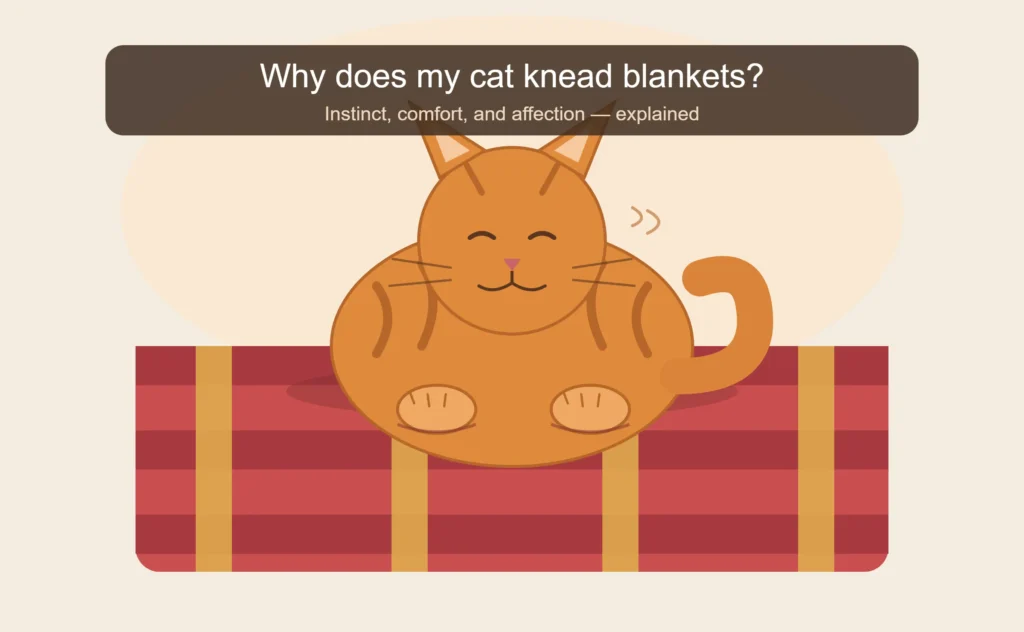
What Is Cat Kneading, Exactly?
Kneading is the rhythmic, alternating pushing motion cats make with their front paws — often against a soft surface like a blanket, pillow, sweater, or even a person’s lap. Some cats extend their claws slightly with each push; others keep them retracted. The motion is sometimes called “making biscuits” because it looks like a baker kneading dough.
Common signs that accompany kneading include:
- Slow, deliberate paw movements, alternating left and right
- Purring or soft chirping sounds
- Half-closed or fully closed eyes
- Drooling (yes, this is normal for many cats)
- Circling or turning before settling down
- Nuzzling or “making dough” directly on a person’s stomach or legs
This behavior can last anywhere from a few seconds to several minutes, and some cats will knead every single time they get comfortable, while others do it only occasionally.
Why Does My Cat Knead Blankets? 5 Real Explanations
1. It’s a Leftover Instinct From Kittenhood
The most widely accepted explanation traces back to nursing. Kittens knead their mother’s belly to stimulate milk flow while feeding, a reflex that starts within days of birth. Even after cats are weaned and fully grown, that motor pattern often sticks around as a comfort behavior — kind of like how some adults still bite their nails or twirl their hair when relaxed.
Blankets, with their soft, pliable texture, closely mimic the feel of a mother cat’s fur or belly, which is why they’re such a popular kneading target.
2. It’s a Self-Soothing, Stress-Relief Behavior
Kneading isn’t just about babyhood nostalgia — it’s genuinely calming for adult cats. The repetitive motion appears to help cats settle into a relaxed state before napping, similar to how some people fidget or rock gently when winding down.
You’ll often notice kneading right before bedtime, after a meal, or during a quiet evening cuddle session — all times when a cat’s stress hormones are naturally lower and comfort-seeking behavior is highest.
3. Scent Marking and Territory
Cats have scent glands in the pads of their paws. When they knead a blanket, they’re depositing their own pheromones onto it, which effectively marks it as “theirs.” This is the same instinct behind cheek-rubbing on furniture or head-butting (called “bunting”) against your legs.
A blanket that smells like your cat — and often like you, too — becomes a comforting, familiar-scented space, which is part of why cats gravitate toward the same blanket over and over.
4. Nesting Instinct
In the wild, cats’ ancestors would trample down grass, leaves, or dirt to create a soft, flat sleeping spot and check the area for hidden hazards before lying down. Domestic cats retain this instinct, and kneading a blanket serves a similar function — softening and “preparing” the surface before settling in for a nap.
5. Expressing Contentment and Affection
When a cat kneads while curled up next to you, purring with half-closed eyes, they are almost certainly expressing comfort and trust. Cats reserve this vulnerable, relaxed body language for environments and people they feel safe with. Many behaviorists consider blanket kneading directed at a favorite person to be a genuine sign of affection.
Is Kneading Ever a Sign of a Problem?
For the vast majority of cats, kneading is a harmless, even healthy, behavior. However, there are a few situations worth paying attention to:
- Sudden onset in an older cat with no prior history of kneading could occasionally be linked to cognitive changes or comfort-seeking due to discomfort — worth mentioning at your cat’s next checkup, not a cause for panic.
- Excessive drooling paired with other symptoms like reduced appetite, lethargy, or bad breath could point to a dental issue and should be evaluated by a veterinarian.
- Kneading that becomes compulsive or paired with obvious distress, such as excessive vocalizing, pacing, or self-grooming to the point of hair loss, may indicate an anxiety-related issue that a vet or veterinary behaviorist should assess.
- Nursing behavior that includes suckling on fabric (sometimes called “wool sucking”) is more common in certain breeds, like Siamese, and is generally benign but can sometimes lead to fabric ingestion, which is worth monitoring.
As always, if you notice a sudden change in behavior or anything that seems paired with signs of pain or illness, a licensed veterinarian is the right person to make an actual diagnosis — this article is meant to help you understand normal behavior, not replace professional veterinary guidance.
How to Support Healthy Kneading Habits
You don’t need to do anything to “fix” kneading, since it’s a natural behavior — but there are ways to make it more enjoyable for both you and your cat.
- Offer a designated soft blanket or cat bed. Many cats develop a preference for one specific texture, so experiment with fleece, knit, or faux-fur options to find their favorite.
- Trim nails regularly. This is especially helpful if your cat kneads directly on your lap or skin, since it reduces scratching discomfort while your cat is mid-knead.
- Avoid startling your cat mid-knead. Because kneading often happens during a relaxed, vulnerable state, sudden loud noises or movements can interrupt this calming ritual.
- Use the moment to bond. Gentle petting or quiet talking while your cat kneads can reinforce the sense of safety and trust that triggered the behavior in the first place.
- Watch for patterns. Noting when and where your cat tends to knead (before naps, after meals, during storms) can help you understand their individual comfort cues over time.
The Bottom Line
Kneading blankets is one of the clearest windows we get into a cat’s inner world — a mix of instinct, comfort, scent-marking, and genuine affection. Rather than a quirky habit to discourage, it’s a behavior most veterinarians and cat behaviorists agree is worth simply enjoying (and maybe keeping a spare blanket handy).
Read This
How to Stop Dog Aggression Towards Other Dogs: A Practical Owner’s Guide
FAQS
Why does my cat knead and then bite the blanket?
A: Light nibbling or “mouthing” fabric often goes along with the same nursing-related instinct as kneading. It’s usually harmless, though if your cat is ingesting fabric fibers, it’s worth asking your vet about supervised access to certain textures.
Why does my cat drool while kneading?
A: Drooling during kneading is a common side effect of the deeply relaxed, purring state cats enter — similar to how some people’s mouths water when they’re very relaxed. It’s typically nothing to worry about unless it’s excessive or paired with other symptoms.
Do all cats knead blankets?
A: No. Kneading frequency varies widely between individual cats. Some knead daily, others rarely, and both patterns can be perfectly normal.
Should I stop my cat from kneading on me?
A: You don’t need to stop the behavior itself, but if claws are uncomfortable, placing a blanket between your cat’s paws and your skin is an easy, cat-friendly solution.
Is kneading related to a cat “making biscuits”?
A: Yes — “making biscuits” is simply a popular nickname for the kneading motion, inspired by the way it resembles hands working dough.
- Why Every Pet Owner Needs an Emergency Pet First Aid Kit
- Affordable Pet Care on a Budget: A Real Owner’s Guide
- Moving House With a Cat: Tips to Keep Your Feline Calm and Safe
- Flea and Tick Prevention Guide: How to Protect Your Pet Year-Round
- How to Pet Proof a Christmas Tree: A Complete Guide for Dog and Cat Owners