
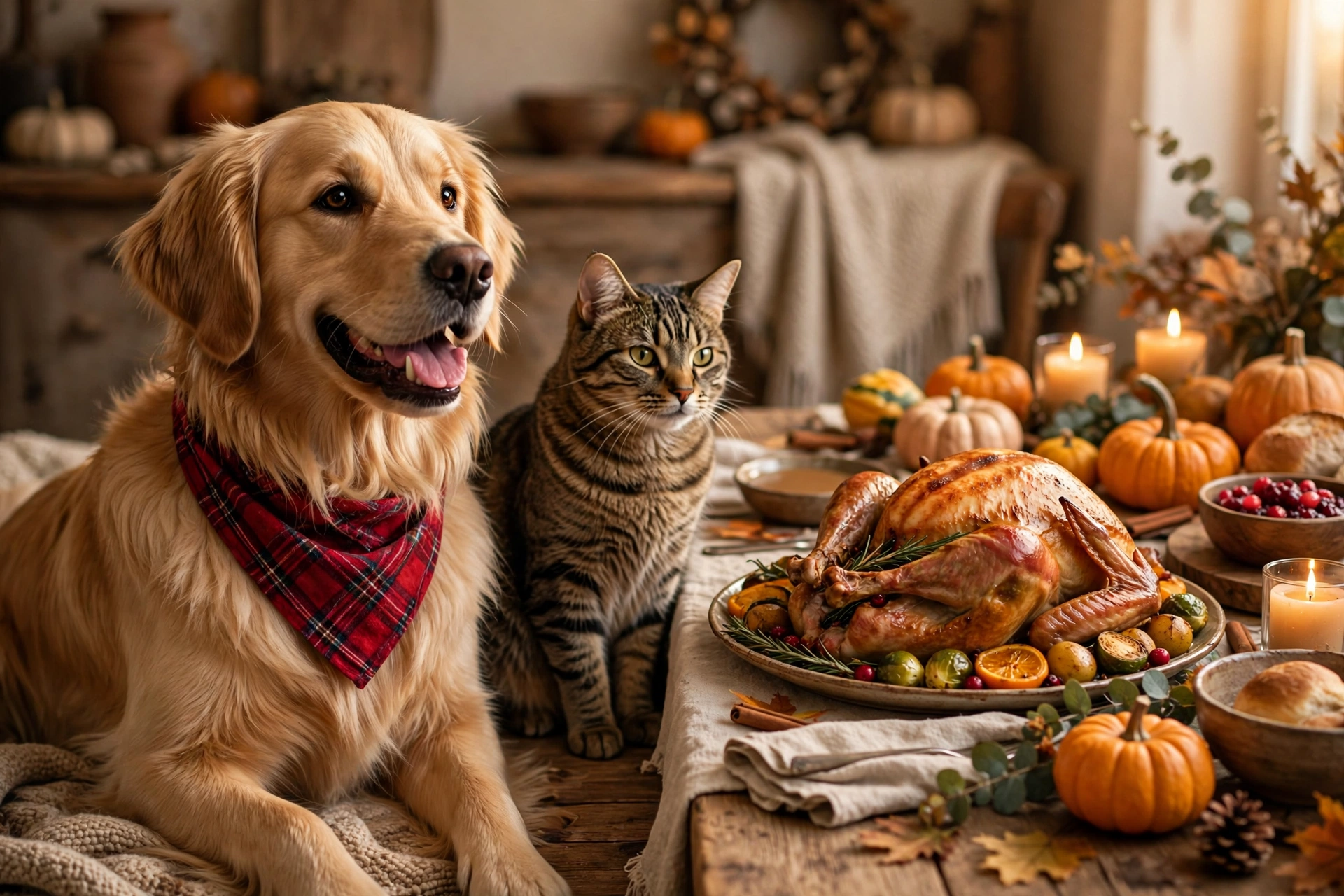
Thanksgiving Is the Best Meal of the Year — and the Riskiest Day for Your Pets
Thanksgiving dinner is one of the happiest days of the year for most families. The kitchen smells amazing, the table is full, and everyone is in a generous mood. For your dog or cat, though, Thanksgiving is one of the most dangerous days of the year. Rich food, busy kitchens, open doors, and well-meaning guests handing out scraps under the table create a perfect storm for upset stomachs, choking, and emergency vet visits.
Most Thanksgiving emergencies are completely preventable. The problem is rarely a pet stealing a whole turkey. It is the small things: a piece of turkey skin here, a spoonful of stuffing there, a bit of gravy poured over kibble, a dessert left on a low table. Each little treat adds up, and many classic holiday foods contain ingredients that are genuinely toxic to dogs and cats.
This guide covers the Thanksgiving foods that are dangerous for dogs and cats, explains why each one is a problem, lists the foods that are safe to share in small amounts, and gives you a simple plan for keeping your pets safe while you enjoy the holiday. If you want a broader plan for handling pet emergencies before they happen, read our guide on why every pet owner needs an emergency plan.
Why Thanksgiving Is a High-Risk Day for Pets
Veterinary clinics and poison control hotlines see a surge of calls around Thanksgiving every year. There are a few reasons for this. First, the food itself is the issue. Thanksgiving cooking uses large amounts of fat, butter, salt, sugar, onions, garlic, and herbs that pets are not built to handle. A dog or cat that eats plain kibble all year can get seriously ill from a single rich meal.
Second, the day is chaotic. The kitchen is busy, the door opens and closes as guests arrive, and food sits on counters and low tables within easy reach. Pets that never counter-surf may try it when the smell of roasting turkey fills the house. Cats, who are natural climbers, can reach dishes that seem safely out of the way.
Third, guests are often the biggest risk. Visitors who do not have pets of their own may not know that stuffing or dessert is dangerous, and they may feed your dog from the table because those big eyes are hard to resist. Kids are especially likely to share their plates. A quick word with everyone before dinner can prevent most of these problems, and we will cover exactly what to say later in this article.
Finally, Thanksgiving falls at a time of year when many vet clinics run holiday hours. If your pet gets sick late on Thursday evening, your regular vet may be closed, and an emergency clinic visit can be expensive. Prevention really is the cheapest option, and if you are watching costs, our guide to affordable pet care on a budget has practical ways to plan for unexpected vet bills.
Dangerous Thanksgiving Foods for Dogs and Cats
Here are the holiday foods that cause the most trouble, and what makes each one risky.
Turkey Skin, Fat, and Bones
Plain, cooked turkey meat is fine for most pets in small amounts. The skin and fat are a different story. Turkey skin is extremely fatty, and a sudden fatty meal can trigger pancreatitis in dogs, a painful inflammation of the pancreas that can cause vomiting, diarrhea, loss of appetite, and abdominal pain. Cats can also suffer stomach upset from fatty foods. Small dogs are at higher risk because a few bites of skin are a large meal relative to their body size.
Cooked turkey bones are even more dangerous. Cooking makes bones brittle, so they can splinter when a dog chews them. Splinters can cut the mouth, throat, or intestines, or cause a blockage that needs surgery. Never give your pet turkey bones, and do not leave the carcass where a pet can reach it. Wrap bones tightly and take the trash out promptly, since many dogs will happily dig through a kitchen trash can for a turkey carcass.
Stuffing and Dressing
Stuffing is one of the most dangerous dishes on the table for pets. Most recipes contain onions and garlic, which are toxic to both dogs and cats. Onions and garlic can damage red blood cells and cause anemia, and cats are especially sensitive. The toxic effect is not always immediate, so a pet can seem fine on Thanksgiving and show symptoms like weakness, pale gums, or dark urine a few days later.
Stuffing also tends to be high in fat, salt, and butter, and it often contains herbs like sage. Even stuffing made without onions can upset a sensitive stomach. Keep stuffing completely off your pet’s plate, and do not let guests share it.
Gravy
Gravy seems harmless, but it is usually made from fatty drippings, butter, and salt, and it may contain onion or garlic. Pouring gravy over your pet’s regular food is one of the most common ways pets get sick on Thanksgiving. The fat can trigger pancreatitis in dogs, and the salt load is too much for most cats. If you want to make your pet’s meal feel special, a spoonful of plain cooked turkey or a few plain green beans is a much safer choice.
Mashed Potatoes and Sweet Potato Casserole
Plain boiled potatoes are not toxic to pets, but Thanksgiving mashed potatoes are usually loaded with butter, milk, cream, salt, and garlic. Many dogs and cats are lactose intolerant, so the dairy alone can cause diarrhea. Sweet potato casserole is worse, because it is often topped with marshmallows and brown sugar. The sugar and fat make it a poor choice for pets, and cats in particular do not need sugary foods at all. Plain, cooked sweet potato without butter, sugar, or marshmallows is a safe alternative in small amounts.
Cranberry Sauce
Fresh cranberries are not toxic to pets, but canned cranberry sauce is very high in sugar. That much sugar can upset a pet’s stomach and is a bad idea for pets with diabetes or weight problems. Some sugar-free cranberry sauces are even more dangerous, because they may be sweetened with xylitol. Xylitol is extremely toxic to dogs, even in small amounts, and can cause a dangerous drop in blood sugar and liver failure. Always check the label of any sugar-free product, and keep it away from pets entirely.
Desserts: Chocolate, Xylitol, and Raisins
Thanksgiving desserts are a triple threat. Chocolate is toxic to dogs and cats because it contains theobromine, which pets cannot process well. Dark chocolate and baking chocolate are the most dangerous, but even milk chocolate can cause vomiting, diarrhea, and restlessness. Pumpkin pie often contains nutmeg, which can cause stomach upset and nervous system symptoms in pets.
Xylitol, the sugar substitute found in many sugar-free desserts, gum, and candy, is one of the most dangerous substances a dog can eat. Even a small amount can cause a rapid drop in blood sugar, seizures, and liver failure. Cats are less commonly affected, but there is no safe reason to give any pet a sugar-free dessert.
Raisins and grapes are another serious hazard. They appear in some stuffing recipes, fruit salads, and desserts, and they can cause kidney failure in dogs. The toxic dose is unpredictable, so any amount should be treated as an emergency. Keep fruitcake, mince pies, and raisin-filled dishes well away from pets.
Alcohol and Raw Dough
Alcohol is toxic to dogs and cats, and they are far more sensitive to it than people are. Even a small amount of wine, beer, or spirits can cause vomiting, disorientation, slowed breathing, and in severe cases coma. Holiday drinks left on low tables are easy for a curious pet to lap up, so keep glasses out of reach and clean up spills quickly.
Raw bread dough and pie dough are also dangerous. The yeast in raw dough continues to rise in a pet’s warm stomach, which can cause painful bloating. As the yeast ferments, it also produces alcohol, which adds to the risk. Never let a pet eat raw dough, and keep rising dough covered and out of reach.
Other Foods to Keep Away
A few more items deserve a mention. Macaroni and cheese is very high in fat and dairy. Green bean casserole often contains onions, garlic, and creamy soup, so plain green beans are safe but the casserole is not. Corn on the cob is a choking and blockage risk because dogs may swallow the cob whole. Ham is very salty and fatty, and many vets recommend avoiding it entirely. Nuts, especially macadamia nuts, can be toxic to dogs, and most nuts are too fatty for pets in general. If you are not sure whether a dish is safe, the safest answer is not to share it.
Thanksgiving Foods That Are Safe to Share (in Small Amounts)
Your pet does not have to miss out completely. These foods are safe for most healthy dogs and cats when served plain and in small amounts, as a treat rather than a meal. Remember the general rule many vets recommend: treats should make up no more than about 10 percent of your pet’s daily calories.
- Plain cooked turkey: Skinless, boneless, unseasoned white meat, cut into small pieces. A few bites for a dog, a small piece or two for a cat.
- Plain pumpkin: Canned pure pumpkin (not pumpkin pie filling) is a favorite for many pets and can be good for digestion. A spoonful is plenty.
- Plain green beans: Steamed or boiled with no butter, salt, garlic, or onion. A crunchy, low-calorie treat.
- Plain sweet potato: Cooked and mashed with nothing added. Rich in fiber and vitamins, and most dogs love it.
- Carrots: Raw or cooked, plain, and cut into pieces sized for your pet. A good crunchy option for dogs.
- Apple slices: Plain apple without seeds or core. Sweet, crunchy, and safe in small amounts.
- Plain cranberries: A few fresh cranberries are fine, though many pets will not like the tart taste.
Serve safe foods in your pet’s own bowl, away from the table, so they learn that treats come from you, not from guests. If your pet has a medical condition such as diabetes, kidney disease, pancreatitis, or food allergies, check with your vet before sharing any holiday food. Cats tend to be pickier and more sensitive than dogs, so keep portions very small for them. For more seasonal safety tips, see our pet safety tips — many of the same habits, like keeping pets away from the kitchen and watching what guests offer, apply year-round.
What to Do If Your Pet Eats Something Dangerous
If you catch your pet eating something dangerous, stay calm and act quickly. First, remove any remaining food so they cannot eat more. Do not try to make your pet vomit unless a veterinarian tells you to, because inducing vomiting can be dangerous with some foods and for some animals.
Next, figure out what and how much your pet ate, and when. This information helps the vet or poison control expert judge the risk. Then call your veterinarian right away, or call the ASPCA Animal Poison Control Center for expert advice. The ASPCA also publishes guidance on holiday pet safety through the AVMA’s Thanksgiving pet safety page, which is a useful reference for the whole family.
Watch for warning signs such as vomiting, diarrhea, drooling, weakness, trembling, difficulty breathing, or collapse. Some symptoms, like those from onion or raisin toxicity, can take a day or two to appear, so keep an eye on your pet for several days after the holiday. If your regular vet is closed, head to an emergency vet clinic and bring the food packaging or a sample of what your pet ate if you can. Acting fast can make a real difference, and having a plan in place before the holiday is the best preparation of all.
Tips for Guests and Kids
Most Thanksgiving pet emergencies start with a well-meaning guest, so a little preparation goes a long way. Before dinner, tell everyone the simple rule: no feeding the pets from the table, and no sharing any food without asking you first. Put it in positive terms, and give guests a safe alternative. Set out a small bowl of pet-safe treats, like plain cooked turkey pieces or green beans, and let guests offer those instead.
Kids need a clear, simple message too. Explain that some people food can make dogs and cats very sick, and that the pet’s own treats are the way to show love. If you have young children, it helps to feed your pet before the meal and give them a puzzle toy or a long-lasting chew in a quiet room during dinner. That keeps your pet busy, happy, and away from dropped food.
Keep the kitchen off-limits while you cook, and ask someone to watch the door as guests arrive so pets do not slip out. After dinner, clear plates quickly and take the trash out right away. A turkey carcass in an open trash can is an invitation to trouble, especially for dogs. A baby gate across the kitchen doorway is a simple, effective tool that many pet owners swear by on busy cooking days.
Quick Safe vs. Unsafe Thanksgiving Checklist
Print this list or save it on your phone for Thanksgiving Day.
Safe in small amounts (plain, unseasoned):
- Plain turkey meat, no skin or bones
- Plain pumpkin puree, not pie filling
- Plain green beans and carrots
- Plain sweet potato, no butter or sugar
- Apple slices without seeds or core
Unsafe — keep away from pets:
- Turkey skin, fat, and cooked bones
- Stuffing with onion or garlic
- Gravy, butter, and salty sauces
- Chocolate, xylitol, and sugar-free desserts
- Raisins, grapes, and macadamia nuts
- Alcohol and raw dough
- Cranberry sauce and sweet potato casserole
- Corn on the cob and ham
Frequently Asked Questions
Can dogs eat Thanksgiving turkey?
Yes, dogs can eat plain, cooked turkey meat in small amounts. Serve it skinless, boneless, and unseasoned. Avoid turkey skin, fat, and cooked bones, which can cause pancreatitis or dangerous splinters.
Can cats eat turkey on Thanksgiving?
Cats can have a small piece of plain, cooked turkey as a treat. Keep the portion very small, and never give a cat turkey skin, bones, stuffing, or gravy. If your cat has a sensitive stomach or a medical condition, skip the table food entirely.
Is pumpkin pie safe for dogs?
No. Pumpkin pie filling contains sugar, spices like nutmeg, and sometimes butter and cream, which can upset a dog’s stomach. Plain canned pumpkin puree, with no added sugar or spices, is the safe alternative.
What should I do if my dog eats stuffing with onions?
Call your veterinarian or the ASPCA Animal Poison Control Center right away and tell them how much your dog ate and when. Do not wait for symptoms, because onion toxicity can take a day or two to appear. Your vet will advise whether your dog needs to be seen.
How can I keep my pet safe during Thanksgiving dinner?
Feed your pet before the meal, keep them out of the kitchen while you cook, and tell guests not to feed them from the table. Offer a few plain, pet-safe treats in their own bowl, give them a toy to keep them busy, and take the trash out promptly after dinner.