
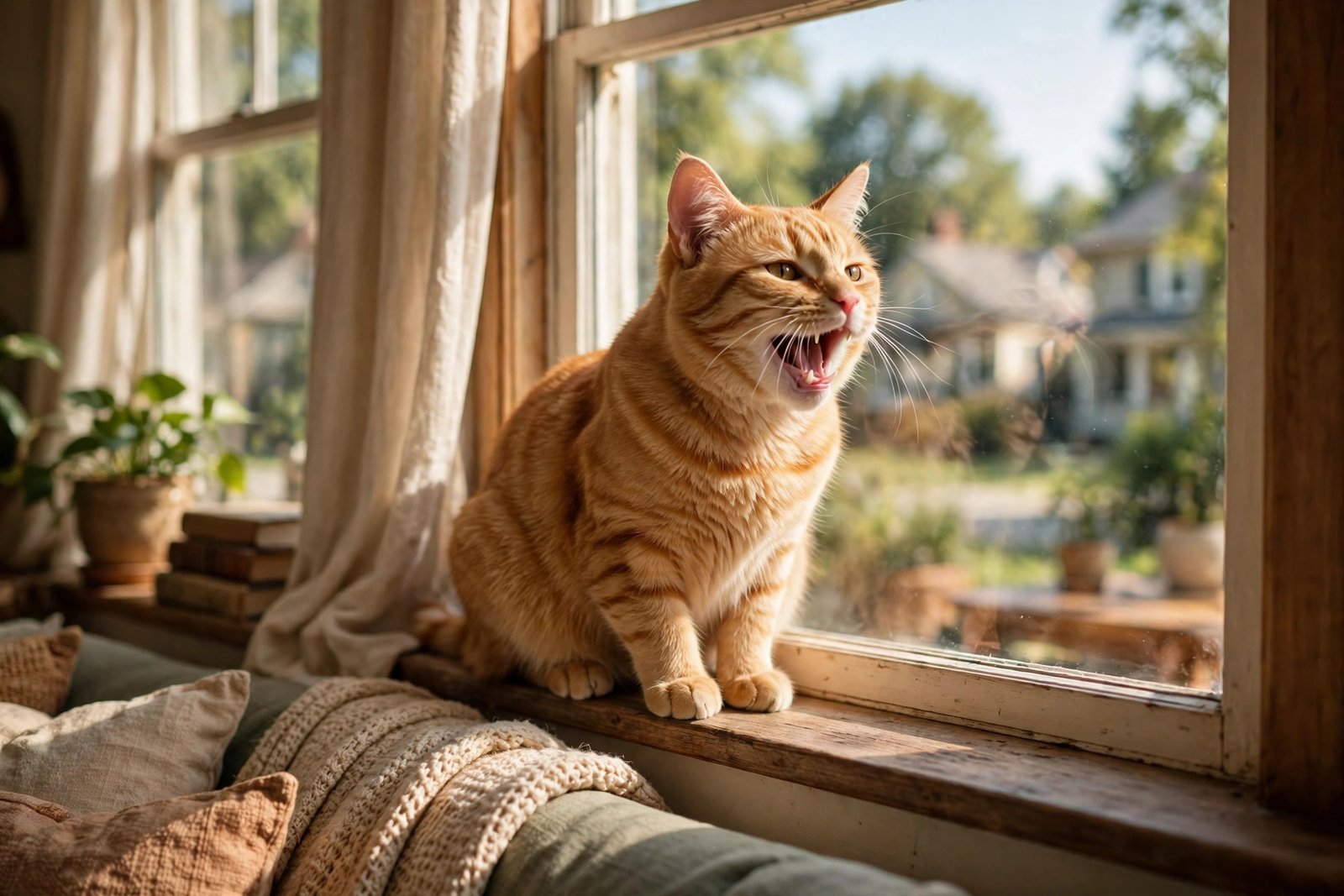
If your cat seems to have something to say about everything — at breakfast, at bedtime, at 3 a.m., and every moment in between — you have probably wondered: why does my cat meow so much? A little meowing is perfectly normal. Adult cats rarely meow at each other; they developed meowing mainly as a way to communicate with humans. In other words, your cat is talking to you because you are the one who listens. But when the meowing becomes constant, loud, or happens at odd hours, it can be exhausting, and it can also be your cat’s way of telling you that something needs attention.
Some cats are simply more talkative than others. Siamese, Oriental Shorthair, Bengal, and Tonkinese cats are famous for being chatty, while breeds like the British Shorthair and the Scottish Fold tend to be quieter. But breed is only part of the story. Meowing can mean hunger, boredom, stress, pain, confusion, or simply a desire for your company. The key is learning to tell the difference between a cat that is chatting and a cat that is asking for help. This guide walks you through the nine most common reasons cats meow excessively, how to figure out which one applies to your cat, and what you can actually do about it.
Why Does My Cat Meow So Much? 9 Common Reasons
Before you try to fix the meowing, you need to understand it. Cats do not meow without a reason — even if the reason is just that they enjoy the sound of their own voice and your reaction to it. Work through the list below, starting with the simplest explanations, and pay attention to when the meowing happens. A cat that meows only at mealtimes is telling a very different story from a cat that yowls all night long.
1. Your Cat Is Hungry or Thirsty
Hunger is the number one reason cats meow at their owners. If your cat meows loudly around mealtimes, leads you to the kitchen, or sits next to its empty food bowl and stares at you while meowing, the message is clear: feed me. Cats are excellent at learning routines, and they will often start meowing earlier and earlier if they have learned that meowing makes food appear faster. Some cats also meow for a specific food — they may turn their nose up at the kibble in the bowl and meow until the wet food comes out.
Make sure your cat always has access to fresh, clean water. Cats are picky about water, and a cat that meows near the sink or the bathtub may be asking for running water or a cleaner bowl. Many American cat owners find that a pet water fountain, which typically costs $25 to $50, encourages their cat to drink more and reduces faucet-related meowing. If your cat is on a feeding schedule, stick to it. Feeding at the same times every day reduces food-related meowing, because your cat learns that food arrives on schedule whether it meows or not. And resist the urge to feed your cat every time it meows — that is the fastest way to train a cat to meow even more.
2. Your Cat Wants Attention
Cats are often described as independent, but many of them crave attention just as much as dogs do — they are simply more selective about when and how they ask for it. A cat that meows at you, rubs against your legs, and then flops down for a belly rub is asking for interaction. This is especially common in single-cat households, in homes where the owner works long hours, and in the evening when the owner finally sits down to relax.
The tricky part is that attention-seeking meowing is reinforced every time you respond to it. If your cat meows and you immediately pick it up, talk to it, or give it a treat, you have just taught it that meowing works. That does not mean you should ignore your cat — cats need daily interaction, play, and affection. It means you should give your cat attention on your schedule, not only when it demands it. Schedule two or three short play sessions a day, about ten to fifteen minutes each, using a feather wand or a toy mouse. A cat that has had its social and play needs met is a much quieter cat.
3. Your Cat Is Bored or Understimulated
An indoor cat that has nothing to do all day will find ways to entertain itself, and meowing at you is one of them. Boredom is a huge driver of excessive meowing, especially in young, active cats and in high-energy breeds like Bengals and Abyssinians. A bored cat may also scratch furniture, knock things off shelves, or race around the house at night — behaviors that often show up together.
The fix for boredom is enrichment, and it does not have to be expensive. A tall cat tree near a window gives your cat a place to watch birds and squirrels, which is genuinely entertaining for them. Puzzle feeders, which cost $10 to $25, make your cat work for its food and engage its hunting instincts. Rotating toys — putting half the toys away and swapping them every week — keeps things novel. Cardboard boxes and paper bags are free and endlessly fascinating to most cats. Even a bird feeder outside a window, which costs about $15 to $30, can provide hours of entertainment. If your cat’s meowing drops after you add enrichment, boredom was the problem all along. You can also check our guide on how to stop cat scratching furniture, since boredom often drives that habit too.
4. Your Cat Is Stressed or Anxious
Cats are creatures of habit, and change stresses them out. A move to a new home, a new baby, a new pet, a houseguest, construction noise, or even rearranging the furniture can trigger anxious meowing. Stressed cats often meow more than usual, and the meow may sound different — lower, longer, or more urgent than their normal voice. They may also hide more, eat less, over-groom, or avoid the litter box.
If you can identify the stressor, address it directly. Give your cat a safe, quiet room with its bed, food, water, and litter box when guests visit or workers are in the house. Use a pheromone diffuser such as Feliway, which costs around $20 to $35 for a starter kit in the United States, to help create a calming atmosphere. Keep your cat’s routine as consistent as possible — same feeding times, same playtimes, same sleeping spots. If the stress is severe or long-lasting, talk to your veterinarian about anti-anxiety options. Some cats benefit from calming supplements or, in serious cases, prescription medication, and there is no shame in that.
5. Your Cat Wants to Go Outside — or Come Inside
Cats that are allowed outdoors, or that can see outdoors through a window, often meow at doors and windows when they want out. Indoor cats that spot a bird, a squirrel, or another cat outside may meow with excitement or frustration — a rapid, chattering sound that is different from their normal meow. Cats in heat are especially vocal about wanting to go outside, and unneutered males may yowl for hours when they smell a female in heat nearby.
If your cat is not spayed or neutered, talk to your veterinarian about the procedure. In the United States, spaying or neutering typically costs $50 to $200 at a low-cost clinic or $200 to $400 at a private veterinary practice, and it dramatically reduces heat-related yowling, spraying, and roaming. For indoor cats that simply want to look outside, a window perch or a catio — an enclosed outdoor patio for cats — can satisfy the urge safely. A window perch costs about $20 to $40, and a small window-box catio starts around $150. Never let your cat roam freely outdoors unsupervised if you live near busy roads, coyotes, or other hazards.
6. Your Cat Is in Pain or Feeling Unwell
This is the reason every owner should take seriously. A cat that suddenly starts meowing much more than usual, especially if the meow sounds pained, urgent, or different from its normal voice, may be trying to tell you that something hurts. Cats are famous for hiding pain, so a change in vocalization is often one of the first signs that something is wrong. Cats with urinary problems, for example, may cry out while trying to use the litter box. Cats with arthritis may meow when jumping up or down. Cats with dental pain may meow around food but then refuse to eat.
Other warning signs that the meowing is medical include a loss of appetite, vomiting, diarrhea, changes in litter box habits, hiding, lethargy, or excessive grooming of one spot. Older cats that start yowling at night may be experiencing cognitive dysfunction — the feline equivalent of dementia — or may be going deaf and meowing louder because they cannot hear themselves. Hyperthyroidism, kidney disease, and high blood pressure are all common in senior cats and can cause increased vocalization. If the excessive meowing is new, sudden, or paired with any other symptom, do not wait — call your veterinarian. A routine visit in the United States typically costs $50 to $100, and early diagnosis is almost always cheaper and kinder than waiting. For a full breakdown of costs, see our article on how much a vet visit costs.
7. Your Cat Is Greeting You
Some meowing is simply a hello. Many cats give a short, cheerful meow or a chirp when their owner comes home, walks into the room, or wakes up in the morning. This is normal, healthy social behavior, and it is actually a sign of a strong bond. Your cat is acknowledging you and inviting interaction, the same way a dog wags its tail when you come home.
Greeting meows are usually short, high-pitched, and paired with an upright tail, forward ears, and a relaxed body. They are not a problem unless they escalate into demanding, nonstop meowing. The best response is a brief, warm acknowledgment — a hello, a chin scratch, a short greeting — and then go about your business. If you make a big fuss every time your cat greets you, the greeting can grow into a demand. A calm, consistent response keeps it a pleasant hello rather than a habit that takes over your evenings.
8. Your Cat Is Lonely, Especially at Night
Cats are most active at dawn and dusk, which is exactly when most owners are trying to sleep or relax. A cat that meows at night is often a cat that is awake, bored, and lonely, and has figured out that meowing gets a reaction from the only other creature in the house. Nighttime meowing is one of the most common complaints cat owners have, and it is also one of the most fixable.
The best approach is to tire your cat out before bed. A vigorous play session in the evening — ten to fifteen minutes of chasing a feather wand or a laser pointer — followed by a small meal or a treat, mimics the natural hunt-eat-groom-sleep cycle of a wild cat. After eating, most cats will groom themselves and settle down to sleep. Keep your cat’s feeding schedule consistent, and make sure it has toys and a comfortable sleeping spot outside your bedroom if nighttime meowing is a problem. If you get up and feed your cat at 3 a.m., you are teaching it that 3 a.m. meowing works. It will take a few nights of ignoring the behavior, but most cats learn quickly once the reward disappears.
9. Your Cat Has Learned That Meowing Works
Sometimes the reason is simple: your cat meows because you have trained it to, without realizing it. Every time you respond to a meow with food, attention, a door opened, or a toy produced, you reinforce the behavior. Cats are fast learners, and they are very good at figuring out which of their behaviors get results. A cat that has learned that a loud meow at 5 a.m. produces breakfast will keep doing it, and may even start earlier to see if it can get breakfast even sooner.
Breaking this cycle takes consistency from everyone in the household. Decide what meowing you will respond to and what you will ignore, and stick to it. Ignore attention-seeking meows completely — do not talk to the cat, do not look at it, do not get up. The moment the cat is quiet, even for a few seconds, reward the silence with attention or a treat. This teaches the cat that quiet behavior, not meowing, gets the good stuff. Be warned: the meowing often gets worse before it gets better, a phenomenon behaviorists call an extinction burst. Your cat is testing whether louder, longer meowing will work. If you hold firm, the behavior usually fades within one to two weeks.
How to Tell What Your Cat’s Meow Means
Not all meows sound alike, and learning your cat’s vocabulary is one of the most useful skills an owner can develop. A short, high-pitched meow is usually a greeting or a request. A longer, drawn-out meow often means the cat wants something specific, like food or access to a room. A low-pitched, grumbling meow can signal annoyance or discomfort. A yowl — a long, loud, drawn-out sound — often means distress, pain, or a cat in heat. A chirp or trill is an excited, friendly sound that cats often make when they see a bird or when greeting a favorite person.
Pay attention to the context as well as the sound. A cat that meows while standing next to its food bowl wants food. A cat that meows while pawing at a door wants the door opened. A cat that meows while crouched in the litter box may be in pain. A cat that meows at nothing, while staring at a wall, especially if it is a senior cat, may be confused or disoriented. The more you watch and listen, the better you will get at translating your cat’s messages — and the less you will have to guess. If you want to understand more of your cat’s body language, our article on why cats knead blankets explains another common communication behavior.
When Excessive Meowing Needs a Vet Visit
Most excessive meowing has a behavioral explanation and can be managed at home. But some situations need professional help, and it is important to know the difference. Call your veterinarian if the meowing started suddenly and your cat has never been vocal before, if the meowing is paired with appetite loss, vomiting, diarrhea, or litter box changes, if your cat cries out in pain when touched, picked up, or using the litter box, or if your senior cat has started yowling at night and seems confused or disoriented.
Your veterinarian may run blood work, check your cat’s thyroid levels, examine its teeth, and take X-rays if arthritis is suspected. These diagnostics cost extra — blood work typically runs $100 to $250 in the United States — but they can catch serious conditions early. The ASPCA notes that excessive vocalization can indicate a medical problem, especially in older cats, and recommends a veterinary exam to rule out illness before assuming the cause is behavioral. That is good advice. Rule out the medical causes first, and then work on the behavioral ones with confidence.
What NOT to Do About Excessive Meowing
There are a few responses that seem logical but actually make the problem worse. Do not punish your cat for meowing — yelling, squirting water, or shaking a can of coins may stop the meow in the moment, but it damages your cat’s trust in you and can increase anxiety, which leads to more meowing. Do not give in inconsistently — feeding the cat at 4 a.m. once after ignoring it for three nights teaches the cat that persistence pays off. And do not assume the problem will fix itself. Excessive meowing that is ignored often escalates, because the cat tries harder and harder to get its message across.
Also, do not reach for calming supplements or medications without talking to your veterinarian first. Some over-the-counter calming products are safe, but others can interact with medications your cat is already taking, and none of them will fix a medical problem. A quick call to your vet’s office can save you money and keep your cat safe. If your cat’s meowing is tied to litter box problems as well, read our guide on why your cat suddenly stopped using the litter box, since the two issues often share a cause.
The Bottom Line
So, why does my cat meow so much? Usually it is hunger, boredom, a desire for attention, or a habit your cat learned from you. Sometimes it is stress, a wish to go outside, or a nighttime burst of energy. And sometimes — the times that matter most — it is your cat telling you that something hurts or something is wrong. Learning to tell these apart is one of the most valuable things you can do as a cat owner.
Start by ruling out medical causes, then look at your cat’s routine: is it eating on schedule, getting enough play, and living in a calm, enriched environment? Meet those needs consistently, reward quiet behavior, and be patient while old habits fade. Your cat is not trying to annoy you. It is talking to you in the only language it has. Listen carefully, respond thoughtfully, and the conversation will get a lot quieter — and a lot more pleasant for both of you.
Frequently Asked Questions
Why does my cat meow so much at night?
Cats are most active at dawn and dusk, so nighttime meowing usually means boredom, hunger, or loneliness. Try a vigorous play session followed by a small meal before bed, and avoid rewarding 3 a.m. meowing with food or attention.
Why does my cat meow so much all of a sudden?
Sudden excessive meowing can mean pain, illness, stress from a change in the home, or a cat in heat. If it is new and paired with appetite loss, hiding, or litter box changes, schedule a vet visit promptly.
Do some cat breeds meow more than others?
Yes. Siamese, Oriental Shorthair, Bengal, and Tonkinese cats are famously chatty, while British Shorthairs, Scottish Folds, and Persians tend to be quiet. But individual personality matters too — any cat can be a talker.
Should I ignore my cat when it meows?
Ignore attention-seeking meows, but never ignore a meow that could signal pain, hunger, or a medical problem. Rule out medical causes first, meet your cat’s basic needs, and then ignore demanding meows while rewarding quiet behavior.
How do I stop my cat from meowing in the morning?
Feed your cat on a consistent schedule and do not feed it the moment it meows. Use an automatic feeder with a timer, which costs about $40 to $70, so your cat learns that food comes from the machine on schedule — not from waking you up.