
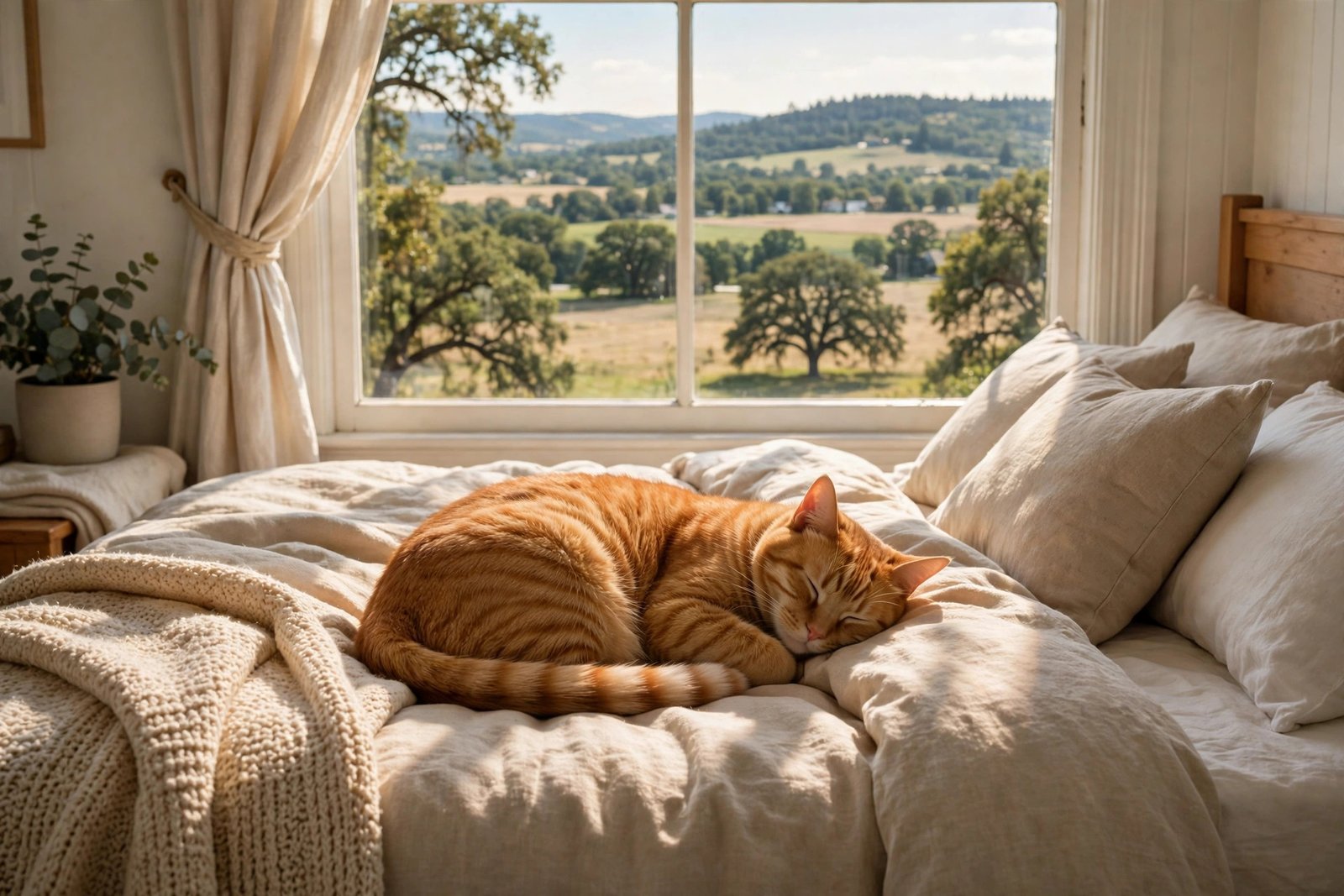
If you have ever looked at your cat, curled up asleep for the third time today, and wondered whether something is wrong, you are not alone. Why do cats sleep so much is one of the most common questions new cat owners ask, because the numbers are startling at first. The average adult cat sleeps twelve to sixteen hours a day. Kittens and senior cats can sleep up to twenty hours. That means your cat spends roughly two-thirds of its life asleep, and a nine-year-old cat has only been awake for about three years in total. It sounds excessive, it sounds lazy, and it sounds like it might be a problem. In almost every case, it is none of those things. It is simply how cats are built.
Cats are not lazy. They are efficient predators with a very specific energy strategy. In the wild, a cat spends a short, intense burst of energy hunting, and then rests for a long time to recover and conserve energy for the next hunt. Sleeping is not wasted time for a cat. It is how a cat recharges, processes memories, regulates its body temperature, and stays ready for the next burst of activity. A cat that sleeps sixteen hours a day is not a broken cat. It is a cat doing exactly what evolution designed it to do.
That said, sleep patterns do change with age, health, environment, and season, and there are times when too much sleep, or a sudden change in sleep, is worth a vet visit. The key is knowing what is normal for your cat, so you can spot the difference between a healthy sleeper and a cat that is sleeping because it does not feel well. This guide will walk you through the numbers, the reasons, and the warning signs, so you can stop worrying about the naps and start enjoying them.
Why Do Cats Sleep So Much? The Biology Behind the Naps
The short answer to why do cats sleep so much is that cats are crepuscular predators with a high-energy hunting style and a low-energy resting style. Crepuscular means they are most active at dawn and dusk, the times when their prey is also most active. In between those hunting windows, they rest. A wild cat might hunt for an hour, eat, and then sleep for several hours before hunting again. Your house cat has the same internal clock, even though its food comes from a bowl and its prey is a wand toy.
There is also a metabolic reason. Cats have a higher body temperature than humans, around 101 to 102.5 degrees Fahrenheit, and maintaining that temperature takes energy. Sleeping, especially curled up in a warm spot, conserves heat and energy. That is why cats love sunny windowsills, warm laundry, and your laptop. They are not just seeking comfort. They are managing their body temperature in the most efficient way possible.
Sleep also plays a critical role in a cat’s brain. Like humans, cats go through sleep cycles, including light sleep and deep sleep, and a dream-like stage called REM sleep. During REM sleep, a cat’s brain processes the day’s experiences, consolidates memories, and practices hunting skills. If you have ever watched a sleeping cat twitch its paws, flick its ears, or make small chirping sounds, you have probably watched it dream. Researchers believe cats dream about hunting, playing, and exploring, which is one more reason not to wake a sleeping cat unless you have to.
Another factor is that cats are solitary hunters, not pack animals like dogs. A dog can rely on its pack for safety while it rests, and it can afford to be awake and social for more of the day. A cat, on the other hand, is on its own. It needs to be alert and ready to hunt or escape at a moment’s notice, and that readiness takes energy. Long periods of rest between bursts of activity are the trade-off that makes the hunting lifestyle work.
How Much Sleep Is Normal for Cats?
Sleep needs vary a lot by age, and knowing the range for your cat’s life stage is the best way to judge whether its sleep is normal.
Kittens: 18 to 20 hours a day
Newborn kittens sleep almost constantly, up to twenty hours a day or more, and that is completely normal. They are growing at an incredible rate, and growth hormone is released primarily during sleep. A kitten that is awake is usually eating, playing, or learning, and a kitten that is asleep is growing. As kittens get older, their sleep gradually decreases, but even a six-month-old kitten may sleep sixteen to eighteen hours a day. If you have just brought home a kitten and it seems to sleep all the time, it is almost certainly fine. For more on raising a young cat, read our guide to how to socialize a kitten.
Adult cats: 12 to 16 hours a day
Most healthy adult cats, roughly one to ten years old, sleep twelve to sixteen hours a day. That is the headline number most vets quote, and it is the range you should expect for a typical indoor cat. Some adults sleep a little less, around ten to twelve hours, especially if they are young, active, and have plenty of play and enrichment. Others sleep closer to sixteen, especially if they are indoor-only cats with a quiet home and not much to do. Both ends of that range can be normal, as long as your cat is eating well, playing, using the litter box normally, and acting like itself when it is awake.
Senior cats: 16 to 20 hours a day
Cats over ten years old tend to sleep more, often sixteen to twenty hours a day. This is partly because they have less energy, partly because their joints may be stiff or sore, and partly because their senses are dulling. An older cat that sleeps more is not necessarily sick, but it is worth paying closer attention to senior sleep patterns, because changes can signal health problems like arthritis, kidney disease, or hyperthyroidism. Senior cats should see a veterinarian at least twice a year, with blood work to catch age-related issues early. A senior wellness exam with blood work typically costs $150 to $300 in the United States, and it is one of the best investments you can make in an older cat’s health.
What Affects How Much Your Cat Sleeps
Several factors influence how much an individual cat sleeps, and understanding them helps you judge whether your cat’s habits are normal for its situation.
Indoor vs. outdoor lifestyle
Indoor cats tend to sleep more than outdoor cats, because they have less to do. An outdoor cat spends its day patrolling territory, hunting, climbing, and interacting with other animals. An indoor cat, especially one in a quiet home where the owner is away all day, has fewer stimuli and may sleep out of boredom as much as out of need. This does not mean your indoor cat is unhappy, but it does mean enrichment matters. A window perch, puzzle feeders, rotating toys, and daily play sessions can make a real difference to an indoor cat’s waking hours, and to its overall health.
Weather and season
Cats sleep more in cold weather and in winter, when days are shorter and there is less light. This is partly a temperature issue, as cats seek warmth and conserve energy in the cold, and partly a light issue, as shorter days can shift their activity patterns. Many owners notice their cats become more active and playful in spring, when the days lengthen. If your cat sleeps a little more in January than in June, that is normal seasonal variation, not a cause for concern.
Activity level and enrichment
A cat that gets regular play sleeps better, in the same way that a person who exercises sleeps better. A cat that gets no play may sleep more, but that sleep is less restful and less healthy. Aim for two play sessions a day, ten to fifteen minutes each, with a wand toy that mimics prey. End each session with a small treat or a meal, so your cat gets the full hunting sequence. If your cat has bursts of wild energy late at night, those zoomies are a sign it needs more daytime play. You can learn more in our article on why cats get the zoomies.
Boredom
Boredom is one of the most overlooked causes of excessive sleep in indoor cats. A cat with nothing to do will sleep, because there is nothing else to do. That is not the same as being rested. A bored cat may also over-groom, overeat, or become destructive. The fix is enrichment, not less sleep. Add a bird feeder outside the window, rotate toys every few days, try a puzzle feeder, and create vertical space with cat shelves or a tall tree. A cat with a stimulating environment will still sleep a lot, because that is what cats do, but its waking hours will be fuller and healthier.
Health and pain
Illness and pain can increase sleep, and this is the factor owners should watch most closely. A cat that is sick often hides, sleeps in unusual places, and is less interested in play, food, or interaction. Arthritis, which affects many cats over the age of ten, can make a cat reluctant to move and more likely to sleep. Dental pain, kidney disease, and thyroid problems can all cause lethargy that looks like extra sleep. The key difference is that a sick cat is not just sleeping more. It is also acting differently when it is awake.
Where Cats Sleep and What It Means
Where your cat chooses to sleep tells you a lot about how it feels. A cat that sleeps curled up in a ball, with its tail wrapped around its body and its nose tucked in, is conserving heat and protecting its vulnerable belly. This is a common sleeping position, especially in cooler weather. A cat that sleeps stretched out on its side, belly exposed, is feeling safe and relaxed. That exposed-belly sleep is a sign of deep trust, because a cat would never show its belly in a place where it felt unsafe.
A cat that sleeps on you, on your chest, your lap, or your feet, is choosing your warmth and your scent over every other spot in the house. This is a strong bonding behavior, and it is one of the most loved parts of owning a cat. You can read more about it in our article on why cats sleep on their owners. A cat that sleeps in high places, like the top of a bookshelf or a cat tree, is choosing a vantage point where it can see the room and feel safe from surprises. This is a natural instinct from their wild ancestors, who slept in trees to avoid predators.
A cat that suddenly starts sleeping in a new, hidden place, like under the bed, in a closet, or behind the sofa, may be telling you something is wrong. Cats hide when they are sick, scared, or in pain. A single afternoon in a closet is not a crisis, but a cat that hides for a day or more, especially if it is also eating less or using the litter box less, should see a vet promptly.
When Too Much Sleep Is a Warning Sign
Most cats that sleep a lot are perfectly healthy. But you should book a vet visit if you notice any of the following changes, especially if they appear suddenly or together. A sudden increase in sleep, where a cat that used to sleep twelve hours now sleeps eighteen or twenty, is worth noting. So is a cat that is hard to wake up, or that seems groggy and disoriented after waking. A cat that stops playing, stops grooming, or loses interest in food and treats is showing signs that go beyond normal sleepiness.
Other red flags include weight loss or weight gain, vomiting or diarrhea, changes in litter box habits, excessive thirst or urination, drooling, bad breath, or limping. Any of these, combined with extra sleep, should prompt a vet visit. The American Veterinary Medical Association (AVMA) recommends annual wellness exams for adult cats and twice-yearly exams for seniors, and a change in sleep is exactly the kind of thing to mention at those visits. For a sense of what vet care costs in the United States, see our guide to how much a vet visit costs.
It is also worth knowing that some medical conditions are very common in older cats and can first show up as extra sleep. Hyperthyroidism, which affects many cats over ten, can cause restlessness and weight loss in some cats and lethargy in others. Kidney disease, which affects roughly one in three senior cats, often causes increased thirst, increased urination, and gradual lethargy. Diabetes can cause increased thirst, weight loss, and sleepiness. All of these are manageable when caught early, and blood work is the main tool for catching them. That is why regular vet visits matter so much, even for a cat that seems fine.
If you are worried, the best thing you can do is track your cat’s sleep for a few days. Note roughly how many hours it sleeps, when it is active, and whether it is eating, drinking, playing, and using the litter box normally. That simple log is enormously helpful for a vet, because it turns a vague feeling of “my cat is sleeping more” into concrete information the vet can work with.
How to Help Your Cat Sleep Well and Stay Healthy
You cannot and should not try to make your cat sleep less. Sleeping is healthy. What you can do is make sure the sleep your cat gets is good sleep, and that its waking hours are full enough to keep it healthy and happy.
Give your cat a comfortable, safe sleeping spot
Every cat should have a quiet, warm, safe place to sleep where it will not be disturbed. A cat bed in a warm corner, a perch by a sunny window, or a cozy spot on your bed all work well. A basic cat bed costs $20 to $40, and a heated bed costs $30 to $60. Senior cats and cats with arthritis benefit especially from a soft, warm, orthopedic bed that is easy to get in and out of. Avoid placing your cat’s bed in a high-traffic area or near a loud appliance, because cats need quiet to get deep, restful sleep.
Keep a consistent routine
Cats thrive on routine. Feeding at the same times each day, playing at roughly the same times, and keeping the household calm in the evening all help regulate your cat’s sleep-wake cycle. A consistent routine is especially important for cats that are anxious or that have recently experienced a change, like a move or a new pet. The predictability is comforting, and it helps your cat sleep better at night instead of waking you up at 3 a.m.
Play during the day, especially in the evening
A good play session in the evening is the single best way to help your cat sleep through the night. Play mimics hunting, and a cat that has hunted and eaten is a cat that is ready to rest. This is why the play-eat-sleep sequence works so well. Play for ten to fifteen minutes, offer a small meal or treat, and then let your cat settle down. Many owners find that this routine dramatically reduces nighttime zoomies and early-morning wake-up calls.
Do not wake a sleeping cat unless you have to
Unless your cat needs medication or a vet visit, let sleeping cats lie. Waking a cat from deep sleep can be disorienting and stressful, and it can make your cat less likely to trust you as a safe sleeping companion. If you need to wake your cat, do it gently, with a soft voice and a light touch, and give it a moment to orient itself before expecting it to respond.
The Bottom Line
So, why do cats sleep so much? Because they are built that way. Cats are crepuscular hunters that spend short, intense bursts of energy on hunting and play, and then rest for long stretches to recover, conserve heat, and process what they have learned. Twelve to sixteen hours a day is normal for an adult cat, up to twenty hours is normal for kittens and seniors, and variations with weather, season, and lifestyle are all part of the picture. What matters is not the number of hours, but whether your cat is eating, playing, grooming, and acting like itself when it is awake. If it is, enjoy the naps. If it is sleeping more and acting differently, track the change for a few days and talk to your vet. A cat that sleeps a lot is usually a healthy cat, living exactly the life it was designed to live, one long, sunny nap at a time.
Frequently Asked Questions
Why do cats sleep so much during the day?
Cats are crepuscular, meaning they are most active at dawn and dusk, and they rest during the day and night. They sleep twelve to sixteen hours a day because their hunting style uses short bursts of intense energy followed by long recovery periods, and sleep conserves heat and energy.
Is it normal for a cat to sleep 16 hours a day?
Yes, sixteen hours is within the normal range for a healthy adult cat. Kittens and senior cats may sleep even more, up to twenty hours a day. As long as your cat eats well, plays, grooms, and uses the litter box normally when awake, sixteen hours of sleep is not a concern.
Why does my cat sleep more in winter?
Cats sleep more in cold weather and shorter winter days because they are conserving heat and energy, and because reduced daylight shifts their activity patterns. This seasonal change is normal, as long as your cat is otherwise eating and behaving normally.
When should I worry about my cat sleeping too much?
See a vet if your cat suddenly sleeps much more than usual, is hard to wake, stops playing or eating, hides for long periods, or shows other symptoms like vomiting, weight loss, excessive thirst, or litter box changes. These can signal illness, pain, or age-related disease.
Do cats dream when they sleep?
Yes, cats go through REM sleep, the dreaming stage, just like humans. Twitching paws, flicking ears, and small chirping sounds during sleep are likely signs your cat is dreaming, probably about hunting or playing. It is best not to wake a cat during this stage unless necessary.